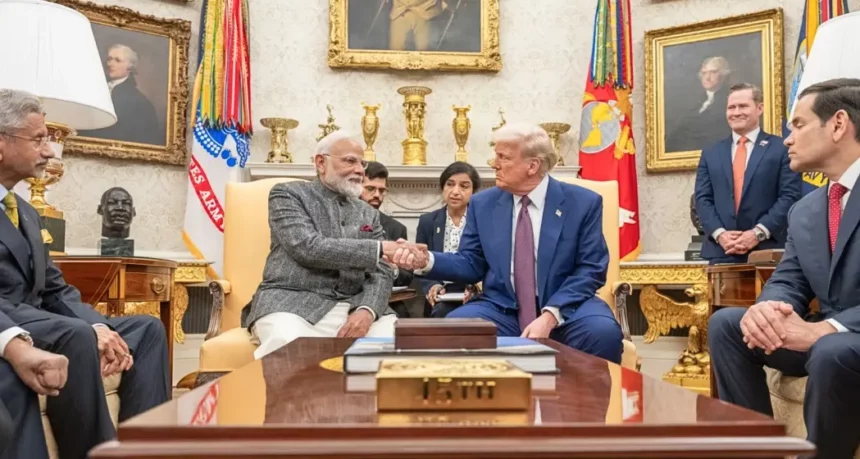
India and the United States are racing against time to finalise an interim trade agreement before a critical July 9 deadline that could see the return of suspended reciprocal tariffs, with US President Donald Trump stating that a deal with “much less tariffs” could soon be in place to allow fairer competition between the two nations.
Donald Trump, addressing the prospects of a US-India trade agreement, said, “I think we are going to have a deal with India. And that is going to be a different kind of deal where we are able to go in and compete. Right now, India does not accept anybody in. I think India is going to do that, and if they do, we will have a deal with much less tariffs.”
Urgency Around July 9 Deadline
The discussions come ahead of the expiry of a 90-day pause on tariff escalations, initially imposed under the Donald Trump administration. The potential reimplementation of a 26% reciprocal tariff structure on specific goods would take effect if negotiations collapse, a senior official warned, underscoring the urgency for both nations to reach an agreement.
The Indian delegation, led by Chief Negotiator Rajesh Agrawal, has extended its stay in Washington beyond the scheduled Thursday and Friday meetings to continue negotiations, reflecting the seriousness of the talks. The goal is to finalise an interim agreement that could prevent the automatic reinstatement of punitive tariffs, preserving the trade environment while both nations work towards a comprehensive bilateral trade agreement (BTA).
Contentious Points: Agriculture and Market Access
The discussions have reached a sensitive phase as India has taken a firm stance on agricultural matters. India’s agriculture sector, dominated by small-scale farmers, is politically sensitive, making concessions in this area challenging. Historically, India has not opened its dairy sector in free trade agreements, and it appears reluctant to shift this position despite pressure from the US.
The US, meanwhile, is pushing for reduced duties on its agricultural exports, including apples, tree nuts, and genetically modified crops, to gain a larger share of the Indian market. India, on the other hand, seeks preferential access for its labour-intensive sectors such as textiles, garments, gems and jewellery, leather goods, and agricultural products like shrimp, oilseeds, grapes, and bananas.
Beyond the interim arrangement, both nations are committed to progressing towards a comprehensive BTA, with the first phase targeted for completion by fall 2024. The broader vision aims to double the bilateral trade volume from the current $191 billion to $500 billion by 2030, reflecting the strategic intent of the two countries to strengthen economic ties in the coming years.