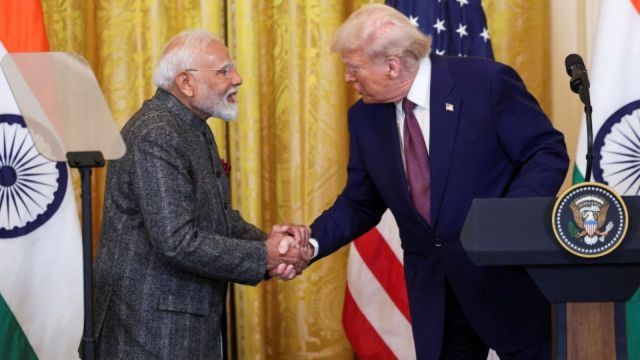
As India inches closer to finalising a trade agreement with the United States, concerns have emerged over the nature and potential consequences of such a deal, with Congress and economic think tanks urging caution. The Global Trade Research Institute (GTRI), a New Delhi-based think tank, has flagged the need for India to avoid rushing into a deal that may compromise critical sectors, warning against what it calls “MASALA” (Mutually Agreed Settlements Achieved through Leveraged Arm-twisting) deals under pressure from the US administration.
Congress leader Jairam Ramesh highlighted these concerns in a post on X, drawing parallels between previous Masala Bonds issued by Indian entities and the current trade negotiation pressures being faced by India. Ramesh stated that while India has historically used innovative financial instruments like Masala Bonds, the current scenario requires caution due to the unpredictable functioning of President Trump and the risk of India conceding critical interests under pressure.
Think Tank Warns of Politically Driven Demands
The GTRI pointed out that the United States is currently negotiating with over 20 countries and seeking trade concessions from more than 90, often using high tariffs as leverage to secure deals. Recently, the US has imposed or proposed tariffs as high as 50% on Brazil and up to 30% on its key partners like the EU and Mexico, a strategy designed to force quick agreements. GTRI founder Ajay Srivastava warned that many countries, including major US partners, are resisting these pressure tactics as the deals often offer no lasting trade certainty and are driven by transactional, political motives.
Srivastava emphasised that India must recognise it is not alone in facing such pressures and should avoid being rushed into agreements that could jeopardise core sectors like agriculture. “India should stay the course and avoid trading away core sectors like agriculture. A hasty deal under pressure could have irreversible consequences, especially when such agreements may not survive the next shift in US politics,” Srivastava said.
Calls for Caution Amid Growing US Trade Pressures
Congress leader Ramesh underscored the importance of maintaining caution while dealing with the US, noting President Trump’s statements about using MASALA tactics to stop “Operation Sindoor” abruptly, a reference highlighting the US President’s unconventional negotiation style. He added that while the Prime Minister’s penchant for acronyms is well known, the warnings from GTRI should not be taken lightly as India navigates these complex negotiations.
Experts have also highlighted that Washington is not sparing even its closest partners, demanding tariff cuts without reciprocal concessions, pushing for guaranteed purchases of American goods, and keeping the option open for future tariffs, even after agreements are signed. Countries like Japan, South Korea, the EU, and Australia are reportedly pushing back against such one-sided terms, with India advised to take a similar stance to protect its long-term trade interests.
As a team of Indian trade negotiators prepares to visit Washington to advance discussions for the proposed Bilateral Trade Agreement (BTA), the call for caution comes at a critical time. Trade experts insist that while building stronger economic ties with the US is important, it should not come at the cost of compromising critical sectors or falling into politically driven, unstable trade arrangements that may not hold beyond the current US administration’s term.
The conversation around MASALA deals, as framed by the GTRI and echoed by Congress, aims to ensure that India approaches these negotiations with a clear focus on safeguarding its interests while maintaining the flexibility to resist pressures that could undermine its economic stability and sectoral strengths.