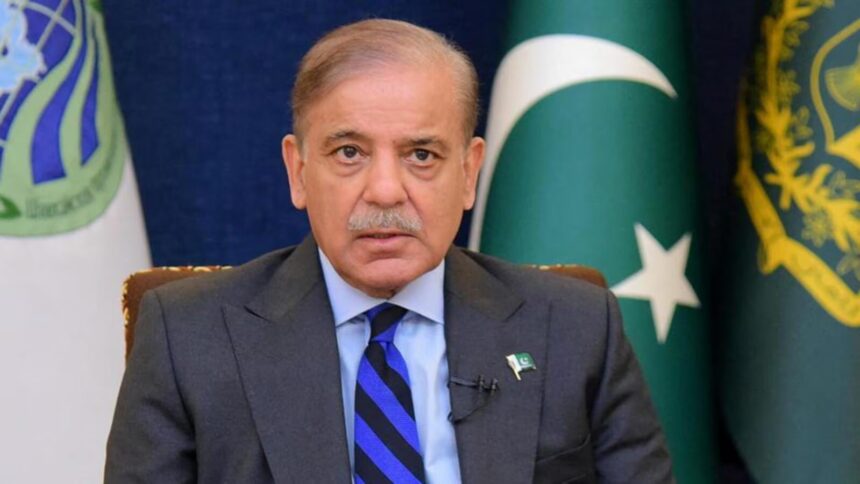
India issued a sharp and uncompromising response to Pakistan at the United Nations General Assembly after Prime Minister Shehbaz Sharif delivered a speech accusing New Delhi of aggression and human rights abuses. Exercising its right of reply, India denounced Sharif’s remarks as an “absurd display of theatrics” and accused Islamabad of glorifying terrorism on an international stage. Petal Gahlot, First Secretary at India’s Permanent Mission to the UN, delivered the response, stressing that no level of drama or falsehoods could conceal the reality of Pakistan’s state-sponsored support for terrorism. The exchange marked yet another bitter episode in the long and troubled history of India-Pakistan relations being played out at the highest levels of international diplomacy.
India’s sharp rebuttal to Pakistan’s claims at UNGA
Petal Gahlot’s address was direct, forceful, and uncompromising. She declared that the Pakistani Prime Minister had used the global forum not to discuss peace or cooperation, but to glorify terrorism and distort the facts about Jammu and Kashmir. She called his remarks an “absurd display of theatrics” and reminded the Assembly that Pakistan had a long record of shielding terrorists, funding cross-border violence, and providing safe havens to global extremists.
Gahlot pointed to a recent incident in April 2025, when a terror group linked to Pakistan carried out a brutal attack on tourists in Jammu and Kashmir’s Pahalgam region. She said that Pakistan had shielded this group from accountability at the United Nations Security Council, exposing its duplicity. By referencing this case, she reinforced India’s longstanding position that Pakistan has consistently protected and even nurtured organizations dedicated to spreading terror across borders.
Her statement also recalled Pakistan’s notorious record of harboring Osama bin Laden for nearly a decade while simultaneously pretending to be an ally in the global war on terror. Gahlot stressed that Pakistani officials themselves have repeatedly admitted to running terror camps, making Islamabad’s protestations of innocence hollow and unbelievable. According to her, it was no surprise that duplicity had reached the highest levels of Pakistan’s leadership, with the Prime Minister now himself glorifying terrorism on the international stage.
Gahlot also invoked India’s military operations against terrorism, referencing Operation Sindoor. She described how Indian forces had struck terror camps in Bahawalpur and Muridke, resulting in the deaths of many militants. She underlined that when Pakistani civilian and military leaders publicly glorify such notorious terrorists, there could be no doubt about the ideological proclivities of the regime in Islamabad.
Responding directly to Sharif’s narrative about the most recent conflict between the two countries, Gahlot described it as bizarre. She reminded the Assembly that Pakistan had threatened India with escalation until May 9, but only a day later its military had directly pleaded with India for a cessation of fighting. The turning point, she argued, was India’s destruction of multiple Pakistani airbases, whose images—burned hangars and damaged runways—were publicly available. For Pakistan’s Prime Minister to describe this as a victory, she said, was absurd, and if such devastation was considered triumph in Islamabad, then Pakistan was welcome to embrace it.
Gahlot further emphasized that India had acted in self-defense after suffering terrorist attacks on innocent civilians. She said India had not only defended its people but had also brought the perpetrators and organizers to justice. She challenged Pakistan to prove its sincerity by immediately dismantling terrorist camps and handing over individuals wanted in India for acts of terrorism. Without such action, she stressed, Pakistan’s rhetoric about peace would remain nothing but hollow words.
On the question of dialogue, Gahlot reiterated India’s long-standing policy that all outstanding issues with Pakistan must be addressed bilaterally. She rejected any role for third parties, declaring that both nations had already agreed on this principle in the past. She concluded her remarks with a stark warning: India would never allow terrorism to be practiced under the guise of nuclear blackmail, nor would it distinguish between terrorists and their state sponsors. Both, she said, would be held accountable, and India would never bow to threats.
Shehbaz Sharif’s accusations and dramatic claims
While India struck back in measured but forceful tones, Pakistan’s Prime Minister Shehbaz Sharif had earlier used the UNGA podium to launch a blistering attack on New Delhi. His address accused India of aggression, violations of international law, and atrocities in Kashmir. He repeated Pakistan’s longstanding demand for a UN-mandated plebiscite in Jammu and Kashmir and declared solidarity with the Kashmiri people, portraying them as victims of Indian oppression. He insisted that Pakistan condemned terrorism in all its forms and called for peace through dialogue.
Sharif also accused India of exploiting the Pahalgam terror attack for political gain rather than cooperating in investigating what he described as a humanitarian tragedy. He claimed that India’s military response had targeted civilian areas and sought to divert global attention from its actions by blaming Pakistan. His remarks were aimed at portraying India as the aggressor and Pakistan as a responsible actor seeking justice and peace.
In one of the more dramatic and unverified claims, Sharif alleged that the Pakistani Air Force, under the leadership of Air Chief Marshal Zaheer Ahmed Babar, had defeated India in aerial combat, destroying seven Indian fighter jets. He presented this as evidence of Pakistan’s resilience and military strength. The claim, however, lacked evidence and was swiftly dismissed in New Delhi as a fabrication designed to rally domestic audiences and deflect international criticism.
Sharif also accused India of violating the Indus Waters Treaty, framing it as an act of aggression akin to a declaration of war. This charge was aimed at portraying India as undermining a vital international agreement that secures water access for millions in both countries. For Islamabad, this narrative was intended to show the world that New Delhi was acting in bad faith not only militarily but also diplomatically.
The Pakistani Prime Minister’s address attempted to place India in the dock before the world community by combining charges of human rights violations, treaty breaches, and military aggression. Yet his speech also reflected a pattern seen often at the UNGA, where Pakistani leaders use the platform to spotlight Kashmir and cast India in a negative light. For Sharif, the moment was also a chance to strengthen his own political credentials at home by projecting defiance against a larger neighbor.
By the time India exercised its right of reply, the contrast in tone and content was unmistakable. Where Pakistan relied on dramatic claims and unverified allegations, India responded with evidence, references to specific terror incidents, and reminders of Pakistan’s well-documented history of sheltering extremists. This exchange once again highlighted how the conflict between the two countries is as much about narratives and global perception as it is about security and sovereignty on the ground.
India issued a sharp and uncompromising response to Pakistan at the United Nations General Assembly after Prime Minister Shehbaz Sharif delivered a speech accusing New Delhi of aggression and human rights abuses. Exercising its right of reply, India denounced Sharif’s remarks as an “absurd display of theatrics” and accused Islamabad of glorifying terrorism on an international stage. Petal Gahlot, First Secretary at India’s Permanent Mission to the UN, delivered the response, stressing that no level of drama or falsehoods could conceal the reality of Pakistan’s state-sponsored support for terrorism. The exchange marked yet another bitter episode in the long and troubled history of India-Pakistan relations being played out at the highest levels of international diplomacy.
India’s sharp rebuttal to Pakistan’s claims at UNGA
Petal Gahlot’s address was direct, forceful, and uncompromising. She declared that the Pakistani Prime Minister had used the global forum not to discuss peace or cooperation, but to glorify terrorism and distort the facts about Jammu and Kashmir. She called his remarks an “absurd display of theatrics” and reminded the Assembly that Pakistan had a long record of shielding terrorists, funding cross-border violence, and providing safe havens to global extremists.
Gahlot pointed to a recent incident in April 2025, when a terror group linked to Pakistan carried out a brutal attack on tourists in Jammu and Kashmir’s Pahalgam region. She said that Pakistan had shielded this group from accountability at the United Nations Security Council, exposing its duplicity. By referencing this case, she reinforced India’s longstanding position that Pakistan has consistently protected and even nurtured organizations dedicated to spreading terror across borders.
Her statement also recalled Pakistan’s notorious record of harboring Osama bin Laden for nearly a decade while simultaneously pretending to be an ally in the global war on terror. Gahlot stressed that Pakistani officials themselves have repeatedly admitted to running terror camps, making Islamabad’s protestations of innocence hollow and unbelievable. According to her, it was no surprise that duplicity had reached the highest levels of Pakistan’s leadership, with the Prime Minister now himself glorifying terrorism on the international stage.
Gahlot also invoked India’s military operations against terrorism, referencing Operation Sindoor. She described how Indian forces had struck terror camps in Bahawalpur and Muridke, resulting in the deaths of many militants. She underlined that when Pakistani civilian and military leaders publicly glorify such notorious terrorists, there could be no doubt about the ideological proclivities of the regime in Islamabad.
Responding directly to Sharif’s narrative about the most recent conflict between the two countries, Gahlot described it as bizarre. She reminded the Assembly that Pakistan had threatened India with escalation until May 9, but only a day later its military had directly pleaded with India for a cessation of fighting. The turning point, she argued, was India’s destruction of multiple Pakistani airbases, whose images—burned hangars and damaged runways—were publicly available. For Pakistan’s Prime Minister to describe this as a victory, she said, was absurd, and if such devastation was considered triumph in Islamabad, then Pakistan was welcome to embrace it.
Gahlot further emphasized that India had acted in self-defense after suffering terrorist attacks on innocent civilians. She said India had not only defended its people but had also brought the perpetrators and organizers to justice. She challenged Pakistan to prove its sincerity by immediately dismantling terrorist camps and handing over individuals wanted in India for acts of terrorism. Without such action, she stressed, Pakistan’s rhetoric about peace would remain nothing but hollow words.
On the question of dialogue, Gahlot reiterated India’s long-standing policy that all outstanding issues with Pakistan must be addressed bilaterally. She rejected any role for third parties, declaring that both nations had already agreed on this principle in the past. She concluded her remarks with a stark warning: India would never allow terrorism to be practiced under the guise of nuclear blackmail, nor would it distinguish between terrorists and their state sponsors. Both, she said, would be held accountable, and India would never bow to threats.
Shehbaz Sharif’s accusations and dramatic claims
While India struck back in measured but forceful tones, Pakistan’s Prime Minister Shehbaz Sharif had earlier used the UNGA podium to launch a blistering attack on New Delhi. His address accused India of aggression, violations of international law, and atrocities in Kashmir. He repeated Pakistan’s longstanding demand for a UN-mandated plebiscite in Jammu and Kashmir and declared solidarity with the Kashmiri people, portraying them as victims of Indian oppression. He insisted that Pakistan condemned terrorism in all its forms and called for peace through dialogue.
Sharif also accused India of exploiting the Pahalgam terror attack for political gain rather than cooperating in investigating what he described as a humanitarian tragedy. He claimed that India’s military response had targeted civilian areas and sought to divert global attention from its actions by blaming Pakistan. His remarks were aimed at portraying India as the aggressor and Pakistan as a responsible actor seeking justice and peace.
In one of the more dramatic and unverified claims, Sharif alleged that the Pakistani Air Force, under the leadership of Air Chief Marshal Zaheer Ahmed Babar, had defeated India in aerial combat, destroying seven Indian fighter jets. He presented this as evidence of Pakistan’s resilience and military strength. The claim, however, lacked evidence and was swiftly dismissed in New Delhi as a fabrication designed to rally domestic audiences and deflect international criticism.
Sharif also accused India of violating the Indus Waters Treaty, framing it as an act of aggression akin to a declaration of war. This charge was aimed at portraying India as undermining a vital international agreement that secures water access for millions in both countries. For Islamabad, this narrative was intended to show the world that New Delhi was acting in bad faith not only militarily but also diplomatically.
The Pakistani Prime Minister’s address attempted to place India in the dock before the world community by combining charges of human rights violations, treaty breaches, and military aggression. Yet his speech also reflected a pattern seen often at the UNGA, where Pakistani leaders use the platform to spotlight Kashmir and cast India in a negative light. For Sharif, the moment was also a chance to strengthen his own political credentials at home by projecting defiance against a larger neighbor.
By the time India exercised its right of reply, the contrast in tone and content was unmistakable. Where Pakistan relied on dramatic claims and unverified allegations, India responded with evidence, references to specific terror incidents, and reminders of Pakistan’s well-documented history of sheltering extremists. This exchange once again highlighted how the conflict between the two countries is as much about narratives and global perception as it is about security and sovereignty on the ground.