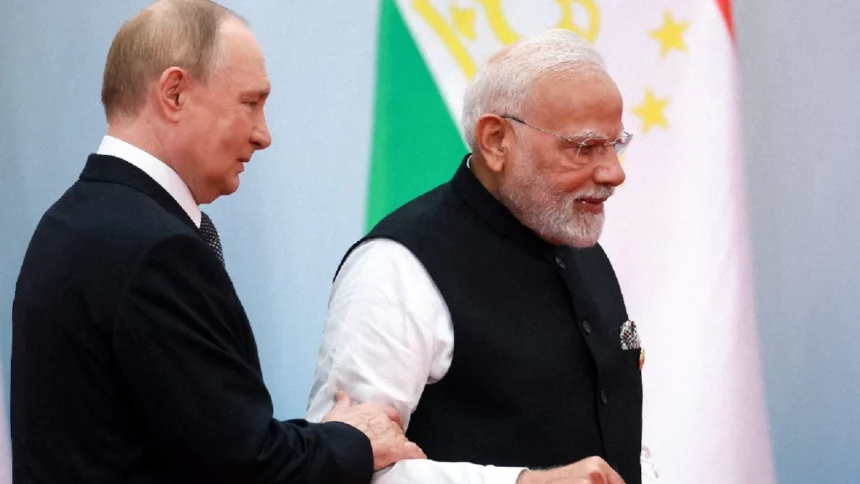
India and Russia are on the verge of finalizing a landmark bilateral mobility agreement that is expected to be signed during President Vladimir Putin’s upcoming visit to New Delhi in the first week of December. This agreement is being hailed as a transformative step in bilateral relations, as it promises to provide a structured framework for the legal migration of Indian workers to Russia, safeguard the rights of Indian professionals currently employed there, and open doors to new employment opportunities across multiple sectors. The accord is particularly significant for India’s skilled workforce, which has long sought reliable avenues for overseas employment, while Russia is experiencing a critical shortage of qualified professionals in the wake of rapid economic expansion and industrial transformation. By the end of this year, over 70,000 Indian citizens are expected to be officially employed under quotas supervised by the Russian Ministry of Labour, marking a substantial increase in legal workforce migration between the two nations. The agreement will create a formal mechanism for recruitment, workplace protections, and employment standards, ensuring that Indian workers are treated fairly, with dignity and security, while simultaneously addressing Russia’s pressing need for skilled manpower.
Structured Framework to Ensure Rights, Opportunities, and Legal Employment
The forthcoming mobility pact between India and Russia is designed to create a comprehensive and legally binding framework for workforce mobility, aimed at benefiting both nations. By establishing formal procedures for recruitment, documentation, and work permits, the agreement seeks to prevent exploitation of workers and reduce the risk of illegal migration. Historically, Indian nationals traveling to Russia for employment have faced challenges arising from fraudulent recruiters, visa issues, and lack of legal protections. The new accord aims to address these gaps by implementing clear legal safeguards, monitoring mechanisms, and ethical recruitment practices. It will include provisions for worker protection, outlining rights and responsibilities for both employers and employees, including transparent wage structures, safe working conditions, access to grievance redressal systems, and avenues for legal recourse in case of violations. These measures are expected to enhance trust between Indian workers and Russian employers, ensuring that cross-border employment is secure and beneficial for all parties involved. Additionally, the agreement is expected to include structured orientation and language training programs for Indian workers, enabling smoother integration into Russian workplaces and society. By addressing historical challenges related to overseas employment, the mobility pact marks a decisive step toward creating a sustainable and mutually advantageous labor migration system.
For India, the agreement represents a significant opportunity to channel its vast skilled workforce toward overseas employment in a regulated and protected environment. Indian professionals, particularly in sectors such as construction, textiles, engineering, healthcare, information technology, and electronics, will benefit from formal recognition, guaranteed legal status, and protection under Russian labor laws. For Russia, the agreement offers a timely solution to an acute shortage of qualified personnel in key sectors of its rapidly growing economy. The infusion of skilled Indian labor is expected to bolster productivity, contribute to industrial modernization, and support Russia’s infrastructure and economic development goals. Moreover, the structured quota system, managed by the Russian Ministry of Labour, will provide predictability and transparency, ensuring that workforce planning aligns with the country’s evolving economic requirements. By formally integrating Indian professionals into the Russian labor market, the agreement addresses both the demand for talent in Russia and the aspiration of Indian workers to secure dignified and lawful employment abroad.
Role of Indian Business Alliance and Bilateral Stakeholders in Facilitating Migration
The Indian Business Alliance (IBA), headquartered in Moscow, has welcomed the impending mobility agreement, calling it a strategic milestone in deepening India-Russia economic and cultural relations. According to IBA President Sammy Manoj Kotwani, the accord will leverage India’s highly skilled and dynamic workforce while meeting Russia’s urgent need for qualified professionals amid industrial transformation. The organization emphasized that structured coordination among government agencies, private employers, and civil society actors is crucial to ensuring the success of the mobility framework. IBA plans to collaborate closely with both the Indian and Russian governments, as well as regional business stakeholders, to ensure smooth recruitment processes, ethical practices, and adherence to labor standards. By organizing orientation sessions, language training, and awareness programs, the alliance aims to empower Indian workers, preparing them to integrate seamlessly into Russian workplaces and communities. These initiatives are expected to reduce the risk of exploitation, provide clarity on legal rights, and ensure that workers are informed about employment conditions before leaving India.
Furthermore, the IBA will work alongside the Embassy of India in Moscow, coordinating with regional authorities and local administration to monitor the welfare of Indian workers. This includes addressing any challenges related to accommodation, workplace conditions, and social integration, as well as offering assistance for any legal or administrative issues. By creating a support ecosystem, the alliance ensures that Indian citizens are not only gainfully employed but also protected, respected, and integrated into the broader social and professional fabric of Russia. Such measures are intended to prevent past instances where Indian nationals were deceived by unscrupulous recruiters or faced obstacles due to inadequate legal protections. Through close cooperation between the two governments, business bodies, and the Indian community in Russia, the mobility pact aims to establish a model for responsible and sustainable labor migration, benefiting workers, employers, and both nations.
The mobility agreement is also expected to facilitate long-term economic collaboration, promoting knowledge transfer, skill development, and cultural exchange between India and Russia. By enabling Indian workers to contribute to key sectors of the Russian economy, the pact supports the creation of a skilled, adaptable workforce capable of meeting global standards. Indian professionals, while gaining international exposure, will acquire new skills, enhance their expertise, and develop valuable experience that can be leveraged both abroad and back home in India. This mutually beneficial approach underscores the strategic dimension of the mobility agreement, demonstrating how cross-border labor frameworks can strengthen bilateral relations while supporting economic growth, workforce development, and social welfare objectives.
By providing legal clarity, comprehensive protections, and structured employment pathways, the India-Russia mobility pact sets a precedent for responsible, ethical, and mutually beneficial international labor migration. It is designed not merely as a bilateral arrangement but as a model for other countries seeking to establish safe, regulated, and efficient mechanisms for cross-border workforce movement. With more than 70,000 Indian citizens expected to gain lawful employment in Russia under government-supervised quotas, the agreement represents a historic step forward in India’s engagement with global labor markets and its ongoing collaboration with strategic partners like Russia. The pact highlights the importance of aligning workforce policies with legal frameworks, ethical recruitment practices, and proactive support measures to ensure that international labor migration is safe, fair, and productive for all stakeholders.
The agreement also reflects a shared commitment by India and Russia to safeguard worker rights, enhance economic cooperation, and facilitate professional mobility across borders. By combining regulatory oversight, training programs, and government supervision, the accord ensures that Indian professionals working in Russia can focus on their careers in secure, legally protected environments. It represents a tangible effort to formalize labor migration pathways, foster international partnerships, and create new opportunities for skilled workers while strengthening economic and diplomatic ties between the two nations.
As the final negotiations proceed, Indian and Russian officials are coordinating to implement robust monitoring mechanisms, establish transparent recruitment protocols, and address potential challenges proactively. Both governments are committed to ensuring that the mobility framework not only opens doors for employment but also provides safeguards against legal, social, or financial risks. By emphasizing worker protection, ethical recruitment, and structured integration, the India-Russia mobility pact is poised to become a model for international cooperation in labor migration, demonstrating how bilateral agreements can harmonize workforce needs, economic development, and social welfare in a globalized world.
The introduction of these measures is expected to have a transformative impact on both Indian workers and Russian industries. Indian professionals will gain access to secure, regulated employment opportunities in critical sectors, while Russian businesses and institutions will benefit from the influx of skilled labor necessary to sustain industrial growth and innovation. The mobilization of such a significant workforce under legal frameworks will also serve as a catalyst for broader dialogue on international labor standards, cross-border worker rights, and the potential for ethical recruitment practices globally.
In essence, the India-Russia mobility agreement is more than a bilateral labor arrangement; it is a strategic initiative with far-reaching implications for workforce development, economic partnership, and professional mobility. By providing Indian workers with lawful employment in Russia, ensuring their protection, and creating a structured system for workforce integration, the pact embodies a forward-looking approach to labor migration that prioritizes transparency, accountability, and mutual benefit.
This historic accord represents a convergence of interests between two nations seeking to strengthen economic collaboration, address workforce shortages, and provide meaningful employment opportunities for a skilled and dynamic labor force. With over 70,000 Indians expected to participate under the program by year-end, the agreement promises to enhance bilateral ties, foster professional development, and contribute to sustainable economic growth for both countries. It underscores the importance of strategic international labor agreements in addressing global workforce challenges, improving employment standards, and creating pathways for professional advancement in a secure and structured environment.