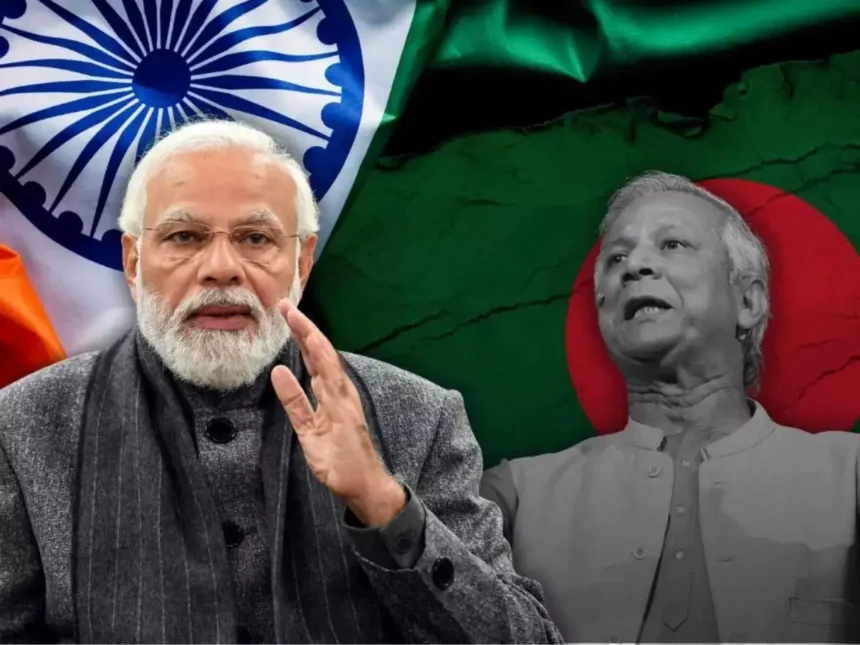
India’s strategic engagement with Bangladesh came under detailed discussion during a meeting of the Parliamentary Standing Committee on External Affairs chaired by Dr Shashi Tharoor, with experts assuring members that Bangladesh remains stable and distinct from Pakistan, even as concerns rise over China’s and Pakistan’s increasing footprint in the region. The session, attended by high-profile experts, also explored the need for deeper people-to-people ties while addressing issues such as illegal migration and water-sharing disputes.
Experts Assure Bangladesh Stability
During the meeting, former National Security Adviser Shivshankar Menon, Lt Gen Syed Ata Hasnain (Retd), former High Commissioner to Bangladesh Riva Ganguly Das, and strategic affairs analyst Professor Amitabh Mattoo shared insights on India-Bangladesh relations. They clarified that while concerns about youth radicalisation and external influences in Bangladesh exist, there is no immediate reason for alarm, especially when compared with Pakistan. Experts highlighted that the Bangladeshi army is not as radicalised as the Pakistani army, a factor that plays a crucial role in the stability of India’s eastern neighbour.
They also observed that while media narratives often overstate Bangladesh’s closeness with India’s adversaries, the reality on the ground is different, with Bangladesh maintaining a working relationship with India despite its engagements with China and Pakistan.
Calls for Deeper Bilateral and People-to-People Engagement
Several members of the committee, including BJP MP Kiran Choudhry, recalled India’s role in the Bangladesh Liberation War, underscoring the long-standing friendship between the two countries. Opposition MPs emphasised the importance of enhancing bilateral engagement, particularly as West Bengal and Tripura share linguistic and cultural ties with Bangladesh alongside long, porous borders. Members suggested increasing people-to-people exchanges, including media and journalist programmes, to foster deeper mutual understanding.
The meeting also addressed the issue of illegal migration, with Dr Shashi Tharoor noting that such cases have significantly declined according to recent committee inputs, although the matter continues to be flagged by leaders in West Bengal and Jharkhand. When asked about the sensitive water-sharing disputes, particularly in the context of concerns raised by West Bengal Chief Minister Mamata Banerjee, Dr Shashi Tharoor noted that details on this topic would be available in the committee’s final report.
The meeting follows the last major review in December, when Foreign Secretary Vikram Misri briefed the committee on bilateral issues, including reported violence against the Hindu minority community in Bangladesh. Experts at the current session reaffirmed the need for India to continue a steady, people-centric approach in its relations with Bangladesh while monitoring developments in the region closely.
Dr Shashi Tharoor described the session as a “first-class, in-depth discussion,” noting that members raised several important questions and received comprehensive responses from the experts. The committee will submit a detailed report to Parliament soon, shaping India’s next steps in its engagement with Bangladesh amidst evolving regional dynamics.