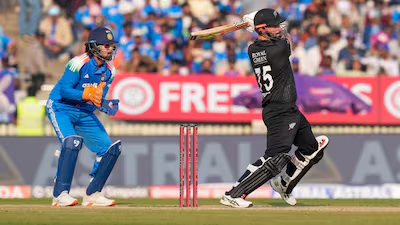
India began their home one-day international series against New Zealand with a hard-fought win in Vadodara, navigating pressure moments and late twists to claim the first match and take an early lead in the contest between two evenly matched sides.
The opening ODI, played at the BCA Stadium, marked the return of international cricket to the city after a long gap and unfolded as a gripping spectacle of skill, temperament, and resilience. A packed stadium witnessed momentum swing back and forth as India chased down a competitive New Zealand total, leaning on experience in key moments and composure under pressure. The match was not only about runs and wickets but about how India managed expectations at home, handled a spirited New Zealand challenge, and closed out a game that threatened to slip away late in the chase.
From the first ball, the atmosphere reflected the significance of the occasion. Fans filled the stands hours before the start, turning the venue into a sea of blue and setting the tone for a contest that promised intensity. New Zealand arrived with a reputation for discipline and adaptability, while India sought to assert dominance on home soil. What followed was a contest that delivered on both fronts, offering drama, individual brilliance, and lessons for both teams as the series unfolds.
New zealand set a challenging target as india’s bowlers search for control
After the toss, India opted to bowl first, backing their bowling attack to exploit early conditions and contain New Zealand’s batting depth. The pitch offered a fair contest, with enough pace and carry for seamers while remaining true for batters willing to apply themselves. New Zealand’s openers began cautiously, aware of the importance of building a platform against a disciplined Indian attack that mixed pace and spin effectively.
As the innings progressed, New Zealand found stability through their middle order, rotating strike and capitalising on loose deliveries. Daryl Mitchell emerged as a central figure, anchoring the innings with a composed knock that balanced restraint with timely aggression. His ability to find gaps and run hard between the wickets allowed New Zealand to keep the scoreboard moving without taking undue risks.
India’s bowlers worked in partnerships, probing with variations and adjusting fields to cut off boundaries. There were moments when wickets fell at crucial intervals, preventing New Zealand from launching a sustained assault in the middle overs. Spinners played a key role in controlling the tempo, forcing batters to work for their runs and creating pressure that led to mistimed shots.
Despite these efforts, New Zealand’s lower middle order added valuable runs, ensuring that the visitors crossed the 300-run mark. The total reflected both their application and India’s occasional lapses in execution. While India managed to avoid a late onslaught, the target set was substantial enough to test the hosts’ batting depth and nerve, especially under the weight of expectation in front of a home crowd.
As New Zealand closed their innings, there was a sense that the match remained finely balanced. The total was neither unassailable nor easily within reach, setting the stage for a chase that would demand focus, partnerships, and calm decision-making from India’s top and middle order.
Kohli’s composure and india’s depth seal the chase amid late tension
India’s response began with intent, as the openers looked to take advantage of the powerplay while respecting the new ball. Early boundaries lifted the crowd and eased initial nerves, but New Zealand’s bowlers responded with discipline, keeping lengths tight and extracting movement to challenge the batters. The early exchanges set the tone for a chase that would be built patiently rather than in a flurry.
At the heart of India’s innings was Virat Kohli, whose presence brought stability and assurance. Kohli’s innings was defined by timing, placement, and an acute awareness of the game situation. Rather than forcing the pace, he focused on building partnerships, rotating strike, and punishing errors. His ability to find boundaries without undue risk ensured that the required rate remained manageable even as wickets fell around him.
Captain Shubman Gill provided valuable support, contributing runs at the top and reinforcing India’s control during the early and middle phases of the chase. Together, they navigated periods of pressure, particularly when New Zealand tightened the screws with disciplined bowling spells that tested patience.
The middle overs proved crucial, as India experienced brief instability with the loss of a couple of wickets in quick succession. New Zealand sensed an opening, attacking with aggressive fields and sharper lines. For a moment, the chase appeared to teeter, reminding the home side that no total is straightforward in international cricket.
India’s depth, however, came to the fore. Contributions from the middle order ensured that momentum did not swing decisively in New Zealand’s favour. KL Rahul played a measured role, absorbing pressure and keeping the chase on track with sensible shot selection. His calm presence at the crease allowed others to play with greater freedom.
As the match entered its final stages, tension gripped the stadium. The required runs narrowed, but New Zealand continued to fight, picking up wickets and forcing India to recalibrate. The crowd’s energy oscillated between celebration and apprehension with every delivery, underscoring how finely poised the contest had become.
Kohli’s dismissal, just short of a century, briefly reignited New Zealand’s hopes. Yet, India’s lower middle order held firm, demonstrating composure and clarity in shot selection. Singles were taken when boundaries were not on offer, and poor deliveries were punished decisively. The final overs tested nerves, but India crossed the line with wickets in hand, sealing a four-wicket victory that reflected both skill and mental strength.
Beyond the result, the match carried broader significance. It showcased India’s ability to manage pressure situations, a crucial attribute ahead of major international tournaments. For New Zealand, the contest offered positives in discipline and competitiveness, even in defeat, and highlighted areas where they could tighten execution in the remaining matches.
The return of international cricket to Vadodara added another layer of meaning to the occasion. The city’s enthusiastic response, coupled with smooth organisation, reinforced its credentials as a host venue. Fans witnessed not only a memorable match but also a reminder of cricket’s power to unite and energise communities.
As the series progresses, both teams will draw lessons from this opener. India will look to build on their momentum and refine areas that came under pressure, while New Zealand will aim to convert strong phases into decisive advantages. The first ODI, rich in drama and quality, has set the tone for a compelling contest between two sides that know each other well and are rarely separated by much.