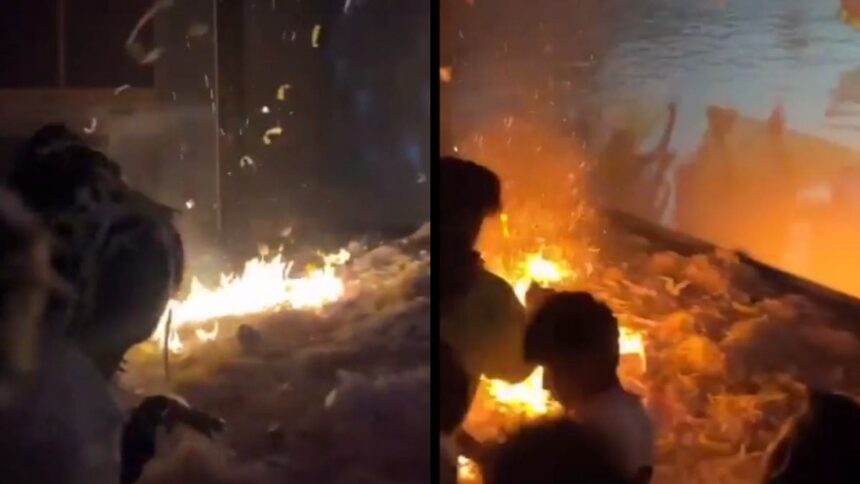
A routine movie screening in Odisha turned into a moment of panic when a fire broke out inside a cinema hall during the screening of the much-awaited film The Raja Saab, highlighting serious concerns about safety, crowd behaviour, and celebratory practices inside enclosed public spaces.
The incident occurred during an evening show at Ashok Talkies, where a packed audience had gathered to watch The Raja Saab, starring Prabhas. What began as an atmosphere of excitement and celebration quickly shifted to fear when flames were spotted near the screen area, forcing viewers and staff to react swiftly. Although the fire was brought under control within minutes and no injuries were reported, the episode has reignited debate around fan culture, safety preparedness, and the responsibilities of cinema managements and audiences alike.
The fire reportedly broke out at a peak moment in the film when fans, caught up in enthusiasm, began performing aarti inside the auditorium. During the ritual, an aarti plate slipped and fell onto paper materials near the screen, causing them to catch fire instantly. The sudden flare startled the audience, with some people attempting to move away from the affected area while others alerted theatre staff. Thanks to the prompt response of cinema employees and a few alert viewers, fire extinguishers were used quickly, preventing the situation from escalating into a major disaster.
How fan celebrations turned dangerous inside the theatre
Celebrations inside cinema halls have become increasingly common during the release of big-budget films, especially those starring popular actors. In many parts of India, fans express devotion through rituals that mirror religious practices, including garlands, chanting, and aarti. While these acts are intended to show admiration, the incident at Ashok Talkies demonstrates how such practices can become hazardous when conducted inside enclosed spaces filled with people and flammable materials.
According to eyewitnesses, the fire ignited suddenly, leaving little time for panic to spread widely. Some audience members initially froze in shock, while others quickly shouted warnings. Theatre staff rushed in with fire extinguishers, and within moments the flames were put out. Smoke lingered briefly, but the situation stabilised quickly enough for the screening to resume after a safety check.
Local authorities later confirmed that the fire was minor and that no casualties or serious damage occurred. However, officials stressed that the incident could have had far more serious consequences if the fire had spread or if panic had caused a stampede. Cinema halls are designed with safety mechanisms such as emergency exits and extinguishers, but their effectiveness depends heavily on calm behaviour and rapid response.
Police officials in the area issued advisories urging cinema-goers to avoid any form of celebration involving open flames, fireworks, or combustible materials inside theatres. They emphasised that while enthusiasm for films is understandable, safety must always take priority. Theatre owners were also reminded of their duty to enforce rules strictly and prevent prohibited activities within auditoriums.
The management of Ashok Talkies stated that they had clear instructions against such practices and that staff acted immediately once the fire was noticed. They also acknowledged that monitoring large, enthusiastic crowds can be challenging during high-profile releases, particularly when shows are sold out. Following the incident, additional staff were reportedly deployed to monitor behaviour inside the hall during subsequent screenings.
Cinema safety, crowd behaviour, and lessons from the incident
The fire during The Raja Saab screening has drawn wider attention to safety standards in cinema halls across Odisha and beyond. While modern theatres are equipped with fire safety systems, the effectiveness of these measures can be compromised by risky behaviour from patrons. Experts point out that even a small flame can become dangerous in a dark, enclosed space filled with people, upholstery, screens, and electrical equipment.
Fire safety specialists stress that theatres must ensure strict compliance with regulations, including regular maintenance of extinguishers, clear marking of exits, and training staff to handle emergencies. Equally important is audience awareness. Viewers must understand that certain celebratory acts, though emotionally driven, can put lives at risk. The Rayagada incident serves as a reminder that cinema halls are public spaces governed by safety rules, not venues for ritualistic activities involving fire.
Fan culture has evolved significantly over the years, especially with the rise of social media and organised fan clubs. Big film releases often resemble festivals, with banners, cut-outs, and celebrations beginning outside theatres. Problems arise when these celebrations move indoors. Authorities note that incidents like this are not isolated and have occurred in different states during major releases, sometimes with tragic outcomes.
Industry insiders argue that cinema managements need to adopt stricter screening protocols during opening shows of high-profile films. This may include additional security checks, closer monitoring inside halls, and clear communication with audiences about prohibited activities. Some suggest that theatres should make safety announcements before shows, especially during the first few days of release when fan fervour is at its peak.
From the audience perspective, many viewers expressed relief that the situation was handled quickly and that no one was hurt. Several patrons later said that the incident was frightening and that it made them realise how quickly celebrations can turn dangerous. Others felt that while enthusiasm for cinema should not be discouraged, it must be expressed responsibly.
The incident has also sparked conversations online, with many users calling for stricter enforcement of safety norms in theatres. Some fans of Prabhas and The Raja Saab distanced themselves from such risky celebrations, stating that admiration for an actor should never come at the cost of public safety. Others urged fan clubs to promote responsible behaviour and discourage actions that could harm fellow viewers.
For cinema owners, the episode is a warning that preparedness cannot be taken lightly. Even a small lapse can have severe consequences, including legal action, reputational damage, and potential loss of life. Authorities may also consider issuing new guidelines or revisiting existing ones to address the unique challenges posed by fan-driven celebrations during film screenings.
As The Raja Saab continues its theatrical run, the focus has shifted briefly from box office numbers to the broader issue of safety in entertainment spaces. The Rayagada fire incident, though minor in outcome, underscores the importance of vigilance, discipline, and cooperation between cinema managements, law enforcement, and audiences.
Ultimately, the joy of watching a film on the big screen should remain a shared, safe experience. Incidents like this highlight how quickly excitement can turn into danger and why responsible behaviour is essential in public venues. The lessons from Ashok Talkies are clear: celebration must never override safety, and awareness can prevent accidents before they happen.