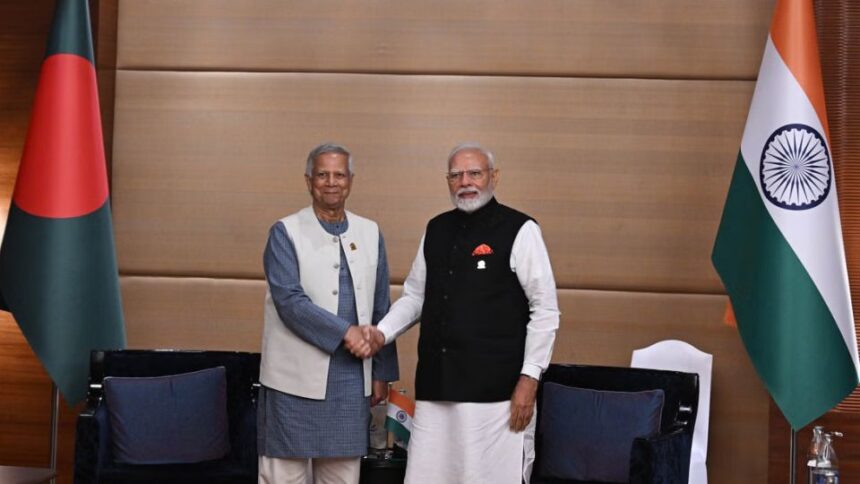
As tensions rise between India and Bangladesh, recent trade restrictions and geopolitical moves signal a deeper strain in what was once considered a friendly bilateral relationship. The suspension of key trade routes and bans on important imports via land ports are not merely economic measures but reflect growing political and strategic disagreements. With Pakistan and China increasing their influence in Bangladesh and the interim government showing signs of challenging India’s patience, the traditional partnership is facing its toughest test in years.
Trade Actions Reflect Larger Political Dynamics
The recent clampdowns on trade with Bangladesh stem from more than just economic concerns. According to senior diplomats familiar with the region, these measures carry significant geopolitical weight. Bangladesh’s interim government, led by Muhammad Yunus, has openly criticized India’s policies in the northeast, ignoring warnings from Indian leaders. Pakistan’s high-level military and ministerial delegations visiting Dhaka, coupled with China’s closer engagement, add further complexity to the situation. These developments suggest a deliberate push by Bangladesh to recalibrate its relationship with India, testing how far it can assert its independence without causing a complete breakdown.
A seasoned diplomat who has served in Bangladesh noted that trade relations between the two countries are critical not only for economic prosperity but also for regional stability in South Asia. The current government’s actions, including interference in border issues and ignoring India’s concerns, have led to carefully planned Indian responses aimed at safeguarding national interests rather than random trade disputes.
Suspension of Collaborative Efforts
Bilateral cooperation between India and Bangladesh has traditionally extended beyond trade, encompassing infrastructure, energy, and cultural exchanges. For instance, the 15th meeting of the Joint Working Group on Trade in September 2023 addressed numerous cooperative initiatives such as eliminating port restrictions, enhancing road and rail connectivity, and facilitating essential commodity supplies. Moreover, India had previously agreed to allow bilateral trade transactions in local currencies, easing dollar dependency, and even provided Bangladesh with broad gauge diesel locomotives as a goodwill gesture.
However, since the fall of Sheikh Hasina’s government and the rise of the interim regime, many of these collaborations have stalled. Diplomatic sources indicate that until Bangladesh holds stable elections, the foreign policy direction remains uncertain and unpredictable. The goodwill and progress of past years now hang in the balance as political and strategic challenges dominate the bilateral agenda.