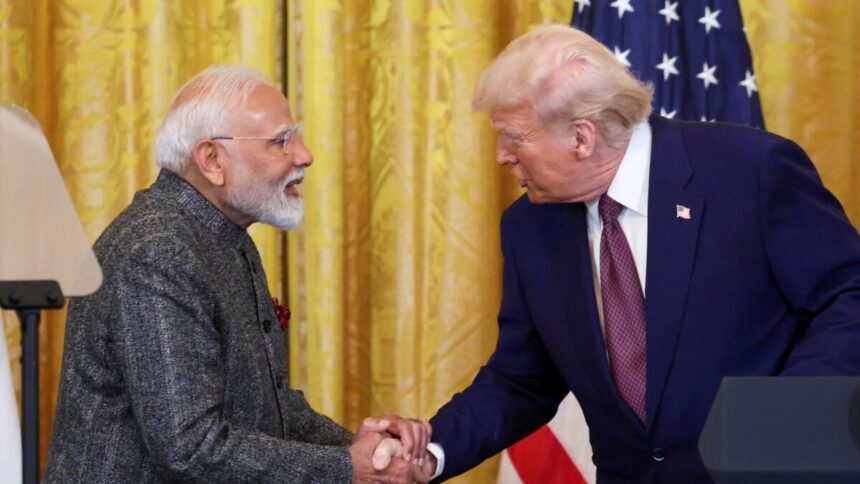
India and the United States are on the verge of announcing their much-anticipated interim trade deal, with all terms now finalised and the announcement likely to be made before July 8. The development comes just before the July 9 deadline set by US President Donald Trump for imposing reciprocal tariffs globally, a move that could have affected Indian exports significantly.
Tariff concerns and negotiation timeline
The Indian negotiating team, led by Rajesh Agrawal, Special Secretary in the Department of Commerce, has been in Washington to finalise the deal, ensuring that India secures the best possible outcome before the looming tariff deadline. Earlier, the Donald Trump administration had suspended the additional 26% levies on Indian imports until July 9, which were initially imposed on April 2 to address the trade imbalance with India. While the baseline 10% tariff on Indian goods remains, India has been pushing for a complete exemption from the additional 26% duty to protect its export competitiveness.
Donald Trump, while speaking to Fox News, hinted that the deadline for imposing tariffs is unlikely to be extended, stating his administration aims to remove trade barriers, which he termed “unthinkable.” The urgency in finalising the deal reflects the critical need for both nations to protect their trade interests while working towards a stable bilateral trade relationship.
Focus sectors and negotiation challenges
The interim trade deal is expected to lay the foundation for a broader Bilateral Trade Agreement (BTA), targeted for completion by October this year, and will cover key sectors such as agriculture, automobiles, industrial goods, and labour-intensive products. The US is keen on securing duty concessions from India on industrial goods, automobiles (particularly electric vehicles), wines, petrochemicals, dairy, and agricultural items like apples, tree nuts, and genetically modified crops.
However, India faces challenges in opening up its agriculture and dairy sectors for tariff concessions due to domestic sensitivities and policy frameworks, as India has not included the dairy sector in any of its previous free trade agreements. On the other hand, India is seeking duty concessions from the US for its labour-intensive sectors, including textiles, leather goods, garments, gems and jewellery, plastics, chemicals, shrimp, oil seeds, bananas, and grapes, aiming to secure better market access for these industries in the US.
President Donald Trump has repeatedly signalled a “major trade deal” with India in recent months, reflecting the US administration’s intent to deepen economic ties with India while balancing trade deficits. Both sides are now working to ensure that the first tranche of agreements under the BTA will address the immediate concerns of tariffs while setting the groundwork for comprehensive sectoral engagements in the future.
The upcoming announcement of the interim trade deal, before the critical tariff deadline, marks a significant milestone in India-US trade relations and is set to provide relief to exporters on both sides, while advancing the vision of reducing trade barriers and enhancing market opportunities.