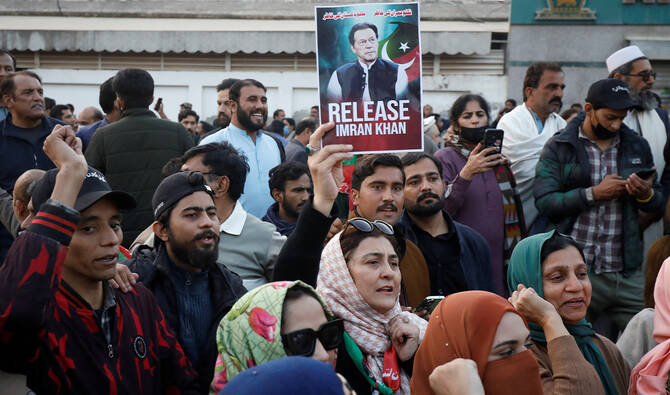
Supporters of jailed former Pakistani prime minister Imran Khan observed a countrywide “shutter-down” strike on Sunday as his Pakistan Tehreek-e-Insaf (PTI) party marked the second anniversary of the February 8, 2024 general elections, which it continues to describe as heavily manipulated. The protest, framed as a peaceful civil action, reflects ongoing political unrest and deep divisions over electoral legitimacy, governance, and the future direction of Pakistan’s democracy.
Anniversary of a Disputed Mandate and Renewed Street Mobilisation
The call for a nationwide shutdown came as PTI and its allied opposition platform, Tehreek-e-Tahafuz-e-Ayin-e-Pakistan (TTAP), urged citizens to express dissent by voluntarily closing businesses across major cities and towns. Party leaders described the action as a symbolic rejection of what they view as an imposed political order that emerged from the 2024 polls.
On February 8, 2024, millions of Pakistanis cast votes in national and provincial elections that were expected to chart a new political course after months of instability. However, polling day was marked by unprecedented developments, including a nationwide suspension of mobile phone services and prolonged delays in announcing results. These disruptions immediately triggered allegations of large-scale manipulation from PTI and several opposition groups.
The caretaker administration in power at the time, along with the Election Commission of Pakistan, rejected the accusations, insisting the polls were conducted according to constitutional and legal standards. Despite these assurances, doubts over the credibility of the results persisted, particularly among PTI supporters, who argue that the process was systematically engineered to limit their party’s path to power.
PTI’s position was further complicated by its exclusion from contesting the elections under its party symbol. Forced to field candidates as independents, the party nevertheless emerged as the single largest grouping in parliament. However, it fell short of the numbers required to form a government, paving the way for a coalition led by Prime Minister Shehbaz Sharif.
PTI leaders maintain that post-poll maneuvers, political pressure, and alleged interference prevented their candidates from converting electoral success into governing authority. The ruling coalition, in contrast, argues that parliamentary arithmetic and constitutional procedures were followed and that PTI was afforded the same legal framework as other political actors.
Speaking ahead of the strike, senior PTI leader Haleem Adil Sheikh said the shutdown was meant to commemorate what the party calls a stolen mandate. He stated that February 8 represents a day when voters were deprived of their right to send genuine representatives to parliament, adding that peaceful protest remains one of the few avenues available to the opposition.
The strike also coincided with national mourning following a deadly suicide bombing in Islamabad days earlier, which killed dozens of people. PTI leaders said the protest carried a dual message of political resistance and solidarity with victims of terrorism, reflecting the layered crises confronting the country.
Political Polarisation, Prison Politics, and Pakistan’s Democratic Strain
The shutter-down strike underscores the depth of Pakistan’s political polarisation more than two years after the elections. While participation varied across regions, the call itself highlighted PTI’s continued capacity to mobilise supporters despite sustained legal pressure and the prolonged incarceration of its founder.
Imran Khan has been in prison since August 2023, facing multiple criminal and corruption cases that have effectively removed him from active politics. He and his party maintain that these proceedings are politically motivated, designed to dismantle PTI’s leadership and marginalise its popular appeal.
In January 2025, an accountability court sentenced Khan to 14 years in prison in a high-profile corruption case involving the Al-Qadir Trust, while his wife received a seven-year sentence. The verdict reinforced PTI’s narrative of victimisation, while the government insists the judiciary acted independently and in accordance with the law.
Khan’s removal from office in April 2022 through a parliamentary no-confidence vote remains a defining moment in Pakistan’s recent political history. The former prime minister has repeatedly claimed that his ouster followed a breakdown in relations with powerful state institutions, allegations that have been categorically denied by the military.
The strike call received a cautious response from Pakistan’s business community. Major trader associations clarified that they had not officially endorsed the shutdown, emphasising their reluctance to align with political protests. However, they acknowledged that individual traders were free to act according to personal political convictions.
Opposition leaders within TTAP appealed to provincial authorities to refrain from disrupting the protest, framing the shutdown as a constitutional exercise of free expression. They argued that suppressing peaceful dissent would further erode democratic norms and exacerbate public mistrust in state institutions.
For the ruling government, the protest presents a familiar challenge: balancing public order with political freedoms while confronting an opposition that refuses to accept electoral outcomes. Officials continue to argue that governance, economic recovery, and security priorities must take precedence over revisiting past electoral disputes.
The broader implications extend beyond party politics. Analysts note that repeated questioning of electoral legitimacy risks undermining confidence in democratic institutions, while prolonged exclusion of a major political force from power can deepen societal divisions.
As Pakistan navigates economic pressures, security threats, and diplomatic challenges, the persistence of unresolved political grievances remains a destabilising factor. The shutter-down strike, whether widely observed or symbolic, reflects a country still wrestling with the meaning of representation, accountability, and democratic choice.