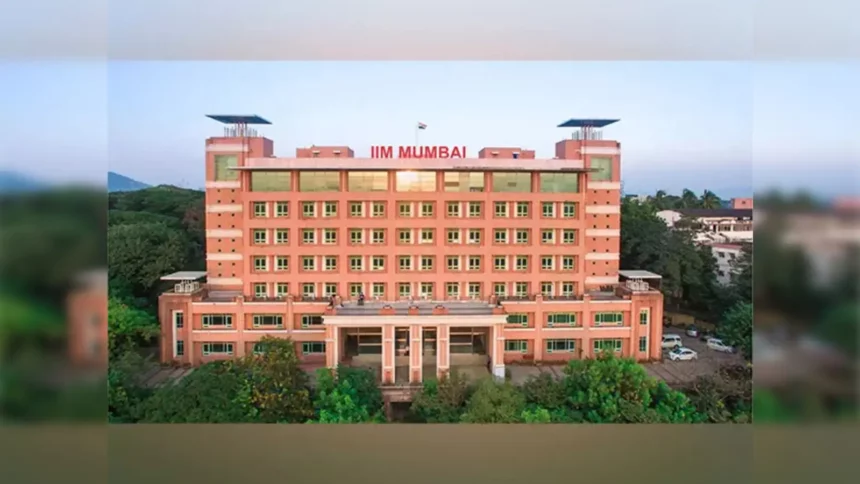
In a bold move aligning with Maharashtra’s vision of becoming a global knowledge powerhouse, the Indian Institute of Management Mumbai (IIM Mumbai) has unveiled an ambitious proposal to establish a satellite campus in or around Mumbai. The proposed campus aims to serve as a beacon of interdisciplinary education and research, offering a dynamic blend of undergraduate, postgraduate, and doctoral programmes focused on finance, policy, technology, data science, and regulatory studies. This initiative is deeply tied to the state’s “Viksit Maharashtra 2047” roadmap and aspires to position Mumbai as a hub for cutting-edge academic and industry integration.
Bridging Academia and Industry in the Heart of India’s Financial Capital
The proposed satellite campus of IIM Mumbai is not just an expansion of its academic footprint; it is a strategic step toward fostering an environment where academia, government, and industry converge. Located close to India’s financial epicenter—housing institutions like the Reserve Bank of India (RBI), Securities and Exchange Board of India (SEBI), Bombay Stock Exchange (BSE), and National Stock Exchange (NSE)—the new campus will offer unmatched exposure to real-time economic and policy-making processes. It will also benefit from proximity to headquarters of major banks, insurance companies, mutual funds, and public sector enterprises, creating a fertile ground for collaboration, internships, and policy engagement.
Students will gain firsthand access to financial regulators and institutions, giving them a rare opportunity to engage with live policy development and regulatory decision-making. By bringing students closer to the machinery of finance and governance, the campus intends to create a vibrant educational ecosystem grounded in real-world applicability.
A Curriculum Aligned with National Educational Goals
Designed in line with the National Education Policy (NEP) 2020, the proposed campus will incorporate a flexible, multidisciplinary, and innovation-driven curriculum. The focus areas—economics, accounting and finance, law and regulation, technology, and data science—reflect the evolving demands of global and Indian economies. Integrating these disciplines, the programmes aim to cultivate leaders equipped to navigate and shape future financial, regulatory, and technological landscapes.
Emphasizing future-ready pedagogy, the institution will prioritize holistic development, critical thinking, and interdisciplinary learning. The goal is to develop intellectual capital capable of responding to the rapidly changing world of digital finance, artificial intelligence, and global regulatory challenges. This will not only enhance employability but also prepare students for leadership in both public and private sectors.
The envisioned academic ecosystem will attract scholars, researchers, investors, and policymakers from across the globe. The institute plans to foster global collaborations, organize policy dialogues, and serve as a think tank influencing both national and international agendas in finance, technology, and governance.
Professor Manoj K. Tiwari, Director of IIM Mumbai, described the proposal as a transformative step toward institutionalizing excellence in management education with a core emphasis on finance and technology. According to him, the location is critical to realizing this vision, as it allows students and faculty to engage directly with key economic institutions and regulatory bodies. This hands-on exposure, he noted, will help in shaping a new generation of leaders attuned to the challenges and opportunities of a rapidly digitizing and regulated world.
The proposal, which includes a comprehensive financial and infrastructure plan, has already received attention from the Maharashtra Department of Higher and Technical Education. Shailendra Deolankar, Director of Higher Education, confirmed that the department is currently evaluating the initiative as part of ongoing consultations for the state’s educational transformation under “Viksit Maharashtra 2047.” The process involves discussions with academicians, industry leaders, and public stakeholders to ensure that upcoming policies are inclusive, progressive, and globally benchmarked.
The satellite campus aims to be more than an academic center—it intends to be a crucible for future economic leadership. With Mumbai already recognized as India’s financial capital, IIM Mumbai’s initiative hopes to add another dimension to the city’s stature: that of an intellectual and educational powerhouse. This synergy between finance and education, driven by geographic proximity and curricular alignment, is expected to yield tangible benefits for students, industries, and the broader policy environment.
As India accelerates toward becoming a knowledge-driven economy, this proposed campus could serve as a model for how higher education can seamlessly integrate with economic development. The plan not only reflects IIM Mumbai’s institutional ambition but also showcases Maharashtra’s commitment to educational reform, innovation, and long-term growth.
The proposal is currently under review, and if approved, could mark a new chapter in the evolution of management education in India. The campus is envisioned to evolve into a center of excellence that combines academic rigor with the realities of a global financial landscape, creating a new generation of leaders equipped to shape India’s economic future.