In a significant move reflecting shifting sentiments within the U.S. political landscape, over a dozen Democratic lawmakers are rallying behind a letter urging President Donald Trump to officially recognize Palestinian statehood. The letter, spearheaded by California Representative Ro Khanna, represents a notable escalation in domestic political pressure on the administration, especially as a mounting humanitarian crisis unfolds in Gaza and global recognition of Palestinian statehood gains momentum.
The draft letter, addressed to President Donald Trump and Secretary of State Marco Rubio, stresses the urgency of recognizing Palestinian rights not just as a humanitarian concern but as a long-overdue geopolitical necessity. The appeal follows the worsening situation in Gaza, where famine and displacement are growing concerns, and comes amid recent pledges by allies such as France, Canada, and the United Kingdom to recognize Palestine as a sovereign state under certain conditions.
Democrats Rally Around Self-Determination and Rights
The core message of the letter is both symbolic and political. It argues that the time has come for the U.S. to acknowledge the Palestinian people’s right to self-determination, emphasizing the need for their rights to be “urgently acknowledged and upheld.” Representative Khanna has received strong backing from progressive colleagues in the House of Representatives, including Greg Casar of Texas, Pramila Jayapal of Washington, and Maxwell Frost of Florida.
“This tragic moment has highlighted for the world the long overdue need to recognize Palestinian self-determination,” the letter reads. It continues by noting that while immediate humanitarian aid is critical, the broader issue lies in establishing a permanent and fair political solution that upholds Palestinian rights and dignity.
According to Khanna, this initiative has garnered overwhelming support even though outreach began only a week ago. He sees the letter as a formal call for the United States to adopt a more balanced role in the Israeli-Palestinian conflict, especially in light of growing bipartisan unease in Congress regarding the continued military campaign in Gaza.
A Balanced Framework for Recognition
The letter also outlines a clear path forward for what Palestinian statehood should entail. While endorsing recognition, it stresses that a viable Palestinian state must acknowledge the existence of Israel and commit to peaceful coexistence. That includes a full disarmament of Hamas and the establishment of a security framework to ensure peace and regional stability.
This dual approach aims to satisfy international concerns while reinforcing U.S. interests in Middle Eastern stability. The Democrats’ letter reflects a growing belief that the absence of such a framework will only prolong violence and further entrench division.
Similar conditions have been echoed by other world leaders, including French President Emmanuel Macron, who proposed a roadmap combining recognition with strict conditions on governance and security.
While the Donald Trump administration has firmly resisted such international pressures, the Democratic signatories see the UN General Assembly session, scheduled from September 8 to 23, as a pivotal moment. The letter is expected to be formally delivered after September 16, aligning with key discussions at the UN regarding the status of Palestine.
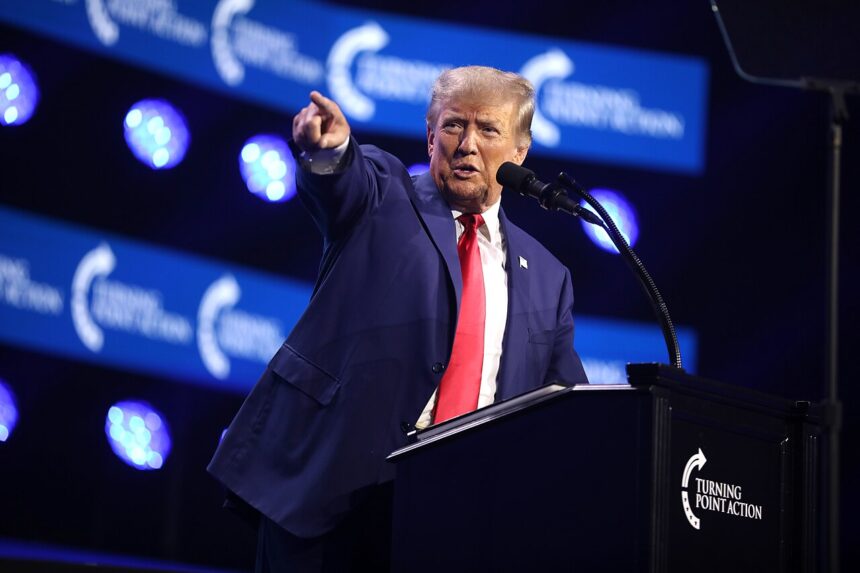
White House Press Secretary Karoline Leavitt recently reaffirmed President Donald Trump’s opposition to recognizing Palestinian statehood under the current circumstances. She argued that doing so would amount to “rewarding Hamas,” a position that reflects the administration’s skepticism toward any political settlement that includes the organization.
Despite these reservations, the administration has taken limited humanitarian steps. Special Middle East envoy Steve Witkoff recently visited Gaza to evaluate aid needs, and President Donald Trump has stated that the U.S. is “putting up money to get the people fed.” Still, critics argue that these measures fall short of addressing the root causes of the crisis.
Growing Fractures Within U.S. Political Support for Israel
Notably, cracks are beginning to show in the traditionally unwavering U.S. congressional support for Israel. Recent weeks have seen dissent from unexpected corners, including Republican Representative Marjorie Taylor Greene of Georgia. Known for her strong pro-Donald Trump stance, Greene shocked many by labeling the situation in Gaza as “genocide” on social media—a characterization that sharply diverges from mainstream GOP narratives.
This comment came in the wake of several congressional attempts to restrict offensive arms sales to Israel. Although a recent vote to ban such sales ultimately failed, a record number of Democratic senators supported the move, signaling a growing divide even within the Democratic Party.
These developments illustrate a shifting paradigm in U.S. foreign policy, particularly among younger and more progressive lawmakers who are increasingly vocal about the need for a more balanced and human-rights-focused approach to the Israeli-Palestinian conflict.
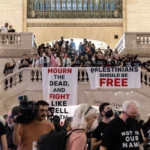
Adding to the chorus of opposition is former U.S. Department of the Interior official Lily Greenberg Call, who resigned earlier this year over the Biden administration’s support for Israel. At a recent protest in New York, she emphasized the responsibility of American Jews to oppose atrocities carried out in their name, asserting that the moral compass of American foreign policy must be recalibrated.
The symbolic and practical importance of this letter from House Democrats is further heightened by the global context. As international actors move closer toward recognizing Palestinian statehood, the U.S. finds itself at a crossroads. Whether it will continue its traditional stance of staunch support for Israel or adapt to a rapidly changing global sentiment remains uncertain.
For now, the Democrats’ letter stands as a formal plea for reevaluating long-held policies and embracing a vision that includes justice and security for both Israelis and Palestinians. With over a dozen congressional signatories and potentially more on the way, this call may yet shift the conversation at one of the most critical junctures in the conflict’s history.