The brutal murder of Chandra Mouli “Bob” Nagamallaiah, a 50-year-old Indian-origin motel manager in Dallas, Texas, has sent shockwaves across the Indian community in the United States and drawn sharp criticism from American lawmakers. The gruesome killing, carried out by 37-year-old Cuban national Yordanis Cobos-Martinez, has raised questions about lapses in the U.S. justice system, which had allowed a man with a violent criminal record to roam free despite multiple prior arrests. With both Indian and American officials expressing outrage and concern, the case has become a flashpoint in discussions over immigration policies, community safety, and the protection of law-abiding immigrants.
The Murder and Its Circumstances
According to police reports, the shocking incident unfolded at the Downtown Suites motel in Dallas, where Nagamallaiah had been working as a manager. On the evening of the murder, a dispute erupted over a malfunctioning washing machine. Witnesses say that Nagamallaiah had asked a colleague to translate his concerns rather than addressing Martinez directly, a move that reportedly enraged the accused.
What followed was an act of unspeakable violence. Martinez, described by authorities as an undocumented immigrant with a history of violent offenses, retrieved a machete during the altercation and launched a frenzied attack on Nagamallaiah. Eyewitness accounts and local media reports reveal that the assault continued relentlessly until the victim was decapitated in full view of his horrified wife and teenage son. The sheer brutality of the crime has left both the local community and broader diaspora reeling with shock and grief.
NBC News, citing eyewitness testimony, reported that Martinez “continued to cut the Indian-origin man until his head was removed from his body,” underscoring the horrifying nature of the assault. Nagamallaiah, originally from Karnataka, had lived in the United States for years, striving to provide a better life for his family. Friends and colleagues remember him as a hardworking, soft-spoken man who had steadily built his life and career in Texas, only to meet such a violent and tragic end.
The horror of the killing did not end at the crime scene. For his wife and 18-year-old son, who witnessed the murder firsthand, the trauma is unimaginable. In the aftermath of the tragedy, members of the Indian-American community quickly mobilized, launching a fundraiser to provide financial support to the bereaved family, who must now endure both the emotional and economic consequences of their devastating loss.
Political and Diplomatic Fallout
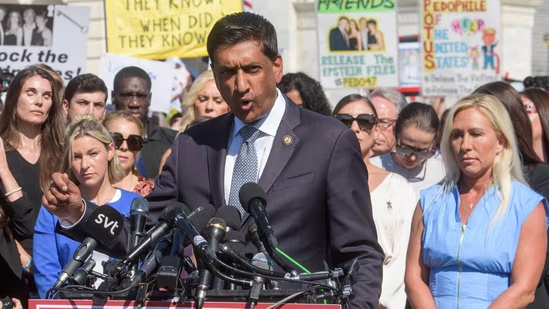
The murder has also reignited debates in the United States about immigration enforcement, judicial accountability, and public safety. Ro Khanna, a U.S. Congressman representing California and a prominent voice for Indian-Americans, issued a scathing statement condemning the crime and criticizing the justice system for failing to prevent it.
“The brutal beheading of a hardworking Indian American immigrant in front of his wife and son is horrific,” Khanna said. He further highlighted that Martinez had been arrested previously on charges of violent theft and child endangerment, yet remained free. “He should not have been free on American streets,” Khanna declared, reflecting widespread outrage over the system’s failure to protect law-abiding residents from repeat offenders.
Khanna’s comments struck a chord with many who view the incident not merely as an isolated tragedy but as a symptom of deeper systemic flaws. Questions are being raised about how an undocumented immigrant with such a troubling criminal background could have slipped through the cracks of both law enforcement and immigration authorities. The case has fueled political debates in Washington and among state leaders in Texas, many of whom have long argued for stricter immigration enforcement and harsher penalties for repeat offenders.
Meanwhile, the Indian government has also expressed sorrow and deep concern over the crime. The Consulate General of India in Houston issued a formal statement mourning the loss of Nagamallaiah and assuring that officials were in close contact with the victim’s family. “Consulate General of India, Houston, condoles the tragic death of Mr. Chandra Nagamallaiah, an Indian National, killed brutally at his workplace in Dallas, Tx. We are in touch with the family and offering all possible assistance. The accused is in the custody of the Dallas Police. We are following up on the matter closely,” the statement read.
The swift response reflects New Delhi’s awareness of the case’s gravity, particularly given the visibility of the Indian diaspora in the U.S. and the need to ensure their safety and dignity. The incident has reignited memories of other high-profile attacks on Indians and Indian-Americans in recent years, fueling fears of vulnerability in a society that many have long considered a land of opportunity.
A Broader Context of Violence and Vulnerability
The murder of Nagamallaiah cannot be viewed in isolation. For many in the Indian diaspora, it serves as a grim reminder of the precarious balance between aspiration and risk while living abroad. While Indian-Americans are among the most prosperous immigrant groups in the United States, they are not immune to racial violence, criminal attacks, and systemic failures that allow dangerous individuals to prey on law-abiding citizens.
The gruesome nature of the Dallas murder recalls other shocking incidents where immigrant families have been victims of violence. For Nagamallaiah’s family, the tragedy is deeply personal, but for the wider community, it is emblematic of vulnerabilities faced by immigrant workers who often take up demanding jobs in sectors such as hospitality, retail, and service industries. These roles, while offering financial stability, also expose them to unpredictable risks, including violent disputes with guests or co-workers.
Martinez’s profile has also reignited conversations about undocumented immigration and its implications for community safety. While many undocumented immigrants live peacefully and contribute to American society, the presence of individuals with violent histories has prompted demands for stricter enforcement. Critics argue that the justice system must be far more vigilant in identifying repeat offenders and ensuring they are not free to commit further crimes.
For the Indian government and its diplomatic representatives in the U.S., the case underscores the importance of advocacy for stronger protections for Indian nationals. The consular outreach in Houston reflects this awareness, and officials are expected to continue pressing for swift justice and greater security assurances for the diaspora community.
Back in India, the news of the murder has been met with widespread grief, particularly in Karnataka, where Nagamallaiah’s extended family resides. The loss of a son who had ventured abroad in search of opportunity has devastated the family, and the gruesome nature of his death has only deepened the anguish.
In Dallas, community organizations and Indian-American groups are rallying not just to support the bereaved family financially but also to demand systemic reforms to prevent such tragedies. Vigils and public meetings are expected to be organized in Nagamallaiah’s memory, turning his death into a catalyst for calls to action.