Tensions between India and Pakistan have remained high following the deadly terrorist attack in Jammu and Kashmir’s Pahalgam on April 22 this year. India retaliated with Operation Sindoor, targeting several nuclear facilities. Though the situation has since stabilized, it serves as a reminder that both countries possess nuclear weapons.
India’s Nuclear Tests and Pakistan’s Response
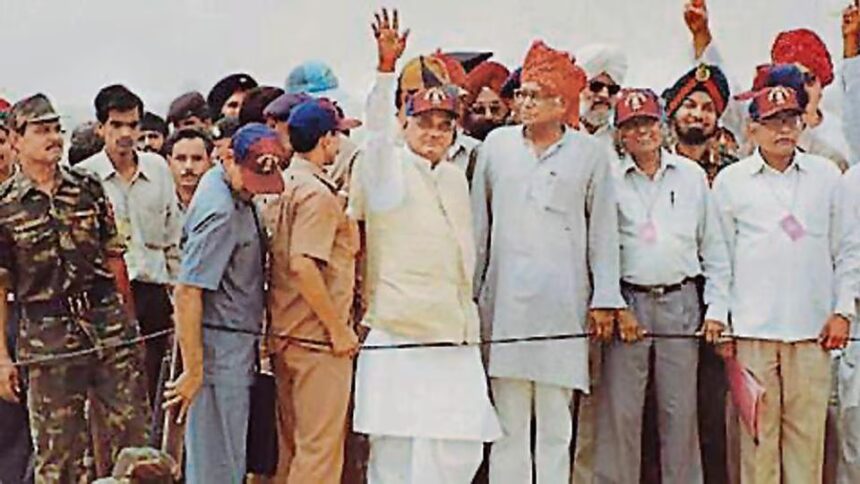
India first demonstrated its nuclear capability on May 11, 1998, with a series of nuclear tests known as Pokhran-II. Ten days later, on May 28, 1998, Pakistan conducted its own nuclear tests in the Ras Koh Hills of Balochistan. Pakistan carried out five underground detonations, marking its entry as the seventh nation in the world to possess nuclear weapons.
This tit-for-tat nuclear development was driven by Pakistan’s desire to restore strategic balance in South Asia and display its nuclear strength after India’s tests. While India’s tests managed to avoid U.S. satellite detection, Pakistan’s preparations were closely monitored by Western intelligence agencies. Reports even mention that then U.S. President Bill Clinton offered $5 billion in aid to dissuade Pakistan from proceeding with the tests.
Technical Details and Aftermath
The devices Pakistan tested were primarily uranium-based, with explosive yields estimated between nine to 40 kilotons of TNT equivalent. Following the initial tests, Pakistan conducted a second round on May 30, 1998, known as Chagai-II, in the Kharan Desert.
In Pakistan, May 28 is commemorated as Youm-e-Takbir or the Day of Greatness, celebrating the nation’s nuclear achievements. However, in Balochistan, the site of the tests, locals observe the day as a “black day,” mourning the environmental and health consequences of the nuclear detonations.
Other Historic Events on May 28
Besides Pakistan’s nuclear tests, May 28 marks other significant historical events:
Volkswagen’s Foundation (1937): Established under Adolf Hitler’s Nazi regime in Germany, Volkswagen was conceived as the “people’s car.” Designed by Ferdinand Porsche, the iconic Volkswagen Beetle became a symbol of Germany’s post-war economic recovery.
Amnesty International’s Founding (1961): Inspired by the imprisonment of two Portuguese students, British lawyer Peter Benenson published “The Forgotten Prisoners,” leading to the formation of Amnesty International. The organization advocates for human rights and was awarded the Nobel Peace Prize in 1977.
Notable Anniversaries on May 28
Leonardo da Vinci’s Last Supper Reopened (1999): The famous painting was reopened to the public in Milan after restoration.
Neville Chamberlain Becomes UK Prime Minister (1937): A significant political milestone in British history.