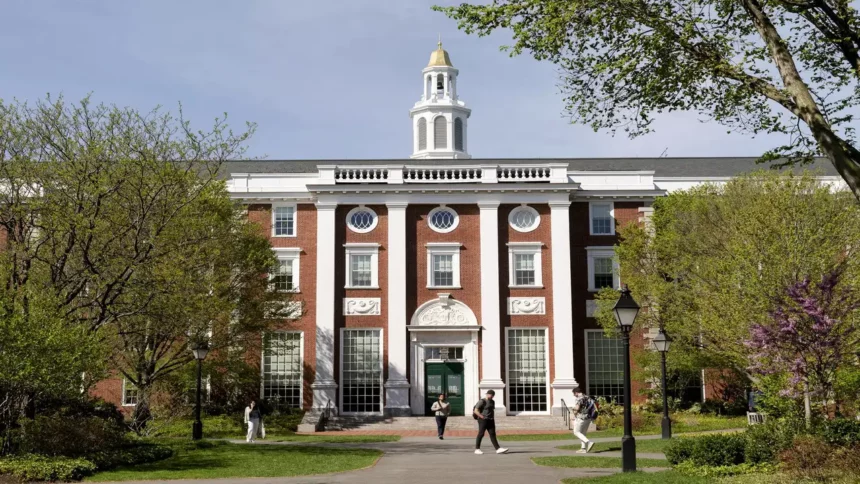
Harvard University is facing a major setback to its global academic operations after the U.S. Department of Homeland Security (DHS) revoked its Student and Exchange Visitor Program (SEVP) certification. This action effectively bars the university from enrolling international students for the 2025–2026 academic year unless it meets six strict conditions within a 72-hour deadline. The move, driven by concerns over compliance and alleged campus safety issues, has put the future of many international students in jeopardy.
DHS Cites Noncompliance and Unsafe Environment
The decision was communicated in a letter dated May 22 from DHS Secretary Kristi Noem, who outlined a series of alleged violations by Harvard. These include a failure to provide required information to DHS, maintaining what Noem describes as an “unsafe campus environment,” and policies perceived to promote hostility toward Jewish students and support for pro-Hamas sentiments. Noem further criticized the university for its “racist diversity, equity, and inclusion policies.”
As a result of the revocation, Harvard is currently prohibited from admitting international students under F-1 or J-1 visas. Students already enrolled under these visa categories must transfer to other institutions to retain their legal status.
Conditions for Reinstatement
Despite the stern action, Harvard has a narrow window to recover its SEVP certification. Secretary Noem provided six conditions that the university must meet within 72 hours. These include:
Submission of all records related to any illegal activity involving nonimmigrant students on or off campus in the past five years.
Disclosure of any information about violent or dangerous acts, threats, or deprivation of rights by such students.
Provision of all disciplinary records and any video or audio documentation of protest activities involving nonimmigrant students.
Failure to provide truthful and complete documentation could expose the university to further legal consequences, including criminal prosecution under federal law.
The situation has sent ripples across the academic community, particularly among Harvard’s international students and faculty. Many now face uncertainty about their academic future and visa status, while the university scrambles to address the federal government’s demands. The broader implications of this standoff between one of the world’s most prestigious institutions and the DHS could reshape how universities handle compliance and campus conduct for international populations in the U.S.