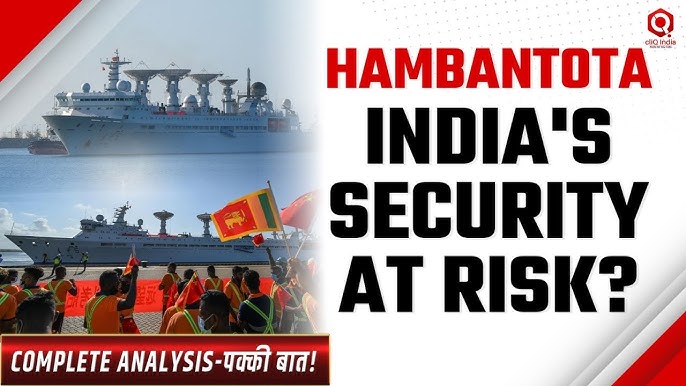
Sri Lanka’s Hambantota Port is once again under international scrutiny following a new maritime cooperation agreement between Sri Lanka and China. This deal has deepened the ties between the two nations, sparking strategic, economic, and geopolitical debates. With the port leased to China for 99 years, questions about Sri Lanka’s sovereignty and economic dependency on Beijing have resurfaced.
India’s Strategic Concerns
The Hambantota Port is located near India’s southern coast, making it a potential strategic risk for India. Experts fear that the port could become a forward base for Chinese naval assets, directly threatening regional security. Additionally, reports of Chinese surveillance ships operating under the guise of research vessels have raised alarms about intelligence gathering on India’s naval bases.
India may need to ramp up its naval presence and surveillance capabilities in the region, potentially leading to increased defense spending and heightened regional tensions. “The proximity of Hambantota to Indian waters makes it a critical concern for India’s maritime security,” said a defense analyst.
Debt-Trap Diplomacy or Strategic Play?
Hambantota has become a textbook case of China’s alleged “debt-trap diplomacy.” Sri Lanka’s decision to lease the port to China after struggling to repay massive loans has sparked criticism worldwide. The port’s dual-use potential — for both commercial and military purposes — strengthens China’s Belt and Road Initiative (BRI) and consolidates its foothold in South Asia.
Economically, Sri Lanka has benefitted from China’s funding, but the growing dependency raises questions about the country’s sovereignty. “Short-term economic relief from Chinese investments could lead to long-term strategic risks for Sri Lanka,” noted an economic policy expert.
Geopolitical Ramifications
China’s growing influence through the Hambantota Port is reshaping regional dynamics. The United States and its allies view this development as a challenge to the Indo-Pacific security framework. As part of its response, India is strengthening its alliances with QUAD partners (Japan, the US, and Australia) to counter China’s maritime assertiveness.
Economic Opportunities vs. Strategic Risks
While China’s investments in Sri Lanka bring immediate economic benefits, the risks of overdependence cannot be ignored. Western nations and QUAD partners perceive this agreement as a threat to Sri Lanka’s neutrality, potentially impacting regional stability. Balancing economic opportunities with strategic sovereignty will be a tightrope walk for Colombo.
Conclusion: Sri Lanka’s Tightrope Walk
The Hambantota Port symbolizes Sri Lanka’s delicate balancing act between two regional giants — China and India. While economic relief from Chinese investments is essential for Sri Lanka’s struggling economy, the long-term implications of strategic overdependence on Beijing are significant. As the geopolitical chessboard of South Asia continues to evolve, Hambantota remains a critical flashpoint.
Watch full video here: https://www.youtube.com/watch?v=WHD5-BtKSaM