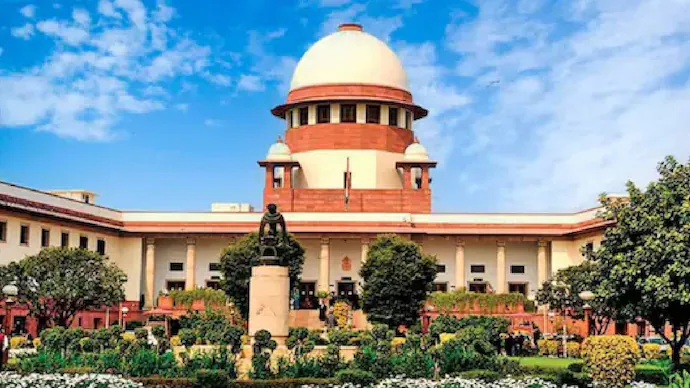
The Supreme Court of India has overturned an Allahabad High Court order which had ruled that breaking a girl’s pyjama string and touching her breasts did not constitute attempted rape. The apex court clarified that such actions do amount to an attempt to commit rape and reinstated the original charges against the accused.
A bench led by Chief Justice Suryakant delivered the verdict on Wednesday. The case concerns an incident in Kasganj district, Uttar Pradesh. In 2022, a woman filed a complaint alleging that three youths from her village had stopped her minor daughter under the pretext of dropping her home and committed sexual misconduct, including touching the child’s private parts and breaking her pyjama string.
Case registration and High Court ruling
Based on the mother’s complaint, a case was registered against all three accused under the POCSO Act. The special POCSO court in Kasganj issued summons to the accused in 2023. The accused challenged the case in the High Court, which, on March 17, 2025, ruled that the acts did not amount to rape or attempted rape and dropped the charges under IPC Section 376 and Section 18 of the POCSO Act.
The High Court instead directed that the accused be tried under IPC Section 354(B) and Sections 9/10 of the POCSO Act, also ordering fresh summons. The ruling drew widespread criticism from legal experts, civil society, and politicians.
Supreme Court intervention and final observations
Taking suo motu cognizance, the Supreme Court stayed the High Court order on March 25, 2025, and later set it aside completely. During the hearing on December 8, 2025, the Supreme Court bench, comprising then CJI B.R. Gavai and Justice A.G. Masih, remarked that some High Court observations reflected an “insensitive and inhuman approach.” The court emphasized that such language could intimidate victims and pressure them into withdrawing complaints.
The incident dates back to November 10, 2021, when the girl was returning home with her mother after visiting a relative in Patiyali. Three village youths—Pawan, Akash, and Ashok—approached them. Pawan offered to drop the girl home, and trusting him, her mother allowed her to go along. On the way, Pawan and Akash allegedly touched the girl’s private parts. Akash tried to drag her under a culvert and broke her pyjama string.
Witnesses Satish and Bhure, passing by on a tractor, rushed to the scene but the accused threatened them with a country-made pistol and fled. Based on the mother’s complaint, Pawan and Akash were booked under IPC Sections 376, 354, 354B, and Section 18 of the POCSO Act, while Ashok was booked under IPC Sections 504 and 506.
The Supreme Court’s ruling reinstates the original charges, sending a strong message that any form of groping or forceful attempt, including breaking clothing, is recognized legally as attempted rape. The court also cautioned all High Courts to avoid insensitive remarks that could have a chilling effect on victims and emphasized the need for victim-sensitive language in judgments and hearings.
This landmark judgment reinforces the legal protections for minors under the POCSO Act and ensures that attempts of sexual assault, even if partial or involving indirect acts like breaking clothing, are treated with full severity under Indian law.