BYLINE: Greg Bruno
Newswise — More than 50 years ago, with America reeling from a series of collective traumas, a determined network of New Jersey psychologists had a vision: a university-based model that would provide not only high-quality care but train the next generation of practicing psychologists.
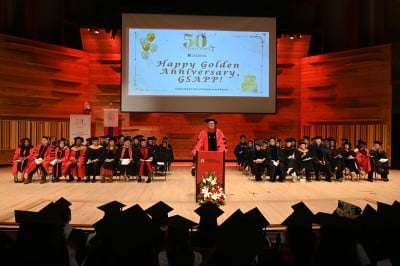
That creation – the Graduate School of Applied and Professional Psychology (GSAPP) at Rutgers-New Brunswick – marks five decades of service this month.
“Our model was and remains unique,” said Ryan Kettler, GSAPP’s associate dean of academic and faculty affairs and a professor of psychology at Rutgers-New Brunswick. “We are the only professional school of psychology within an intensive research university in the country. That allows us to thread the needle between rigorous clinical training and research sophistication.”
In the early 1970s, America was on edge. The Vietnam War had left emotional scars on a generation. Watergate had shaken trust in government. And an oil crisis was fueling economic anxiety.
Yet even as people struggled, access to effective, community-based mental health services was scarce. In 1974, after years of advocacy by some of the state’s best-known psychologists, GSAPP opened its doors to students, one of the first programs of its kind in the nation.
“They came together from across New Jersey to make it happen,” said Lara Delmolino Gatley, the associate dean for administration and strategic operations at GSAPP. Founders, known as the Organizing Council, even put up their own money – as much as $5,000 each – to provide the seed funding, she said.
Psychologists of the era called it the “Age of Depression,” when the clinical understanding of mental and behavioral health was shifting from a focus on external factors – jobs, kids, taxes – to more internal, biological factors.
For the founders of GSAPP, these trends required a new understanding of mental health, and new curriculum and services to meet the moment.
Among GSAPP’s earliest innovations was its focus on the newly emerging doctor of psychology degree, which offered a more clinical pedagogy than its antecedent, the doctor of philosophy degree in psychology.
GSAPP was also an early leader in autism research and services. In the 1980s, school faculty helped bring early autism intervention – identifying and supporting children at the first signs of developmental challenges – into the national spotlight. In the decades since, GSAPP-trained clinicians have advised schools nationwide on mainstreaming autistic children into general education classrooms. The school has also been a leader in providing services to autistic adults.
The early addition of luminaries to GSAPP’s faculty helped establish the school’s reputation. Donald R. Peterson, GSAPP’s founding dean, set a visionary course. Professor emerita Brenna Bry became a national leader in adolescent mental health, while future dean Perry London was recognized for groundbreaking studies on altruism.
That dual mission – preparing clinicians while delivering direct care – remains GSAPP’s hallmark. Each year, GSAPP’s Center for Psychological Services delivers between 8,000 and 10,000 patient appointments serving Rutgers and the state.
For students, the field is literally the classroom. Enrolled students average 400 clinical hours a year during their education, serving patients in clinics, hospitals, jails, schools, Rutgers centers and through community partnerships. It’s a level of direct patient engagement that Daniel Hart, the school’s interim dean, said is “unheard of” among peer institutions.
As GSAPP’s reach has expanded, so has its offerings. Over the past five decades, the school has launched pioneering community-based research and training centers that have become models for the nation, including:
Looking forward, GSAPP officials plan to expand programming to Rutgers-Camden, offer new certification tracks and degrees and integrate artificial intelligence into teaching, research and clinical care.
“Not everyone is built for this kind of work,” said Timothy Cleary, the interim dean for research at GSAPP and former chair of the Department of School Psychology. “It takes a special type of student to see the vision we are creating. But those who come, thrive – and go on to transform lives.”
https%3A%2F%2Fwww.newswise.com%2Farticles%2Fgraduate-school-of-applied-and-professional-psychology-celebrates-50-plus-years%2F%3Fsc%3Drsla