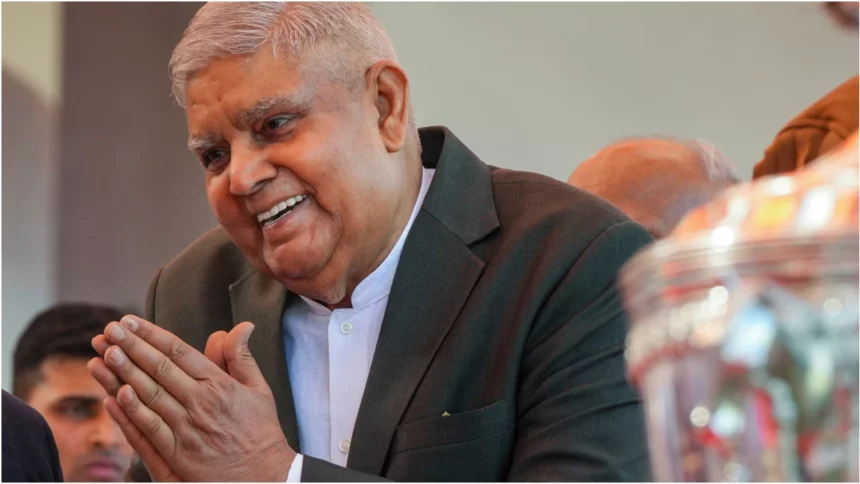
In a dramatic turn during Parliament’s monsoon session, Vice President Jagdeep Dhankhar resigned unexpectedly hours after presiding over Rajya Sabha, triggering a chain of political reactions and preparations for the next vice-presidential election. The resignation came after Dhankhar accepted an Opposition-backed impeachment notice against justice Yashwant Varma, despite quiet interventions by senior ministers attempting to dissuade him, signalling an internal rift over the procedure and timing.
Sources revealed that Union health minister and Rajya Sabha leader JP Nadda and parliamentary affairs minister Kiren Rijiju reached out to Dhankhar on Monday after he acknowledged the notice signed by 63 Opposition MPs. The government, keen to manage the impeachment process through the Lok Sabha with consensus, was caught off guard, with concerns reportedly conveyed to Dhankhar that Prime Minister Narendra Modi disapproved of the sudden move. However, Dhankhar maintained he was operating within the House’s rules and constitutional boundaries.
Behind the Sudden Resignation
The acknowledgment of the impeachment notice followed by the Vice President’s resignation unsettled the government’s plans, with BJP leaders deciding to skip the second Business Advisory Committee meeting chaired by Dhankhar on Monday evening. Later that night, the 74-year-old Vice President submitted his resignation to President Droupadi Murmu, citing health concerns, invoking Article 67(a) of the Constitution.
His resignation was swiftly formalised by the Union home ministry through a gazette notification, coming within hours of the announcement on the Vice President’s official handle. The Election Commission of India has since begun preparations for the vice-presidential election, constituting the electoral college and finalising officials for the process. Both elected and nominated members of Parliament will vote, with the National Democratic Alliance holding a numerical edge over the Opposition bloc.
Government Caught Off Guard as Impeachment Notice Gains Ground
Justice Yashwant Varma, against whom the impeachment notice was filed, faces allegations of corruption after large sums of cash were reportedly recovered from his residence. Dhankhar’s move to admit the impeachment notice in the Rajya Sabha disrupted the government’s careful strategy, as it preferred addressing the notice in the Lok Sabha to ensure greater control over the process. Opposition leaders, acting quickly, prepared and signed the impeachment notice, which came as a surprise to the NDA as none of its MPs were informed or included in the move.
In the Rajya Sabha, Dhankhar announced he had received the motion signed by more than 50 members seeking the removal of justice Varma under constitutional provisions, stating it was his duty to inform the House. This declaration frustrated the government’s plan, triggering a series of meetings among senior leaders, including Union home minister Amit Shah, JP Nadda, Kiren Rijiju, and Lok Sabha Speaker Om Birla. Discussions were held on how to handle the pending impeachment notice and the legalities surrounding the formation of a committee of jurists to investigate the allegations.
Meanwhile, the Opposition, under Congress chief Mallikarjun Kharge, has indicated that constituents of the INDIA alliance will meet to decide on their strategy for the upcoming vice-presidential election, including discussions on a potential candidate to contest the poll.
The Constitution mandates that an election for the Vice President’s post must be held as soon as possible after a vacancy, with the elected person serving a full five-year term. The Election Commission has assured that the formal schedule will be announced promptly upon completing preparatory steps, with the entire process, including the poll, generally spanning 30 days from the notification date.
This unfolding situation has not only shifted the political mood in Delhi but also highlighted the delicate balance between constitutional procedure and political strategy in high-stakes impeachment processes. It underscores the complexities of managing parliamentary business while adhering to the Constitution, especially when institutional actions intersect with political priorities.