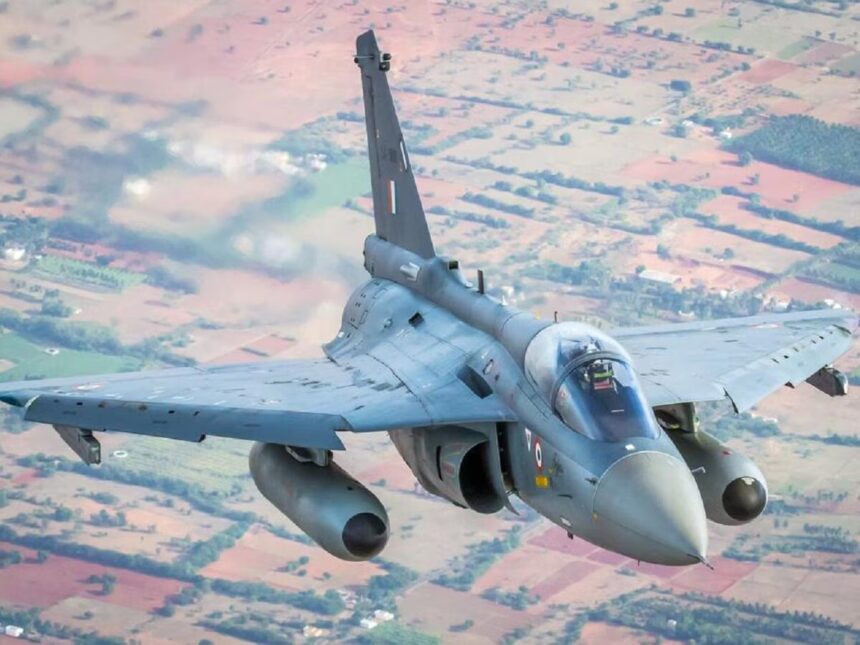
In a major boost to India’s indigenous fighter jet program, US-based aerospace giant General Electric (GE) is set to deliver the first of the 99 contracted F-404 engines for the Tejas Mk 1A by the end of March. The contract, signed in 2021 and valued at $716 million, had been delayed by two years, raising concerns within the Indian Air Force (IAF) over timely deliveries.
According to sources familiar with the matter, the first engine is currently undergoing testing and will be handed over to Hindustan Aeronautics Limited (HAL) before the month’s end. Under the agreement, 12 engines are scheduled for delivery in 2025, followed by 20 engines per year until the order is fulfilled. These engines will power the Tejas Mk 1A, the advanced variant of India’s Light Combat Aircraft (LCA), which is critical to modernizing the IAF’s fleet.
Parallel to this development, HAL is collaborating with GE to manufacture the more powerful GE-414 engine in India under a transfer of technology arrangement. This initiative falls under the India-US Initiative on Critical and Emerging Technologies (iCET), a strategic agreement between the two nations. The GE-414 engine is slated to power India’s ambitious fifth-generation Advanced Medium Combat Aircraft (AMCA), currently under development by the Defence Research and Development Organisation (DRDO).
The delays in delivering the 83 LCA Mk 1A jets, contracted to HAL, have already drawn concerns from the IAF leadership. In response, the Ministry of Defence, under the direction of Defence Secretary R.K. Singh, has established a committee to explore alternative business models for the AMCA program. The committee will not assess technical aspects but will focus on increasing private sector participation in fighter jet manufacturing to reduce dependence on HAL and create a competitive ecosystem for India’s defense industry.
Amid these developments, India is also evaluating its options for a next-generation fighter aircraft. While former US President Donald Trump previously offered the F-35 fighter to India, the country is simultaneously exploring the possibility of manufacturing Rafale fighters and the M-88 engine in India under the ‘Aatmanirbhar Bharat’ initiative. The push for self-reliance in defense manufacturing is expected to be a key factor in India’s long-term security strategy.
The successful delivery of the F-404 engines marks a crucial step in strengthening the Tejas program, ensuring that the IAF receives the necessary firepower to enhance its operational capabilities. Meanwhile, the collaboration on the GE-414 engine and India’s pursuit of indigenous fighter jet production highlight the country’s commitment to advancing its aerospace and defense capabilities.