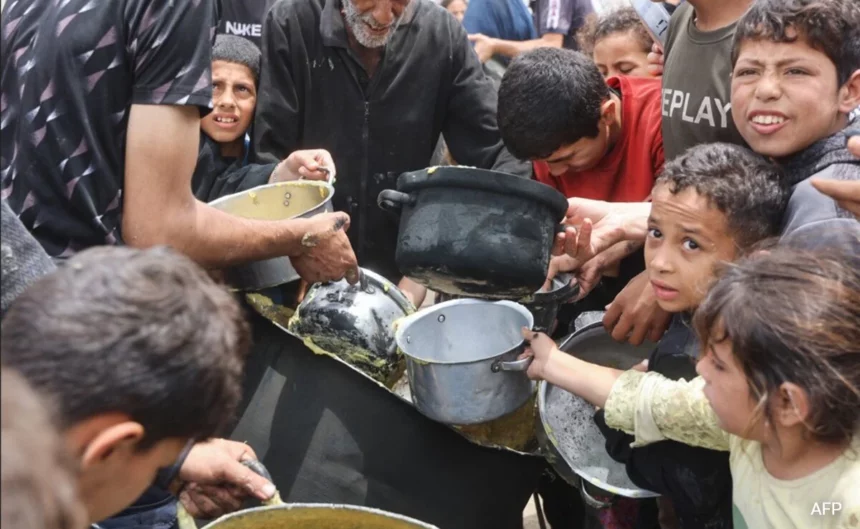
The humanitarian crisis in Gaza has reached a critical tipping point. If aid supplies do not enter the war-ravaged strip immediately, 14,000 babies are at imminent risk of death within the next 48 hours. This grim warning has intensified global concern over the dire conditions in Gaza, where the population—particularly children—has been reeling under relentless bombardment, starvation, and disease for months.
‘There are 14,000 babies that will die in the next 48 hours’
The crisis was brought into sharp focus by a top United Nations official who painted a harrowing picture of babies on the verge of death due to lack of food and medical supplies. He underlined that UN teams on the ground—despite facing constant dangers—are doing everything possible from medical centres and schools to assess the severity of the situation. However, they cannot operate without life-saving aid.
Only five trucks were reportedly allowed into Gaza on Monday, a number described by aid officials as a mere “drop in the ocean” compared to the actual need. These trucks, despite crossing the border, had not been able to reach the civilian population at the time of the statement, signalling a breakdown in last-mile delivery.
Domestic dissent rising in Israel
The situation has also stirred discomfort within Israel. A former senior military official and left-leaning political voice publicly criticised the ongoing operations in Gaza, warning that Israel risks becoming a “pariah state.” He questioned the morality of waging war against civilians and warned of the lasting consequences such actions could have on Israel’s global standing.
Drawing from Jewish history, he said that a nation that has suffered centuries of persecution must not become the oppressor, especially when innocent babies are involved.
The humanitarian blockade: How did it come to this?
Since the beginning of the war between Israel and Hamas in October 2023, humanitarian aid to Gaza has been under severe restriction. Israeli authorities argue that such measures are needed to prevent supplies from reaching Hamas, but the resulting impact on civilians has been devastating.
According to UN estimates, the Gaza Strip needs about 500 truckloads of humanitarian aid daily. However, since March 2, Israel has blocked all aid, including essential food and medicine. This full blockade has pushed Gaza’s population into what many are calling famine-like conditions.
A UN-linked food security assessment noted that over 93% of Gaza’s children—approximately 930,000—are at risk of famine. Local accounts suggest that starvation has become even more frightening than the bombings, with reports of children drawing pictures of food in the sand due to extreme hunger. The World Food Programme has previously estimated that 14,000 children in Gaza are suffering from severe acute malnutrition.
Situation spiralling out of control
The health system in Gaza, already on the verge of collapse, is overwhelmed. According to international health officials, the situation is deteriorating “exponentially” and may soon become “beyond control” if conditions persist. With nearly all hospitals non-functional and aid organisations severely hampered, there is little left to prevent a mass tragedy.
International outrage is mounting. While Israel claims it is taking steps to avoid a full-blown starvation crisis by allowing a limited quantity of food into Gaza, global powers are pushing back.
International pressure mounts, but aid still stuck
On May 19, under growing global pressure, Israel permitted the entry of a small quantity of aid. But critics say this is far from adequate. A joint statement by multiple Western countries condemned the restrictions as “wholly inadequate,” warning of “concrete actions” if humanitarian access does not improve.
Israel reportedly agreed to allow 100 aid trucks to enter Gaza, but ground reports suggest the aid has yet to be distributed. UN officials confirmed that dozens of supply trucks had cleared Israeli security but were held up on the Palestinian side, unable to reach those in desperate need.
Global consequences
The worsening situation has prompted some Western nations to take diplomatic action. One country suspended trade talks with Israel, summoned its ambassador, and imposed sanctions on individuals linked to settler violence in the West Bank.
The foreign minister of one of Israel’s key allies called the military campaign in Gaza “morally unjustifiable” and said the conflict had entered a “dark new phase.” Meanwhile, the country’s prime minister described the humanitarian crisis as “intolerable” and demanded faster and larger flows of aid into Gaza.
A race against time
As the international community calls for de-escalation and humanitarian relief, the situation on the ground remains desperate. Thousands of babies and children are teetering on the edge of death due to starvation, dehydration, and a collapsing health system.