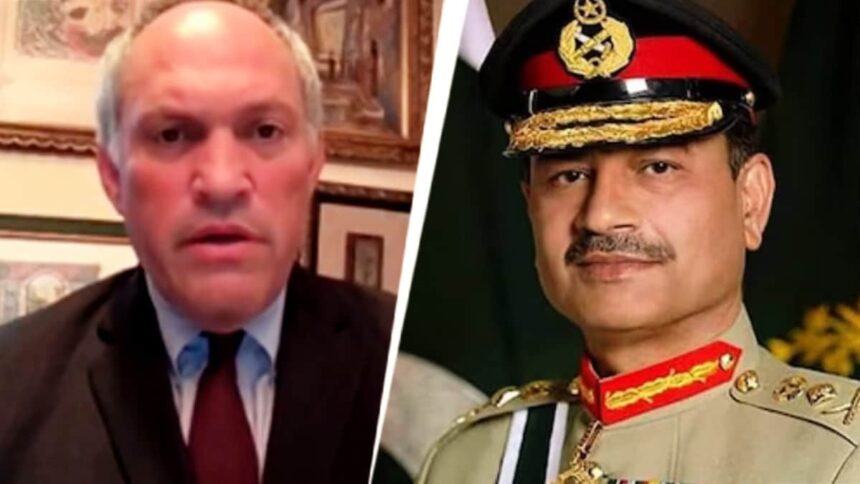
Michael Rubin, a former Pentagon official, delivered a blunt assessment of Pakistan’s recent conflict with India, stating that Pakistan suffered a severe defeat both on the battlefield and in international diplomacy. Michael Rubin highlighted that India’s precise military strikes and diplomatic efforts have shifted global attention onto Pakistan’s ongoing sponsorship of terrorism. According to him, Pakistan’s response was weak and reactionary, culminating in a desperate call for a ceasefire after key airbases were disabled by Indian forces. This analysis reflects the profound strategic blow Pakistan endured during the brief but intense military engagement following the Pahalgam terror attack.
Michael Rubin emphasized that India’s success was twofold: militarily, through well-executed precision strikes on terror infrastructure; and diplomatically, by effectively spotlighting Pakistan’s role in terrorism. The Indian military operation, dubbed Operation Sindoor, was launched on May 7, targeting terror camps and training centers linked to groups such as Jaish-e-Mohammed, Lashkar-e-Taiba, and Hizbul Mujahideen in Pakistan and Pakistan-occupied Kashmir. Over 100 terrorists were reported killed in these strikes. In retaliation, Pakistan responded with cross-border shelling and drone attacks along the Line of Control.
India’s Tactical Edge and Pakistan’s Military Setback
Michael Rubin noted that India successfully neutralized Pakistan’s air capabilities by targeting critical airfields at the Sargodha, Peshawar, and Chaklala airbases, effectively grounding Pakistan’s ability to retaliate from the air. This left Pakistan in a vulnerable position, forcing it to seek a ceasefire, which Michael Rubin described as Pakistan “running like a scared dog with its tail between its legs.” The targeting of these specific airbases not only crippled Pakistan’s immediate military response but also sent a strong message about India’s strategic superiority.
The Pentagon official also called attention to Pakistan’s blurred lines between terrorism and its military establishment. He pointed out that Pakistani officers attending terrorist funerals revealed the deep institutional connection between the country’s intelligence services (ISI), armed forces, and terrorist groups. Michael Rubin suggested this reality undermines Pakistan’s credibility on the global stage and underscored the urgent need for internal reform within Pakistan’s military and government.
Rubin further questioned the leadership of Pakistan Army Chief Gen. Asim Munir, highlighting internal dysfunction and the Pakistani military’s incompetence. He stressed that Pakistan must “clean house” to regain stability, but expressed skepticism about whether this is achievable given the current state of affairs.
The conflict, sparked by the deadly Pahalgam terror attack on April 22, left 26 dead and many injured, escalated into a four-day military exchange. India’s swift and precise response fundamentally altered the dynamics of the conflict, leaving Pakistan reeling both militarily and diplomatically. The escalation concluded on May 10 with an agreement for ceasefire across land, sea, and air, marking a pause in hostilities but leaving many strategic questions about Pakistan’s future posture unresolved.