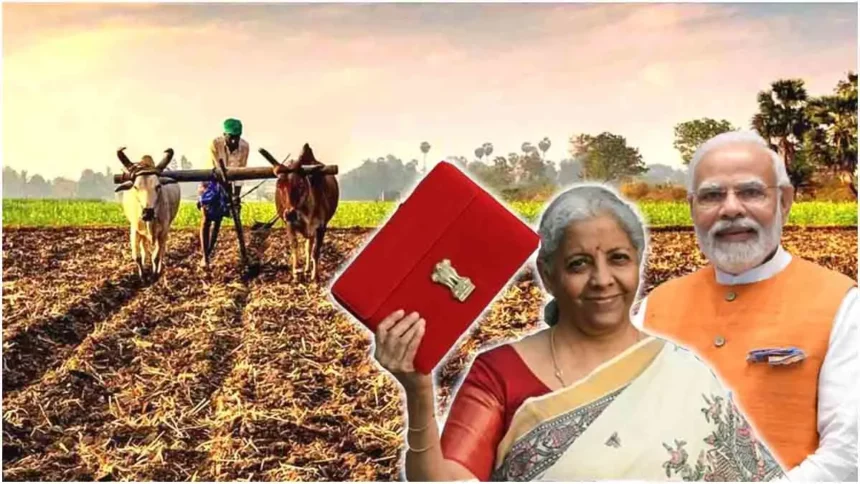
Union Finance Minister Nirmala Sitharaman has unveiled the PM Dhan Dhanya Krishi Yojana, a new initiative aimed at uplifting the agricultural sector and benefiting 1.7 crore farmers across India. The announcement was made on Saturday as part of the government’s broader vision to enhance rural livelihoods and boost agricultural productivity.
The scheme focuses on enhancing crop yield, promoting diversification in farming, strengthening post-harvest storage facilities at the panchayat and block levels, improving irrigation infrastructure, and ensuring better access to both short- and long-term agricultural credit. By addressing these critical areas, the government aims to make agriculture more sustainable and profitable for farmers.
While presenting the scheme, Sitharaman emphasized the importance of rural job creation, stating that the government envisions a future where migration to urban areas is a choice rather than a compulsion. With rising income levels and evolving consumption patterns, the demand for vegetables and fruits is increasing significantly across the country. To ensure self-sufficiency in food production, the Finance Minister announced a six-year mission dedicated to achieving self-reliance in pulses, which will help stabilize supply and reduce dependency on imports. A comprehensive program for boosting vegetable and fruit production is also in the pipeline.
In a major boost for farmers in Bihar, Sitharaman announced the establishment of a Makhana Board to provide institutional support and improve the production and marketing of makhana, a key agricultural product in the state. This initiative is expected to benefit thousands of farmers who are engaged in makhana cultivation, helping them secure better market prices and expand their reach.
Additionally, the Finance Minister revealed plans to strengthen fertilizer production by setting up a new urea plant in Assam. With an annual capacity of 12.7 lakh metric tonnes, the plant is expected to ensure a steady supply of urea to farmers, reducing dependency on imports and stabilizing fertilizer prices in the domestic market.
Sitharaman also highlighted ten broad focus areas in the budget aimed at improving the lives of farmers, youth, women, and the economically disadvantaged sections of society. The ongoing Budget Session of Parliament, which began on January 31, will continue in two phases—the first phase will conclude on February 13, while the second phase will commence on March 10 and conclude on April 4.
Amidst global economic uncertainties, the Economic Survey underlined the rising role of private consumption in maintaining India’s economic stability. The government’s proactive approach in supporting agriculture, rural development, and key sectors is expected to play a crucial role in fostering economic resilience.