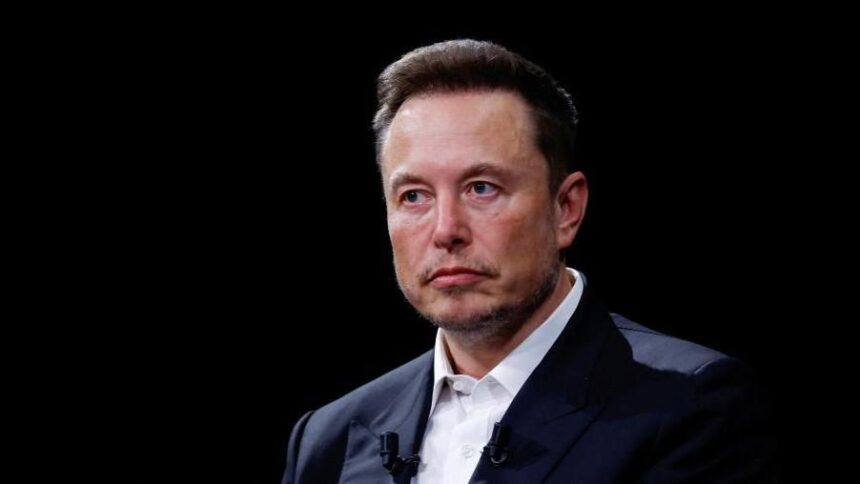
As the political landscape in the UK kicks off the new year, the presence of Elon Musk looms larger than ever, with his bold and often controversial statements taking center stage. Elon Musk, the world’s wealthiest man, has continued to make headlines with his sharp criticisms of Prime Minister Sir Keir Starmer and his involvement in the ongoing debates around child sexual exploitation and political accountability. In the past few days, Elon Musk’s remarks have been particularly biting, accusing Starmer of being “complicit in the rape of Britain” when he was Director of Public Prosecutions (DPP) by failing to act on the child sexual exploitation scandal.
Starmer, facing mounting pressure, has made it clear that he will not engage in a public altercation with Elon Musk, although sources close to him assert that he will vigorously defend his record as DPP. Starmer is also keen to highlight the importance of basing political debates on verifiable facts and dismisses Elon Musk’s claims as “blatantly untrue.” Defenders of the Prime Minister argue that local inquiries into abuse cases involving Pakistani men and the national inquiry led by Professor Alexis Jay should be taken into account when discussing his tenure.
The scandal surrounding child sexual exploitation continues to captivate public attention, and the government’s refusal to launch a public inquiry has sparked outrage from various political figures, including Elon Musk, the Conservative Party, and the Reform Party. Elon Musk’s criticisms of the government were compounded when, shortly after Reform leader Nigel Farage praised him as a “hero” for making the UK look “cool,” Elon Musk delivered a stinging rebuke, stating that Reform Party needed a new leader as Farage “doesn’t have what it takes.”
This sudden shift in Elon Musk’s stance has left Reform Party members in a difficult position, with some trying to spin the situation as an opportunity for Farage to demonstrate his independence and resistance to outside influence. However, the party had hoped for a substantial donation from Elon Musk, and now faces the fallout from his public rejection. Farage, having distanced himself from controversial far-right figures like Tommy Robinson, now finds himself at odds with Elon Musk, which has added an unexpected twist to the ongoing tension within the UK’s political sphere.
The focus now shifts to Kemi Badenoch, the Conservative leader, who has garnered some praise from Elon Musk for her calls for a public inquiry into child sexual abuse. Badenoch, seen by many as a rising star within her party, has positioned herself as a strong voice against what she sees as a broken political system. With the 2025 elections looming, Badenoch is poised to make her mark as she works to rebuild the Conservative Party and assert her leadership. However, her path is complicated by the presence of Nigel Farage, whose influence within the Reform Party continues to challenge her at every turn.
Badenoch recently found herself in a public spat with Farage over party membership numbers, with Badenoch dismissing Reform’s claim that it had surpassed the Tories in membership as “fake.” However, investigations by media outlets like the Financial Times found strong evidence to suggest that Reform’s figures were accurate, adding another layer to the ongoing rivalry between the two leaders.
As 2025 progresses, Badenoch is expected to unveil a series of Policy Commissions designed to guide the Conservative Party’s direction in the coming years. These commissions are expected to generate significant debate, especially as Badenoch and her rivals vie for attention within the party. The shadow justice secretary, Robert Jenrick, who previously contested the leadership against Badenoch, continues to make his presence felt, despite tensions within the Conservative ranks over his public comments and campaign-like rhetoric.
Meanwhile, Prime Minister Sir Keir Starmer faces the challenges of his first six months in office, navigating a difficult political environment both at home and abroad. Despite the internal and external pressures, Starmer’s team is focused on delivering tangible results, with a particular emphasis on reducing hospital waiting lists in England. Starmer is expected to continue engaging in smaller, focused events around the government’s key promises, opting for a more measured approach than his usual large-scale speeches.
As MPs return to their duties for the 2025 parliamentary year, it is clear that the political scene in the UK is already proving to be a dynamic and contentious battleground. With major figures like Elon Musk exerting significant influence over political discourse, and parties like Reform, Conservative, and Labour grappling with internal divisions, it promises to be a lively year ahead.