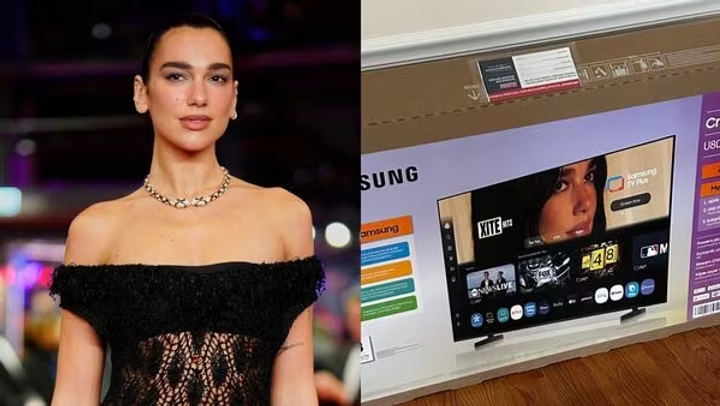
British pop sensation Dua Lipa has filed a major lawsuit against Samsung Electronics, accusing the global technology giant of illegally using her image to promote television sales without permission.
According to reports filed in a federal court in California, the singer is seeking at least $15 million, approximately ₹142 crore, in damages over alleged copyright, trademark and publicity rights violations.
The lawsuit claims Samsung used copyrighted photographs of Dua Lipa on the packaging boxes of its television sets sold in retail markets. The singer’s legal team alleges that the company prominently displayed her image on TV cartons in a manner that functioned as a commercial endorsement and marketing tool without obtaining official authorization.
The case has now become one of the biggest celebrity image rights disputes involving a global electronics company in recent years.
According to court filings cited in media reports, Dua Lipa’s lawyers argued that Samsung commercially benefited from the unauthorised use of her image because customers associated the singer with the product packaging, potentially influencing buying decisions.
The lawsuit also alleges that the use of her likeness created the false impression that she had either endorsed or partnered with Samsung’s television products.
The legal complaint was officially filed on Friday in a California federal court.
Apart from copyright infringement, the singer has also accused Samsung of trademark infringement and violation of publicity rights, which protect celebrities from unauthorised commercial exploitation of their identity, image and persona.
The controversy reportedly intensified after photos of Samsung TV boxes featuring Dua Lipa’s image began circulating widely across social media platforms.
Several online users reacted enthusiastically to the packaging design, with some even claiming they purchased or considered purchasing Samsung televisions after seeing the singer’s photograph on the boxes.
One social media user reportedly commented, “I wasn’t even planning on buying a TV but I saw the box so I decided to get it.”
Another user wrote, “I’d get that TV just because Dua is on it.”
The lawsuit argues that such public reactions demonstrate the commercial advantage Samsung allegedly gained by using the singer’s global popularity and public image.
Dua Lipa’s legal team further claimed that the singer became aware of the alleged unauthorised usage in June last year and formally demanded Samsung stop using her photographs.
However, according to the complaint, Samsung allegedly refused to discontinue the packaging design despite repeated legal notices and objections raised by the singer’s representatives.
The case now places renewed attention on celebrity image rights and intellectual property protections in international advertising and branding campaigns.
Entertainment law experts note that major global celebrities often earn enormous revenues through endorsement agreements, making unauthorised commercial use of their image financially and legally significant.
Under publicity rights laws in the United States, companies can face heavy penalties if they commercially exploit a celebrity’s likeness without explicit contractual permission.
The lawsuit could therefore become financially expensive for Samsung if the court finds that the company intentionally benefited from Dua Lipa’s global brand value without authorization.
Dua Lipa remains one of the world’s most commercially successful pop artists. The British Albanian singer has won multiple Grammy Awards and built a massive international fan following through hit songs, global tours and luxury brand collaborations.
Her strong social media influence and global popularity make her image highly valuable in advertising and consumer marketing industries.
Samsung has not yet publicly responded in detail to the allegations at the centre of the lawsuit.
The dispute also highlights growing tensions between celebrity branding rights and global corporate marketing strategies in the digital age, where packaging visuals and promotional content often spread rapidly online beyond traditional advertising channels.
Legal analysts believe the outcome of the case may influence future branding policies for multinational companies using celebrity inspired packaging or promotional imagery.