United States President Donald Trump’s recent warning to pro-Palestinian student protesters has sparked widespread legal and ethical concerns, with advocates arguing that it poses a threat to free speech and civil rights. In a statement issued last week, Donald Trump warned immigrant students who participated in the protests, threatening them with deportation and the cancellation of student visas. His remarks were directed specifically at those who took part in the pro-Palestinian demonstrations that took place throughout 2024, particularly targeting immigrants among the protesters. “To all the resident aliens who joined in the pro-jihadist protests, we put you on notice: come 2025, we will find you, and we will deport you,” Trump said, according to a White House fact sheet. He further vowed to cancel the student visas of all “Hamas sympathizers” and warned that university campuses, which he claimed had become “infested with radicalism,” would face swift consequences.
The remarks come amid a larger political and legal clash over the rights of student activists, particularly those involved in pro-Palestinian movements. The protests, which were in response to Israel’s military actions in Gaza, garnered significant attention for their widespread nature, peaceful demonstrations, and vocal opposition to Israel’s tactics. Thousands of students across the country rallied, set up encampments, and staged pickets to demand their universities divest from Israeli businesses and to express solidarity with Palestine. However, the backlash from Israel’s allies, including many pro-Israel activists and conservative figures, escalated, with accusations of anti-Semitism being levied against the protestors. Critics argued that these protests were in violation of American values and reflected poorly on universities that allowed such demonstrations.
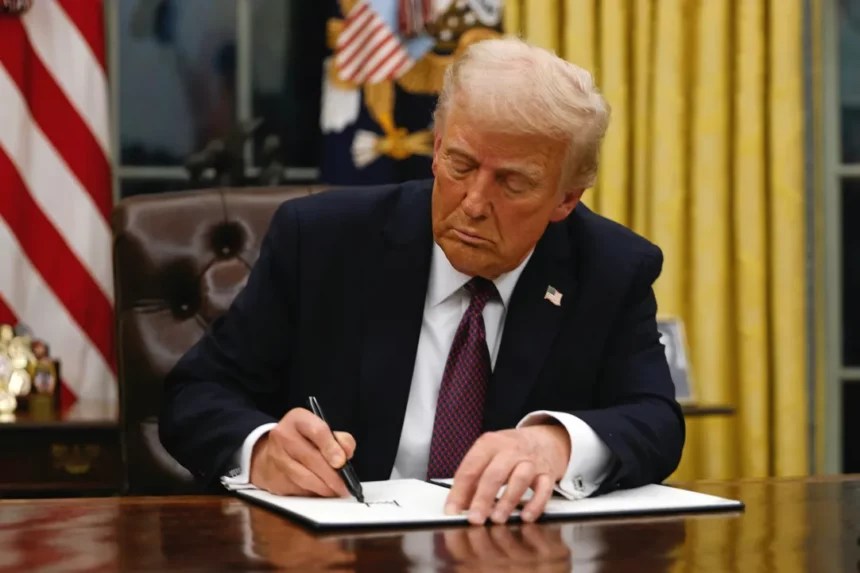
In response, the Trump administration introduced a new executive order on January 29, 2025, aimed at combating anti-Semitism in U.S. colleges and universities. The order directs federal agencies to take immediate action to prosecute and remove foreign students involved in anti-Semitic harassment and violence on campuses. It requires educational institutions to monitor and report activities by foreign students that might be related to anti-Semitic conduct, especially those that support Hamas or engage in protests related to the ongoing conflict in Gaza. The order is part of a broader crackdown on what the Donald Trump administration describes as an “explosion of anti-Semitism” on U.S. campuses, which it claims has been exacerbated by the conflict in Gaza.
Donald Trump’s rhetoric and the executive order have drawn severe criticism from free-speech advocates and legal experts. Critics argue that Donald Trump’s comments and actions violate the constitutional rights of students, particularly the First Amendment, which guarantees the right to free speech and assembly. Sarah McLaughlin, a scholar at the Foundation for Individual Rights and Expression (FIRE), expressed concerns about the legal complexities of deporting students for engaging in political speech that would otherwise be protected under U.S. law. “The legal questions about deporting students for speech that would otherwise be protected in the U.S. are complicated,” McLaughlin stated. “But the ethical question is clear: Do we want deportation to be a consequence for expressing political views disfavored by the White House?”
Many experts believe that Donald Trump’s actions could have broader implications for free speech in the United States, especially concerning foreign nationals. Carrie DeCell, a senior staff lawyer at the Knight First Amendment Institute at Columbia University, emphasized that the First Amendment protections apply to all individuals in the U.S., regardless of their citizenship status. “Deporting non-citizens on the basis of their political speech would be unconstitutional,” she explained. Such measures, they warn, could create a chilling effect, deterring vulnerable student protesters from speaking out for fear of losing their visas and being forced to leave the country. Critics further argue that this could silence dissent and erode the diversity of political expression on college campuses.
The legal ramifications of the executive order are expected to be significant, as it faces potential challenges in court. However, the political dimensions of the order are already clear, particularly as Donald Trump uses the issue to strengthen his stance among his political base. His rhetoric and the order are seen as part of a broader campaign to target political opposition and suppress dissent, not only among Palestinian rights activists but also among any foreign nationals critical of his administration. Dima Khalidi, director of Palestine Legal, condemned the order, calling it an authoritarian attempt to silence students and impose ideological conformity. “It’s the latest in a growing list of dangerous, authoritarian measures aimed at enforcing an ideological strangulation on schools by attempting to scare students into silence,” she said.
While the stated goal of combating anti-Semitism resonates with many, critics argue that the executive order risks exacerbating the very issues it aims to address. Ben Olinsky of the Center for American Progress criticized the Donald Trump administration for weaponizing anti-Semitism for political gain. “It does nothing to keep Jewish students or any other Americans safe from hate or prevent terrorism, which pose legitimate threats to America’s Jewish communities,” Olinsky remarked. He also questioned the sincerity of Donald Trump’s commitment to addressing anti-Semitism, pointing out that his actions seemed more focused on silencing opposition than tackling the rise of anti-Semitic incidents.
This order has also raised questions about the effectiveness of such measures in addressing campus tensions. Reports indicate a rise in anti-Muslim and anti-Palestinian hate alongside the surge in anti-Semitic incidents, but critics argue that the executive order largely ignores these other forms of discrimination. The Council on American-Islamic Relations (CAIR) denounced the order, calling it an attempt to smear the many Jewish, Muslim, and Palestinian students who protested the war in Gaza together. The group emphasized that the order does not address the full scope of hate and violence faced by students on U.S. campuses.
As the debate continues to unfold, questions remain about how the executive order will be implemented and whether it will result in more widespread censorship and repression on U.S. campuses. While the order’s stated purpose is to combat anti-Semitism, critics argue that it could deepen divisions, suppress political speech, and undermine the principles of free expression and academic freedom that are central to American higher education. Ultimately, the debate over Donald Trump’s executive order highlights the ongoing tension between national security concerns, free speech, and the right to protest in the United States.