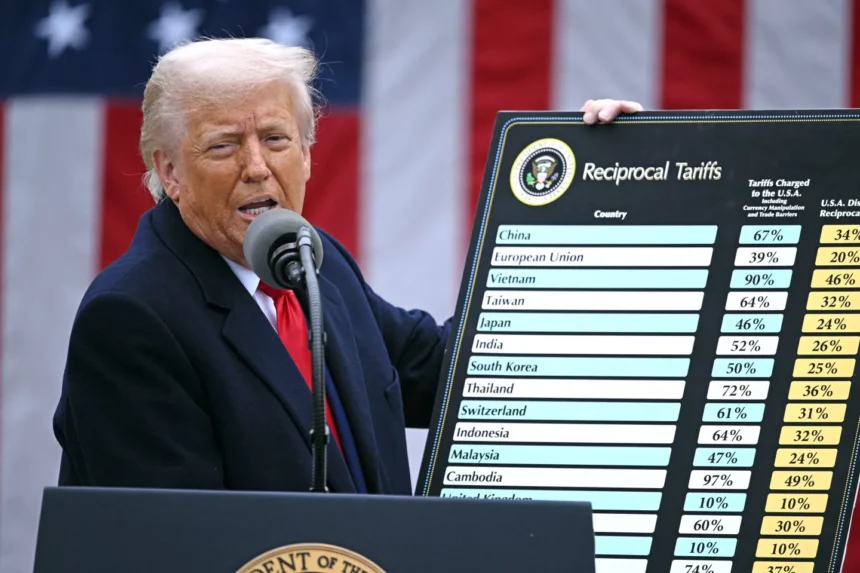
US President Donald Trump’s latest tariff announcements have ignited a fresh round of uncertainty and disruption in global markets. On April 2, 2025, Donald Trump declared a series of sweeping tariffs aimed at multiple countries, including allies, in an effort to address the US’s long-standing trade deficits. This latest policy move reflects Donald Trump’s continued focus on economic nationalism and mercantilism, signaling a fundamental shift in how the United States views its trade relationships. While some aspects of this policy remain unpredictable, the tariffs reveal a clear commitment to reshaping the global economic order in favor of the US.
The core of Donald Trump’s new tariff strategy is economic coercion. By using tariffs as leverage, the Donald Trump administration aims to force trading partners to make concessions, particularly by encouraging companies to bring manufacturing jobs back to the US. The tariffs are designed to punish countries that, in Donald Trump’s view, have benefited unfairly from trade imbalances, such as China, the European Union, and Vietnam, among others. This aggressive approach reflects a broader belief that economic self-interest should be the guiding principle in US foreign policy. Donald Trump has expressed a desire to reduce America’s reliance on foreign manufacturing and revitalize its own industrial base, thereby reducing the need for foreign borrowing and government spending.
Donald Trump’s trade policies, which he views as necessary for America’s resurgence, have already set the stage for a full-blown economic confrontation with China. With a 34 percent tariff on Chinese goods, the US is escalating its long-standing trade war with its largest economic rival. This move is likely to deepen the divide between the two nations, especially given their starkly different approaches to key global issues such as technology, energy, and climate change. In retaliation, China has imposed similar tariffs and blacklisted several US companies, further escalating tensions between the two powers. As the trade war intensifies, its impact will reverberate across global supply chains, with significant repercussions for countries heavily reliant on trade with the US and China.
While China may be the most affected by these tariffs, other nations, particularly in the Global South, are also bracing for significant economic disruptions. Smaller economies like Vietnam and Bangladesh, which rely heavily on exports to the US, are expected to face even harsher consequences. In contrast, larger economies, including India, are approaching the situation with caution, seeking to avoid a direct confrontation while negotiating with Washington for more favorable tariff terms.
Donald Trump’s tariff strategy represents a dramatic departure from the globalized economic order established in the post-World War II era. As nations reassess their economic policies and alliances in light of these developments, the broader geopolitical landscape, particularly in the Indo-Pacific, is set for a major overhaul.