Once considered a high diplomatic honour, an invitation to the Oval Office has started to look more like a political trap under US President Donald Trump. What unfolded during South African President Cyril Ramaphosa’s recent visit to Washington DC has reignited concerns about how world leaders are being treated on American soil — and whether the Oval Office is becoming a stage for ambush politics.
This wasn’t the first time it happened. In February, the world watched a fiery exchange between Donald Trump and Ukrainian President Volodymyr Zelenskyy, where tensions and accusations dominated the meeting. The latest incident with President Ramaphosa seems to follow a disturbing pattern.
Donald Trump vs Ramaphosa: A Meeting Turns Confrontation
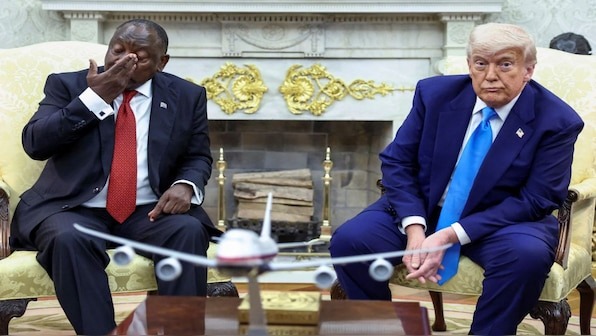
On May 21, President Ramaphosa sat down with Donald Trump for what was expected to be a diplomatic effort to ease tensions. But the meeting quickly escalated. Just 20 minutes in, the room darkened on Donald Trump’s orders and a screen lit up. The South African leader was caught off guard.
A video was played featuring South African opposition leaders singing controversial songs from the apartheid era. Drone footage of grave sites followed, and then Donald Trump pulled out clippings and reports about alleged killings of White South Africans. Repeating the phrase “death, death, horrible death,” Donald Trump pressed Ramaphosa for an explanation of what he referred to as a “White genocide.”
Ramaphosa, staying composed, clarified that such rhetoric does not reflect official government policy. He explained that South Africa’s constitution protects multiparty democracy and free speech, even for smaller parties that express controversial views. He emphasized that the government firmly opposes hate speech or violence.
Despite the clarification, Donald Trump continued pressing conspiracy theories. Even when South African businessman Johann Rupert stepped in to say that criminal violence affects all communities and is not targeted at White farmers alone, Donald Trump seemed unwilling to reconsider his stance. Ramaphosa even made a tongue-in-cheek reference to the US president’s acceptance of a jet from another government, saying, “I wish I had a plane to give you.” Trump responded, “I wish you did. I would take it.”
Ramaphosa also reminded Donald Trump that most victims of violent crime in South Africa are in fact Black South Africans, not Whites. But his calm and fact-based responses could not sway Donald Trump’s theatrics.
The Fallout: Mixed Global Reaction
Reactions to the Oval Office meeting were sharply divided. While Donald Trump’s supporters saw it as a bold stand, others viewed it as a provocation. Officials from South Africa later said Ramaphosa was clearly provoked but handled the situation with grace and restraint.
Civil rights advocates strongly criticised the spectacle, calling it a divisive performance built on misinformation. They accused Donald Trump of stoking racial tensions by promoting a narrative of victimhood for White South Africans, which has been widely debunked.
A former American diplomat to South Africa also condemned the meeting, calling it a shameful misuse of diplomacy and comparing the event to a political ambush rather than a bilateral meeting.
Donald Trump’s Pattern: The Zelenskyy Episode Revisited
The Ramaphosa incident wasn’t an isolated one. Just months ago, Donald Trump engaged in a confrontational session with Ukrainian President Volodymyr Zelenskyy. In that meeting, Donald Trump accused Zelenskyy of ingratitude for US aid and “gambling with World War Three.” Even Zelenskyy’s appearance — not wearing a suit — was publicly questioned.
The tension reached a point where the Ukrainian president cut his visit short and was removed from a scheduled luncheon. By contrast, Ramaphosa — an experienced negotiator who once worked alongside Nelson Mandela — remained calm throughout and even extended his visit, staying at the White House longer than Zelenskyy did.
A New Normal in Diplomacy?
These incidents suggest a shift in how foreign leaders are received in Washington under Donald Trump. Instead of careful diplomacy, visits are turning into public confrontations designed for domestic political gain. The Oval Office, once a symbol of mutual respect and diplomacy, is being transformed into a platform for scripted conflict.
The consequences of such tactics are significant. Not only do they risk diplomatic fallout, but they also send a message to the world that meetings with the US president may come with public humiliation or provocation. It may cause allies and global partners to think twice before accepting an invitation to Washington.
As Donald Trump continues his political campaign, questions remain: Are these confrontations part of a strategy to appeal to domestic voters? And if so, what does it mean for America’s standing on the global stage?
One thing is clear — diplomacy in the Donald Trump era is increasingly unpredictable, and for world leaders, a trip to the Oval Office is no longer just a photo opportunity. It’s a political test.