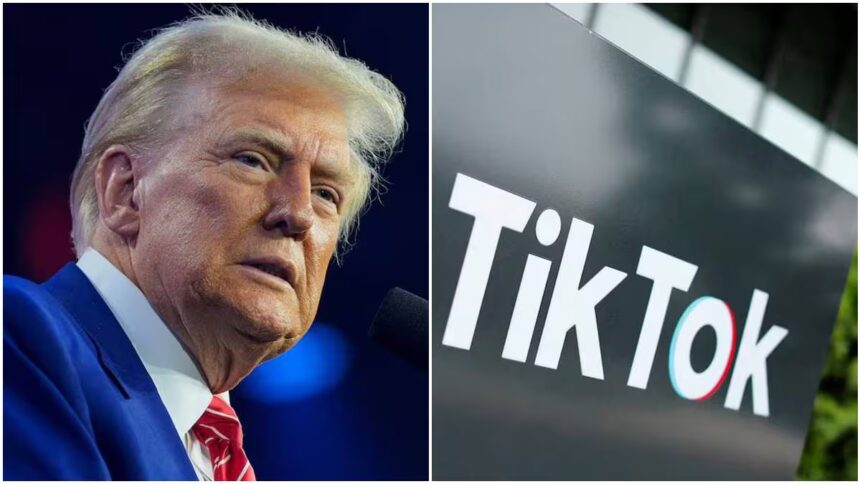
As the U.S. gears up for a potential federal ban on the popular social media app TikTok, the company, which has 170 million American users, is planning to shut down its U.S. operations this Sunday. The ban, set to take effect on January 19, would prohibit any new downloads of TikTok from app stores, such as Apple and Google, unless its Chinese parent company, ByteDance, sells the app’s U.S. operations. However, there could be a last-minute reprieve, as President-elect Donald Trump is reportedly considering an executive order that would suspend enforcement of the shutdown for 60 to 90 days, providing him additional time to explore a “political resolution” of the issue.
According to sources familiar with the situation, the Washington Post reported that the Donald Trump administration is exploring options to prevent TikTok’s shutdown, which is poised to affect millions of American users. The decision to ban TikTok stems from national security concerns regarding its Chinese parent company, ByteDance, and its potential access to the vast amounts of data TikTok collects from U.S. users. The law passed in April mandates that ByteDance must divest TikTok’s U.S. operations by January 19, or the app will be banned in the country. While the ban would prevent new downloads, existing users could still theoretically use TikTok, but U.S. companies would be prohibited from providing services that support its distribution, maintenance, or updates.
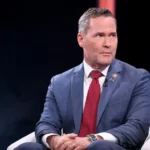
Donald Trump’s transition team has not yet publicly commented on the matter. However, Mike Waltz, Donald Trump’s incoming national security adviser, expressed his support for TikTok during a Fox News interview, calling it a “fantastic platform.” He indicated that the administration would find a way to “preserve it but protect people’s data.” Despite this, it remains unclear how the Donald Trump administration would go about legally suspending the ban.
Meanwhile, outgoing President Joe Biden has made it clear that he will not intervene to stop the ban in the event that the Supreme Court does not block the law. Biden’s administration also emphasized that it is legally unable to intervene unless ByteDance presents a credible plan to divest TikTok’s U.S. assets. In a recent development, U.S. Senator Ed Markey sought unanimous consent from Congress to extend the deadline for ByteDance to divest TikTok by an additional 270 days. However, the proposal was blocked by Republican Senator Tom Cotton, who is opposed to further delays.
In preparation for the potential ban, TikTok has outlined a plan to shut down its U.S. operations. The company intends to display a pop-up message to users when they attempt to open the app, directing them to a website with information about the ban. Additionally, TikTok is offering users the option to download their personal data before the shutdown. TikTok’s lawyer, Noel Francisco, recently informed the U.S. Supreme Court that the company would “go dark” if the ban is enforced, essentially rendering the platform inoperable for U.S. users.
The U.S. Supreme Court is currently deliberating on whether to uphold the law and allow the ban to take effect on Sunday, whether to overturn the law, or whether to pause the law to allow for more time to make a final decision. If the law is upheld, the shutdown of TikTok in the U.S. could have far-reaching consequences for users in other countries as well. According to TikTok, shutting down its U.S. operations would likely impact service providers around the world, as hundreds of U.S.-based companies help maintain the platform for users globally. TikTok warned that the shutdown could make the app unusable for users in many countries, given the interconnectedness of its infrastructure.
In response to the potential ban, TikTok argued that a court order is necessary to “avoid interruption of services for tens of millions of TikTok users outside the United States.” The company also highlighted that the prohibitions would severely hinder its ability to function, noting that data centers may be unable to store TikTok’s code, content, or data.
If the ban is eventually overturned, TikTok would be able to quickly restore its services for U.S. users. The shutdown plan has been designed to protect TikTok’s service providers from legal liability while allowing for a quick recovery of services if the ban is reversed. TikTok’s Chinese parent company, ByteDance, and its U.S. operations have yet to publicly comment on the ongoing legal proceedings.
The ongoing legal battle over TikTok’s future in the U.S. is part of a broader geopolitical struggle between the U.S. and China over technological dominance and data security. TikTok and ByteDance have argued that the law mandating the divestment of TikTok’s U.S. assets violates the First Amendment of the U.S. Constitution, which protects free speech. TikTok has also expressed concerns that the ban could lead to the app becoming unusable for one-third of its 170 million American users.
As the legal proceedings continue, all eyes remain on the U.S. Supreme Court, which will ultimately decide whether the ban on TikTok will proceed, or whether the app will be allowed to remain operational in the U.S. for the time being. The outcome will have significant implications for TikTok, ByteDance, and millions of American users who rely on the platform for entertainment, communication, and business.