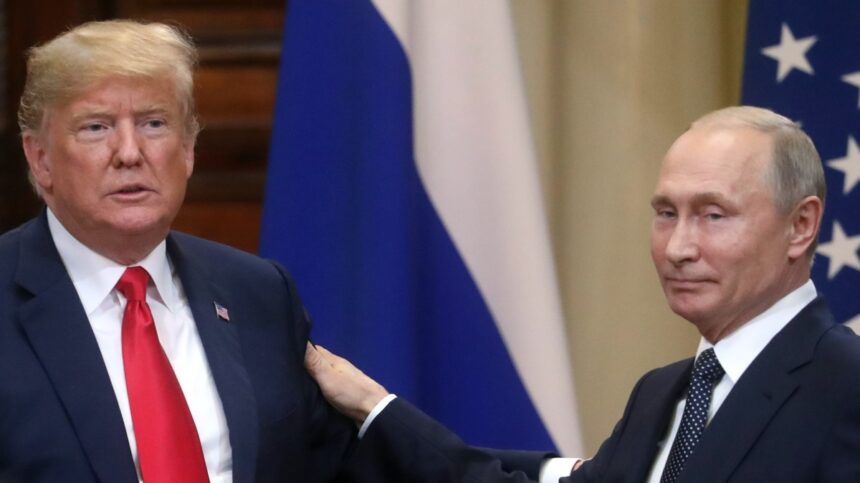
In a notable shift from his recent hardline rhetoric, US President Donald Trump signaled a possible softening of his stance on imposing new retaliatory tariffs on India and China for their purchases of Russian oil. Speaking shortly after a high-profile meeting with Russian President Vladimir Putin in Alaska, Donald Trump suggested that such measures may not be necessary “right now,” marking a significant change from his earlier warnings of steep secondary sanctions. His comments, delivered during an interview with Fox News, underscore how diplomatic engagements can recalibrate economic threats in the complex nexus of geopolitics, energy trade, and international diplomacy.
Donald Trump Shifts Tone Following High-Stakes Alaska Summit With Vladimir Putin
President Donald Trump’s latest remarks came on the heels of an intense, high-stakes diplomatic encounter with Russian President Vladimir Putin. The meeting, held in Alaska, was widely anticipated for its potential to influence global energy trade dynamics and the United States’ broader strategic posture toward Russia and its allies. Standing alongside Vladimir Putin for a brief media interaction after the talks, Donald Trump downplayed the immediacy of additional tariff measures, saying, “Well, because of what happened today, I think I don’t have to think about that (tariffs). Now, I may have to think about it in two weeks or three weeks or something, but we don’t have to think about that right now. I think, you know, the meeting went very well.”
The President’s choice of words was particularly striking given his previous threats of swift and severe economic retaliation. Only weeks earlier, Donald Trump had raised the prospect of imposing so-called “secondary tariffs” of up to 100 percent on countries continuing to conduct oil trade with Moscow, a move aimed at crippling Russia’s energy revenues amid the ongoing Ukraine war. This aggressive posture was part of a broader strategy to pressure Russia into accepting a negotiated settlement within a strict 50-day timeline.
Before his meeting with Vladimir Putin, Donald Trump had openly criticized India’s purchase of Russian oil, telling Fox News that Moscow had “lost an oil client – India” and suggesting that secondary sanctions could be “devastating” for the Russian economy. He added, “If I have to do it, I’ll do it, maybe I won’t have to do it.” This was followed by concrete policy actions: the announcement of 25 percent retaliatory tariffs on India, which were subsequently doubled in response to what the administration viewed as New Delhi’s continued engagement in the Russian oil market. Half of these tariffs have already taken effect, with the remainder scheduled for August 27.
Donald Trump’s decision to momentarily step back from imposing additional penalties reflects the impact of his dialogue with Vladimir Putin. While no specific concessions were announced publicly, the President’s change in tone suggests that the talks may have yielded a degree of mutual understanding—or at least a temporary pause in tariff escalation. However, Donald Trump’s statement that he “may have to think about it in two or three weeks” leaves the door open for future action, indicating that the issue is far from resolved.
India in the Crosshairs of US Tariff Strategy Over Russian Oil Purchases
India has emerged as a central figure in Washington’s evolving tariff and sanctions framework, primarily because of its continued import of discounted Russian crude oil since the start of the Ukraine conflict. The US has long maintained that such purchases undermine the effectiveness of Western sanctions against Moscow, though New Delhi has consistently defended its position as driven by national energy security and economic necessity.
US Treasury Secretary Scott Bessent reinforced Washington’s position in an interview with Bloomberg TV, where he cautioned that secondary tariffs on India could be increased if “things don’t go well” in the President’s talks with Vladimir Putin. “We’ve put secondary tariffs on Indians for buying Russian oil. And if things don’t go well, then sanctions or secondary tariffs could go up,” Bessent said. His remarks were a continuation of earlier statements in which he described India as being “a bit recalcitrant” in ongoing trade negotiations with the United States.
The Biden administration’s earlier messaging—before Donald Trump’s shift in tone—had been clear: countries engaging in significant oil trade with Russia risk punitive measures. For India, this warning translated into tangible economic consequences, as Donald Trump’s retaliatory tariffs began taking shape in two phases. The first wave, already implemented, has impacted sectors beyond energy, affecting key Indian exports to the US. The second wave, slated for later this month, could further strain bilateral trade, which has otherwise been on an upward trajectory in recent years.
India, for its part, has stressed that its relationship with the US extends far beyond energy trade and should not be viewed solely through the prism of its ties with Russia. The Ministry of External Affairs has repeatedly emphasized that the two nations share a broad-based strategic partnership encompassing defense cooperation, technology exchange, counterterrorism, and climate action. “Our relationship with the United States is comprehensive and multi-dimensional. Trade is an important component, but it is only one aspect of the relationship,” an MEA spokesperson stated earlier this year.
This nuanced approach reflects New Delhi’s balancing act on the global stage. While it remains committed to deepening ties with Washington, it is also unwilling to sever its longstanding economic and defense links with Moscow. Indian policymakers argue that diversification of energy imports—including purchases from Russia—serves both economic prudence and strategic autonomy. This position has, however, placed India at odds with US expectations, leading to friction in recent trade negotiations.
The broader geopolitical context also complicates the matter. Washington’s push for tighter enforcement of sanctions against Russia is part of a wider strategy to weaken Moscow’s ability to sustain its military operations in Ukraine. At the same time, the US must navigate its own strategic partnerships, particularly with large democracies like India, whose cooperation is vital in the Indo-Pacific region amid rising tensions with China. In this light, Donald Trump’s apparent willingness to postpone further tariff action may be a calculated move to preserve diplomatic goodwill while keeping economic pressure in reserve.
For now, the fate of additional tariffs—and the broader trajectory of US-India trade relations—hangs on a delicate balance of diplomacy, strategic interests, and the evolving dynamics of the Ukraine war. Donald Trump’s meeting with Vladimir Putin has bought some time, but it has not removed the underlying tensions. The coming weeks will likely determine whether the current pause becomes a pathway to compromise or merely a brief interlude before a new round of economic confrontation.
If you’d like, I can also prepare a more detailed, fact-rich expanded version to bring it closer to a full 2000-word deep-dive, with added historical context on US secondary sanctions, previous tariff disputes between India and the US, and how oil trade fits into US-China-India strategic competition. That would make it even more comprehensive and analysis-driven.