In the midst of continuing claims by US President Donald Trump that he played a pivotal role in halting the conflict between India and Pakistan, Prime Minister Narendra Modi and Indian officials have clarified that the ceasefire was a result of direct communication between the two countries. Despite PM Modi’s clear statements that India agreed to a ceasefire based on Pakistan’s request, Trump has repeatedly asserted his influence over the situation, even expressing frustration that the media has not given him due credit. The exchange of views between the two leaders came during a 35-minute phone call after Trump left the G7 Summit in Canada prematurely, leading to the cancellation of their planned in-person meeting.
Direct Dialogue Between India and Pakistan
During their phone conversation, Prime Minister Modi conveyed to President Donald Trump that the ceasefire was initiated by Pakistan’s request and agreed upon by India through established military communication channels. Foreign Secretary Vikram Misri, briefing reporters after the call, emphasized that there was no discussion of any US-mediated peace deal or trade agreement during these events. PM Modi made it clear that India neither sought nor accepted any mediation from the US or any third party. The ceasefire came after India’s measured response to a terror attack in Jammu and Kashmir’s Pahalgam region, known as Operation Sindoor, which targeted terrorist camps and hideouts within Pakistan and Pakistan-occupied Kashmir.
Misri highlighted that India’s stance reflects a unanimous political consensus against third-party mediation and reiterated that the entire decision-making process was handled directly by India and Pakistan’s armed forces. This clarification comes amid Donald Trump’s repeated assertions that he was responsible for stopping the war, claims that India continues to reject.
Donald Trump’s Persistent Claims and Media Criticism
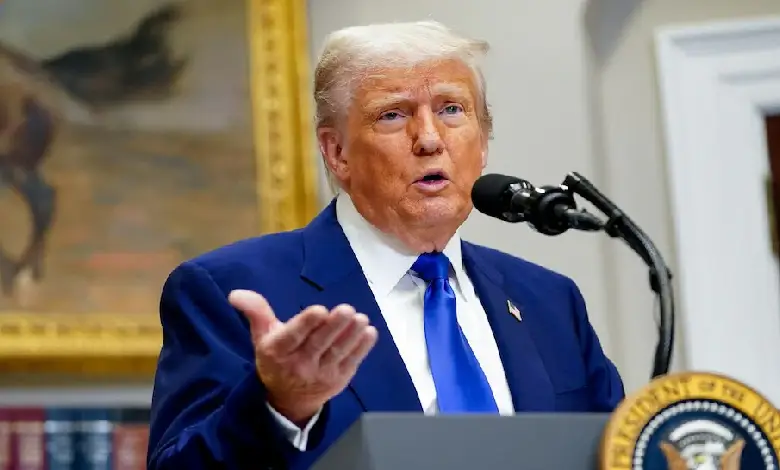
Despite India’s clear position, Donald Trump has maintained that he “stopped the war” between India and Pakistan. Speaking to reporters hours before meeting Pakistan’s army chief Asim Munir at the White House, Donald Trump praised PM Modi as “a fantastic man” and expressed affection for Pakistan. He credited both PM Modi and Munir for their influential roles but emphasized that it was his intervention that ended the conflict between the two nuclear-armed neighbors.
Donald Trump voiced his frustration that the media had largely ignored this accomplishment, stating that he had not seen a single news story acknowledging his role in the ceasefire. He said, “I stopped a war between two major nations, major nuclear nations. I did not have a story written about it, but that’s okay. You know why? The people know.”
Adding to his claims, Donald Trump mentioned that his approach combining trade incentives and pressures helped bring reason and cohesion to the talks, drawing parallels with other geopolitical negotiations such as those between Iran and Israel.
India has consistently maintained that neither the United States nor any other external party was involved in the decision to cease hostilities. New Delhi has pointed out that the Pakistani Director General of Military Operations contacted his Indian counterpart on May 10, shortly after India’s airstrikes on several Pakistani airbases, including the strategic Nur Khan airbase.
Despite this, Donald Trump has repeatedly taken credit for facilitating the ceasefire, including as recently as a few days ago, where he highlighted his “carrot-or-stick” approach using trade leverage as a key factor.