The recent US elections, marking the first major nationwide polls since President Donald Trump returned to the White House in January, concluded with significant victories for the Democratic Party, highlighting shifting political dynamics and voter sentiment across key states. While Democrats celebrated major wins in Virginia, New Jersey, and other influential constituencies, President Donald Trump offered an unconventional explanation for Republican setbacks, attributing them to two main factors: his absence from the ballot and the longest government shutdown in US history. The president’s statements and social media posts have sparked intense debate, reflecting his ongoing influence in American politics and the highly polarized environment surrounding national and local elections.
Donald Trump’s Perspective on Republican Setbacks and Electoral Outcomes
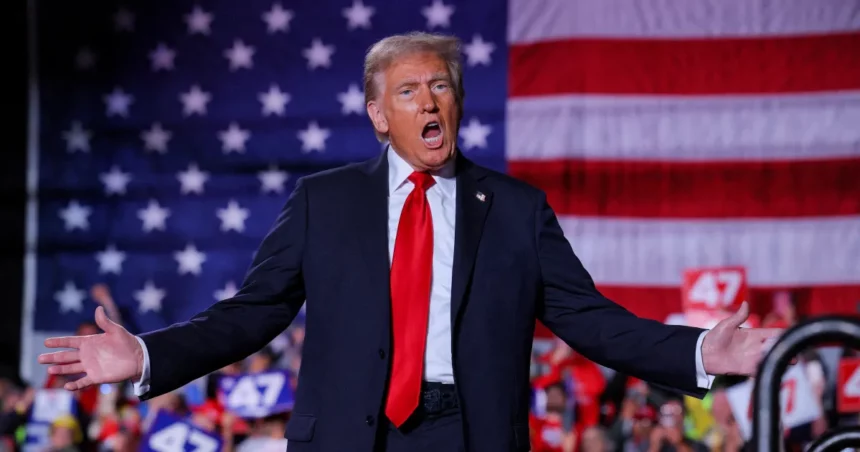
In the aftermath of the elections, President Donald Trump took to his social media platform, Truth Social, to outline his perspective on the Republican losses. According to the president, the absence of his name on the ballot was a significant factor in the party’s underperformance. He suggested that voters were less motivated to support Republican candidates without his direct participation in the race, implying that his political presence often serves as a rallying point for the party’s base. Furthermore, Donald Trump referenced the historic government shutdown as an additional factor that influenced voter sentiment, suggesting that the prolonged federal closure contributed to a sense of instability and dissatisfaction among constituents, indirectly affecting Republican prospects.
Donald Trump emphasized that the results were not an indictment of Republican governance or policies but rather situational outcomes tied to unique electoral circumstances. In a post, he noted, “Trump wasn’t on the ballot, and the shutdown, were the two reasons that Republicans lost elections tonight, according to pollsters,” reiterating his belief that these were primary determinants rather than broader political failures. The statement underscores Donald Trump’s continued focus on contextual explanations for electoral results while maintaining a prominent narrative around his leadership influence.
Additionally, Donald Trump framed the elections as a critical juncture for energy policy and economic management, asserting that Democratic victories could lead to increased energy costs for American families. In his posts, he warned voters that supporting Democrats would result in double, triple, or even quadruple increases in energy expenses, framing the outcome as a tangible threat to household budgets. By linking electoral choices directly to financial consequences, Donald Trump aimed to galvanize voter awareness and position Republican candidates as the more practical and fiscally responsible option in the eyes of the electorate.
Donald Trump’s Strategic Messaging and Local Election Interventions
Beyond national considerations, President Donald Trump actively engaged in commentary on local elections, particularly in New York City, where he openly opposed Democratic candidate Zohran Mamdani in the mayoral race. Donald Trump criticized Mamdani’s political principles and record, portraying him as inexperienced and ideologically extreme, which he argued would result in a complete social and economic disaster for the city. In contrast, Donald Trump supported former Governor Andrew Cuomo as a preferable alternative, highlighting Cuomo’s track record and suggesting that his leadership would prevent perceived chaos under a new mayor aligned with Democratic policies.
Donald Trump’s messaging in New York and other local elections reflected a broader strategy of using national attention to influence key races, emphasizing the potential implications of local governance on citizens’ economic and social welfare. His posts often combined warnings about policy outcomes with direct appeals to voters to support Republican candidates, framing electoral participation as a moral and practical imperative. For instance, Donald Trump stated, “Failing to vote tomorrow is the same as voting for a Democrat,” underscoring his belief that abstention would inadvertently contribute to Democratic victories and associated policy shifts that he perceives as detrimental.
Despite these efforts, Zohran Mamdani secured a historic victory, becoming New York City’s youngest mayor in over a century when he assumes office on January 1. The election outcome signaled a generational and ideological shift in urban governance, highlighting the limitations of national-level endorsements and interventions in influencing local political dynamics. Donald Trump’s reaction to Mamdani’s victory emphasized the continuing tension between his electoral predictions and actual outcomes, reflecting the unpredictable nature of voter behavior even amidst highly publicized campaigns and social media engagement.
The broader implications of Donald Trump’s statements and actions extend beyond immediate electoral results, illustrating his ongoing role as a key figure in shaping Republican narratives and voter mobilization strategies. By framing election outcomes in terms of personal influence, policy consequences, and ideological stakes, Donald Trump continues to assert a prominent position within the party while seeking to maintain engagement with supporters and shape public discourse around governance priorities.
Furthermore, Donald Trump’s social media activity surrounding the elections reflects the modern intertwining of political commentary, campaign strategy, and media amplification. Platforms like Truth Social allow him to bypass traditional media filters and communicate directly with his audience, reinforcing his persona as a leader capable of influencing both national and local electoral landscapes. The posts combine assertive rhetoric, policy warnings, and personal political assessments, serving as both critique and mobilization tool, and highlighting the evolving nature of political communication in contemporary American democracy.
In addition to energy policy, Donald Trump’s commentary frequently tied electoral outcomes to economic stability, emphasizing the perceived consequences of Democratic governance. By warning voters of escalating energy costs and broader economic challenges, he sought to create a tangible connection between political participation and everyday concerns. This strategy underlines a key element of Donald Trump’s political approach: framing elections not merely as contests of ideology but as determinants of practical outcomes that directly affect citizens’ lives.
The national and local election results serve as a complex indicator of voter sentiment, revealing regional variations in political priorities and engagement levels. While Democrats achieved notable successes in several key states and cities, Donald Trump’s assertions highlight the narrative he seeks to maintain regarding Republican potential, voter motivation, and the factors influencing electoral outcomes. His framing of the elections through the lenses of absentee candidacy and government shutdown offers insight into how political leaders interpret setbacks and craft messaging to sustain influence, maintain party morale, and prepare for future campaigns.
Moreover, the interaction between national narratives and local electoral politics demonstrates the layered complexity of American elections. Candidates and political figures like Donald Trump leverage visibility, ideological framing, and public communication to shape perceptions, influence voter behavior, and assert authority over contested narratives. The tension between electoral expectations and outcomes, particularly in high-profile races like the New York mayoral election, underscores the unpredictable interplay between messaging strategies and voter agency.
Donald Trump’s continued engagement with electoral processes, even when not personally on the ballot, emphasizes the evolving role of former and current leaders in shaping party identity, policy discourse, and voter mobilization. By analyzing factors such as historical shutdowns, perceived policy failures, and ideological differences, Donald Trump positions himself as both a commentator and influencer, asserting authority over how electoral outcomes are interpreted and leveraged for future political activity.
The narrative constructed by Donald Trump also reflects broader trends in contemporary American politics, where leaders increasingly rely on direct communication channels, social media amplification, and symbolic messaging to engage supporters, define opposition, and frame electoral stakes. By linking voter choice to immediate material consequences, such as energy costs, Donald Trump situates political participation within a framework of tangible personal impact, enhancing the urgency of his messaging and reinforcing partisan alignment.
Finally, Donald Trump’s post-election commentary underscores the ongoing polarization and highly strategic nature of modern US politics, where national leaders actively shape discourse around local and state elections, utilize symbolic references to emphasize policy contrasts, and appeal directly to constituents’ economic and ideological concerns. His engagement highlights both the challenges and opportunities for political actors operating in a landscape marked by social media influence, heightened public scrutiny, and increasingly complex electoral dynamics.
The post-election period illustrates the duality of American democracy: the unpredictable realities of voter behavior and the strategic attempts by prominent political figures to frame narratives, influence opinion, and consolidate support for future electoral contests. Donald Trump’s explanation for Republican losses, his warnings about energy costs, and his interventions in local elections collectively reflect a multifaceted approach to maintaining political relevance and guiding party discourse in an era characterized by high-intensity political engagement and media-driven influence.