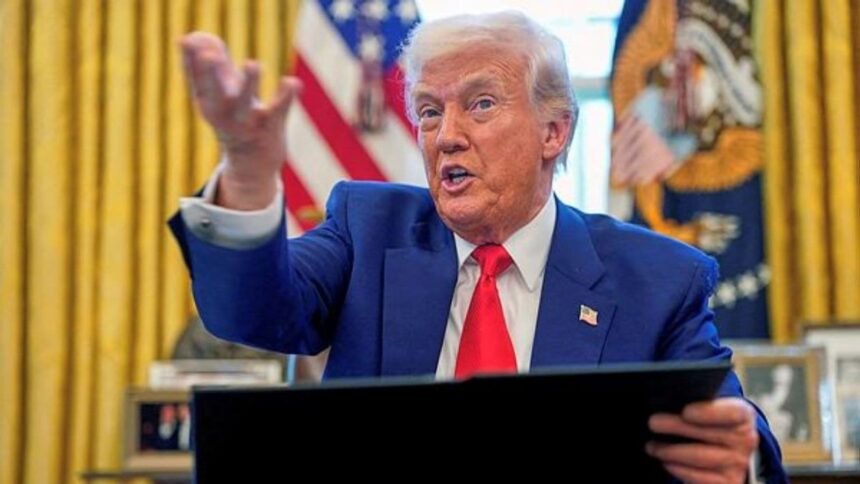
US President Donald Trump on Monday announced a 90-day postponement in the planned increase of tariffs on Chinese goods, just hours before the existing trade truce between Washington and Beijing was due to expire. The announcement marks a significant policy shift in the escalating trade war that has seen both nations impose crippling tariffs on each other’s imports, disrupting global supply chains and raising economic concerns worldwide.
Donald Trump shared the news on his social media platform, Truth Social, writing, “I have just signed an Executive Order that will extend the Tariff Suspension on China for another 90 days.” This extension will last until November 10 and signals a temporary easing of the trade tensions that have defined much of the US-China economic relationship this year.
Background and Timeline of US-China Trade War
The trade conflict between the US and China has escalated rapidly since early 2025, with both countries imposing multiple rounds of tariffs on billions of dollars worth of each other’s goods. The conflict initially began with US concerns over trade imbalances and the flow of fentanyl from China into the United States.
On January 21, shortly after taking office, Donald Trump threatened to impose a 10% tariff on Chinese imports, citing the fentanyl crisis. In early February, the US imposed 0% tariffs on Chinese goods but simultaneously levied 25% tariffs on imports from Mexico and Canada, demanding those countries curb illegal immigration and drug trafficking.
China responded swiftly on February 4 with retaliatory measures targeting US companies, including major firms like Google and agricultural exporters. Beijing also introduced tariffs on US coal, LNG, crude oil, and some automobiles, alongside restrictions on critical metal exports used in defense and clean energy industries.
The tit-for-tat tariffs intensified in March when the US doubled fentanyl-related tariffs on Chinese imports from 10% to 20%, and China retaliated by imposing 10-15% tariffs on about $21 billion worth of US agricultural exports. Additional export and investment restrictions were also put in place by China, targeting 25 US firms.
April saw the trade war reach new heights as Donald Trump announced sweeping tariffs across all Chinese imports, setting a baseline of 10%, with some goods facing significantly higher duties. By April 8, tariffs on all Chinese goods rose to 84%, with China mirroring the increase the following day. Shortly thereafter, the US further escalated tariffs to 125%, with China retaliating similarly and issuing warnings to its citizens against traveling to the US.
The trade hostilities disrupted not only goods movement but also affected areas such as film imports and technology sectors, with China restricting Hollywood films and the US limiting semiconductor and aviation exports.
Amid mounting economic pressures, both sides agreed in May to a 90-day truce that temporarily scaled back tariffs — US tariffs on Chinese goods dropped to 30% from 145%, and Chinese tariffs on US goods fell to 10% from 125%. This truce was expected to ease tensions and pave the way for more constructive trade negotiations.
Despite this agreement, diplomatic tensions lingered, with the US revoking visas of Chinese students and restricting exports of sensitive technologies to China later that month. High-level talks continued through June and July, including phone calls between Donald Trump and Chinese President Xi Jinping and further trade discussions in London and Stockholm.
In early August, the US began issuing licenses for certain high-tech exports, such as Nvidia’s H20 chips, signaling tentative progress in technology trade relations. The latest announcement of a 90-day extension to the tariff suspension on August 11 reinforces the ongoing efforts to stabilize the economic relationship between the two countries.
Reasons Behind the Tariff Pause and Future Outlook
In the executive order published on the White House website, the administration reiterated concerns about “large and persistent annual US goods trade deficits” with China, which are described as “an unusual and extraordinary threat to the national security and economy of the United States.” The order emphasized the need for continued engagement with Beijing to address what the US calls “lack of trade reciprocity” in the bilateral relationship.
The extension of the tariff suspension reflects recognition of the progress China has made toward addressing some US trade complaints, although many issues remain unresolved. By pausing tariff hikes, the Donald Trump administration aims to maintain pressure on China while avoiding further economic disruptions that could harm American businesses and consumers.
Critics argue that the escalating tariffs have led to higher costs for consumers and strained relationships with key trading partners. They warn that continued tit-for-tat tariffs risk deepening economic decoupling and increasing global market instability. Supporters, however, contend that such measures are necessary to counter China’s unfair trade practices, protect intellectual property, and reduce America’s trade deficit.
The extended truce buys both sides time to negotiate more sustainable solutions but leaves many fundamental disagreements intact. As the November 10 deadline approaches, observers will closely watch whether the US and China can translate dialogue into concrete agreements or if tariff tensions will flare up again.
The trade war has broader implications beyond economics, touching on geopolitical competition, technology leadership, and global supply chain security. The current pause is a critical moment in this ongoing struggle for influence and economic power between the world’s two largest economies.