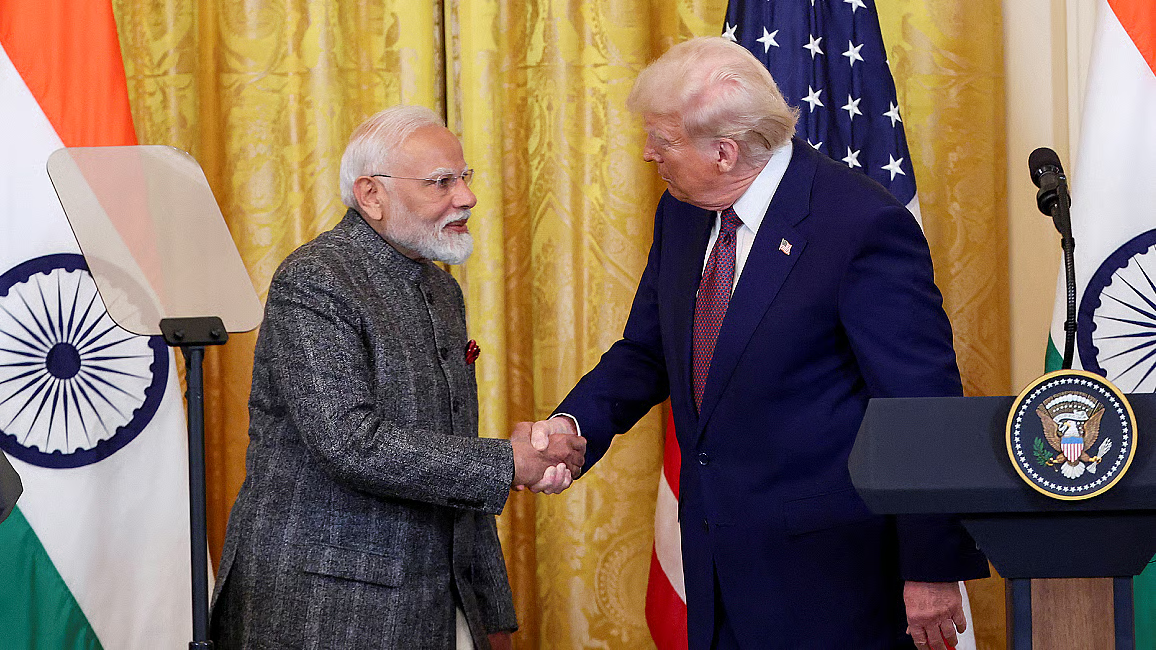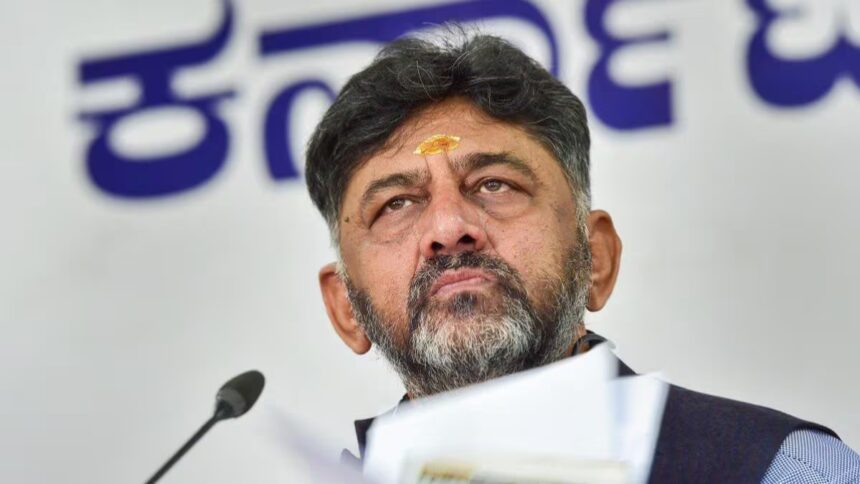
Karnataka Deputy Chief Minister DK Shivakumar created a stir in the state Assembly when he recited the RSS anthem during his speech, an action that has instantly become the center of political discussions and social media discourse. The video, which shows Shivakumar standing in the Assembly and singing “Namaste Sada Vatsale Matribhume,” has gone viral, raising eyebrows due to the historical ideological opposition between his party, the Congress, and the Rashtriya Swayamsevak Sangh (RSS), known as the ideological foundation of the ruling BJP. This unprecedented move comes days after Shivakumar had publicly countered Prime Minister Narendra Modi’s praise for the RSS during his Independence Day address from the Red Fort, asserting the Congress party’s historic contribution to India’s freedom and governance. The incident has reignited debates over political strategy, historical narratives, and the complex dynamics of personal beliefs versus party ideology in contemporary Indian politics.
Shivakumar’s recital, described by many as spontaneous, has left both the Assembly and political observers questioning the motivations behind a senior Congress leader singing an anthem of an organization traditionally viewed as an ideological opponent. In his remarks, Shivakumar clarified that his actions were rooted in research and understanding of the political landscape, particularly the manner in which the RSS operates in Karnataka. The debate now spans multiple dimensions, including ideological positioning, electoral strategy, and the personal versus political choices of influential leaders, highlighting how symbolic acts in political spaces can carry far-reaching implications.
Understanding the Assembly Incident and Shivakumar’s Perspective
The incident unfolded during a routine discussion in the Karnataka Assembly when Shivakumar, responding to the opposition, highlighted his extensive knowledge of political dynamics, even if he was not “groomed” in the opposition’s political machinery. He emphasized that his insights were based on detailed research into political organizations, including the RSS, which he described as actively building institutions across schools and districts in Karnataka. Shivakumar’s intent, as he explained, was to understand the opposition’s influence on younger generations and to inform his political strategy, asserting that leaders must be aware of both friends and opponents in the political arena.
BJP’s Leader of Opposition in the Karnataka Assembly, R. Ashoka, attempted to turn the narrative into a moment of mockery by recalling Shivakumar’s past admission of attending an RSS shakha in Bengaluru’s Rajajinagar area as a child. Without hesitation, Shivakumar turned the moment into a powerful statement, singing the opening lines of the RSS anthem. The recitation, which took place in a formal legislative setting, was met with immediate silence and astonishment from fellow legislators, reflecting the shock and intrigue at a Congress leader publicly engaging with a symbol of ideological opposition.
Following the recitation, Shivakumar elaborated on the political rationale behind his actions. He emphasized that as a senior leader, it was necessary to understand the structure, influence, and operational methods of other political and ideological organizations in order to navigate Karnataka’s complex political landscape effectively. He clarified that his actions were not an endorsement of RSS ideology but a demonstration of informed political awareness, asserting that Congress’s identity and principles remained intact. Shivakumar highlighted his commitment to leading the Congress in Karnataka while maintaining a clear understanding of the opposition, positioning himself as a pragmatic and strategically aware leader.
The political and symbolic significance of this act has been widely analyzed. While the Congress has historically opposed the RSS, Shivakumar’s recital has been interpreted by some as an attempt to engage with broader narratives of nationalism and institutional influence in Karnataka. Observers note that the moment serves multiple purposes: it underscores Shivakumar’s awareness of the political ecosystem, reinforces his image as a leader capable of nuanced understanding, and sparks public discourse around the intersection of personal belief, political strategy, and party ideology.
Political Reactions and BJP’s Critique
The video of Shivakumar singing the RSS anthem quickly drew reactions from various political quarters, particularly the BJP. BJP leaders criticized the Congress for what they termed contradictory behavior, highlighting the irony of a senior Congress leader publicly acknowledging symbols of an organization the party has historically opposed. BJP strategist Pradeep Bhandari commented on social media that Congress leaders, including Shivakumar, seemed to be altering their stance on the RSS following Prime Minister Modi’s Independence Day remarks, creating a perception of inconsistency and opportunism. Bhandari’s comments emphasized that internal dynamics within the Congress were being scrutinized and that the episode might have implications for public perception of the party’s ideological coherence.
Beyond the immediate political jabs, the incident has sparked broader discussions on how political leaders engage with ideological narratives that traditionally belong to rival parties. Analysts suggest that Shivakumar’s actions are part of a wider trend where politicians adopt symbolic gestures to demonstrate awareness, flexibility, and strategic thinking in a highly competitive political environment. The recitation of the RSS anthem, while superficially contradictory to Congress ideology, may be interpreted as an attempt to navigate public perceptions, highlight political knowledge, and signal readiness to engage with diverse viewpoints and influences within Karnataka’s sociopolitical landscape.
Shivakumar himself has addressed the broader implications of his actions, clarifying that his primary motivation was research-driven understanding of political organizations and their influence on communities, schools, and youth. He emphasized that being a leader requires not only ideological adherence but also comprehensive awareness of how rival institutions operate. He stated that his research encompassed the methods, finances, and outreach strategies of the RSS in Karnataka, which he used to inform policy decisions, campaign strategies, and legislative interventions. By presenting this context, Shivakumar framed his recitation as a demonstration of informed leadership rather than ideological alignment.
The BJP, while seizing the opportunity to criticize, has also had to acknowledge the skillful and spontaneous nature of the recitation. Observers note that such moments, while politically charged, underscore the performative and symbolic aspects of legislative proceedings, where leaders can leverage gestures, speeches, and cultural symbols to convey political narratives, assert authority, and engage both colleagues and the public in strategic messaging.
DK Shivakumar’s Position on RSS and National Narratives
DK Shivakumar’s engagement with the RSS anthem also follows his recent response to Prime Minister Modi’s praise for the organization during his Independence Day address. While Modi lauded the RSS for its contributions to the nation, Shivakumar emphasized Congress’s historical legacy and protection of constitutional values. He pointed out that the RSS did not hoist the national flag for an extended period and credited the Congress party and leaders like Atal Bihari Vajpayee for efforts in promoting national unity and symbolism. Shivakumar’s remarks positioned the Congress as a defender of the country’s democratic and constitutional framework while acknowledging that ideological differences with the RSS remain fundamental.
This nuanced approach reflects a balance between critique, historical context, and strategic messaging. By recognizing the organizational role of the RSS in Karnataka while asserting Congress’s ideological and historical credentials, Shivakumar navigates a complex terrain of public perception, party politics, and legislative conduct. The Assembly incident, therefore, is not merely a singular moment but part of a broader strategy to assert leadership, demonstrate political acumen, and engage with competing narratives in the state’s political discourse.
Additionally, Shivakumar’s actions can be contextualized within his personal and political journey. Earlier in the year, he attended a Mahashivaratri event organized by Sadhguru, which was also attended by Union Home Minister Amit Shah. While this event invited internal criticism within the Congress, Shivakumar defended his attendance as an expression of personal belief rather than political alignment. This pattern of engaging with diverse cultural and ideological contexts suggests a pragmatic approach to public life, where leaders navigate personal convictions, public expectations, and political strategy concurrently.
By reciting the RSS anthem, Shivakumar demonstrated an awareness of both historical and contemporary political realities, illustrating the layered and complex interplay between ideology, strategy, and leadership. Observers suggest that this act may have multiple implications, including reinforcing his image as a politically informed leader, signaling awareness of institutional influence, and demonstrating the capacity to engage with rival narratives while maintaining ideological clarity.
The Assembly episode has also provoked commentary from media, political analysts, and social media users, reflecting a high level of public interest in symbolic gestures within Indian politics. The viral nature of the video underscores the importance of performative acts in shaping political narratives, influencing public opinion, and creating opportunities for strategic messaging. Analysts argue that such moments provide insight into the personality, leadership style, and political awareness of senior leaders, revealing how public performances can intersect with legislative duties, party ideology, and broader social discourse.
Shivakumar’s careful positioning—acknowledging the RSS’s organizational role, defending his historical and personal research, and asserting Congress’s ideological identity—demonstrates the nuanced communication strategies required in contemporary Indian politics. The incident highlights how political leaders leverage historical knowledge, research, and symbolic actions to navigate complex electoral and ideological landscapes, asserting authority and reinforcing public perception of competence and strategic insight.
Overall, the recitation of the RSS anthem by DK Shivakumar in the Karnataka Assembly, coupled with his broader statements on ideological research and party history, has sparked wide-ranging political debate. It has provided the BJP with a rhetorical opportunity to critique the Congress while simultaneously highlighting Shivakumar’s political dexterity and the symbolic power of legislative gestures. The episode illustrates the intersection of ideology, strategy, and public performance in Indian politics, emphasizing how symbolic acts can carry substantial political weight and influence public discourse.