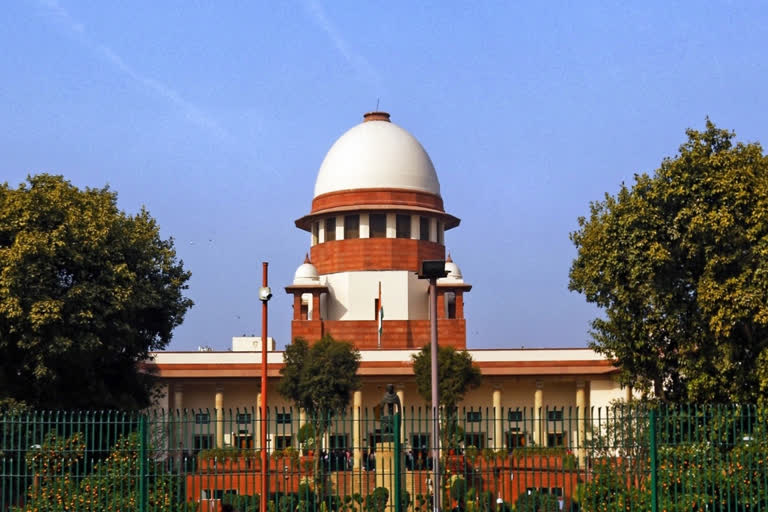
In response to a strong reprimand from the Supreme Court, the Delhi Police has informed the apex court that it will file six appeals challenging acquittals in cases related to the 1984 anti-Sikh riots. This development comes just a week after the top court directed the police to pursue these appeals with seriousness rather than as a mere formality. The Supreme Court had earlier expressed its displeasure over the delays in filing these appeals and emphasized the need for a meticulous approach in addressing cases from one of the darkest chapters in India’s history.
Appearing before a bench comprising Justices A S Oka and Ujjal Bhuyan, Additional Solicitor General (ASG) Aishwarya Bhati confirmed that a decision had been taken to move ahead with the appeals. She informed the court that eight appeals had already been filed before the Delhi High Court and that Special Leave Petitions (SLPs) challenging acquittals in two of these cases had already been presented before the Supreme Court. The remaining six cases, she assured, would soon be followed up with similar appeals.
Taking note of the submission, the Supreme Court directed the Delhi Police to ensure that the proposed SLPs are filed within a maximum period of six weeks from the date of the hearing. Additionally, the court mandated that these SLPs be presented before the Chief Justice of India for necessary directions, including their possible tagging along with the present writ petition. This directive underscores the urgency and gravity with which the court expects the authorities to handle cases pertaining to the 1984 anti-Sikh riots, a tragic episode that led to the killing of thousands of Sikhs in the aftermath of then Prime Minister Indira Gandhi’s assassination.
The case was being heard in connection with a Public Interest Litigation (PIL) filed by S Gurlad Singh Kahlon, a former member of the Shiromani Gurdwara Parbandhak Committee (SGPC). It was on Kahlon’s plea that the Supreme Court, in 2018, constituted a Special Investigation Team (SIT) to revisit 199 cases that had been previously closed without due investigation. The SIT, led by former Delhi High Court judge Justice S N Dhingra, later presented a damning report, highlighting systemic lapses by the police and administration during the riots. The report asserted that law enforcement authorities had been complicit in hushing up criminal cases related to the large-scale violence, instead of ensuring justice for the victims and their families.
Senior Advocate H S Phoolka, representing the petitioner, strongly contended before the court that there had been a concerted effort to cover up the crimes committed during the riots. He argued that the state had failed in its duty by not prosecuting cases with the required diligence and seriousness, resulting in unjustified acquittals. His assertions found resonance with the observations made by the Supreme Court in its previous hearings, where it had pointed to the deficiencies in investigations and the prolonged delays in seeking legal remedies.
The 1984 anti-Sikh riots remain a deeply sensitive and significant chapter in India’s legal and political history. The riots, which followed the assassination of Indira Gandhi by her Sikh bodyguards, saw brutal and widespread violence against the Sikh community, particularly in Delhi. Several commissions and committees have examined the events over the years, but justice has remained elusive for many victims and their families. Despite multiple probes and trials, there has been persistent criticism regarding the slow pace of justice and the reluctance of authorities to prosecute high-profile individuals allegedly involved in orchestrating the violence.
With the Supreme Court’s latest directive, there is renewed focus on ensuring that cases related to the riots are pursued with due diligence. The court’s firm stance signals a clear intent to hold law enforcement agencies accountable for lapses in handling these cases. The direction to expedite the filing of SLPs reflects the judiciary’s growing impatience with procedural delays and its resolve to address historical injustices.
As the Delhi Police moves forward with its appeals, all eyes will be on how the legal process unfolds and whether it brings long-overdue justice to the victims and their families. The Supreme Court’s scrutiny over these matters underscores the importance of ensuring that past atrocities are neither forgotten nor overlooked in the pursuit of a just legal system.