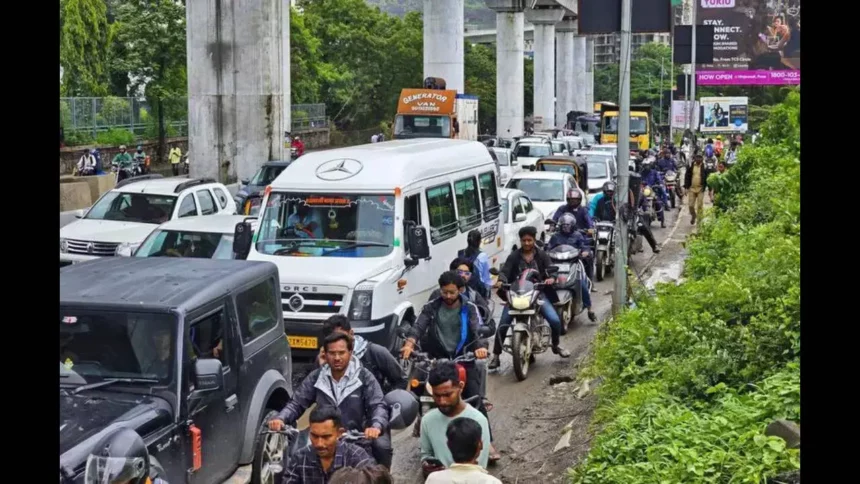
In a bold move to tackle Delhi’s chronic traffic congestion, the city government has unveiled plans for a Rs 6,000 crore elevated corridor over the capital’s 55-kilometre-long Inner Ring Road. This corridor, designed as a premium, toll-based route, aims to provide signal-free, high-speed travel for commuters while alleviating the burden on one of Delhi’s busiest traffic arteries, which is currently overwhelmed by the city’s surging vehicle population and infrastructure limitations.
Project Design and Revenue Model
The proposed elevated corridor will rise above the existing Inner Ring Road, offering a dual-layered traffic solution to separate local and through traffic, easing congestion and reducing travel times for those willing to pay a toll for the premium route. The project, currently in its planning stages, will be implemented under a toll-based revenue model to minimise the financial burden on the government while ensuring sustainable maintenance and operational efficiency.
According to officials, the Public Works Department (PWD) has been directed to initiate the appointment of a consultant to prepare a Detailed Project Report (DPR), which will assess the technical feasibility and outline strategies for traffic diversion to minimise disruption during the construction phase. The corridor is projected to cost between Rs 5,500 crore and Rs 6,000 crore, averaging around Rs 100 crore per kilometre, in line with the cost benchmarks of recent elevated infrastructure projects across urban India.
Addressing a Growing Urban Challenge
The Inner Ring Road, initially planned as a peripheral bypass to divert traffic from central Delhi, now faces the pressure of the National Capital Region’s population boom, with over 30 million residents and vehicle registrations in the capital crossing 1.4 crore, as per data from the Delhi Transport Department. Designed for a much smaller urban footprint, the Inner Ring Road today is riddled with signalised intersections, unregulated access points, and service lanes that often turn into illegal parking spots, leading to persistent bottlenecks across its stretch.
A 2024 survey by the Delhi Traffic Police identified 12 of the city’s worst congestion hotspots along the Inner and Outer Ring Roads, including critical junctions like Ashram, Dhaula Kuan, Moolchand, and ITO, where daily traffic snarls result in significant delays and loss of productive time for commuters.
The elevated corridor, when completed, is expected to extend up to 80 kilometres, factoring in loops, ramps, interchanges, and connectors, enabling seamless integration with the existing road network to eliminate conflict points that often lead to traffic jams. The Delhi government sees the project as a significant infrastructure upgrade aligned with its broader vision to modernise the capital’s road network and reduce the time lost in traffic, improving the quality of life for millions of daily commuters.
As the government pushes forward with what is set to be Delhi’s most ambitious intra-city road infrastructure project in recent years, residents and commuters are observing the developments closely, balancing their hopes for smoother travel with concerns about whether the project will genuinely untangle Delhi’s notorious traffic gridlocks or simply relocate them above ground.