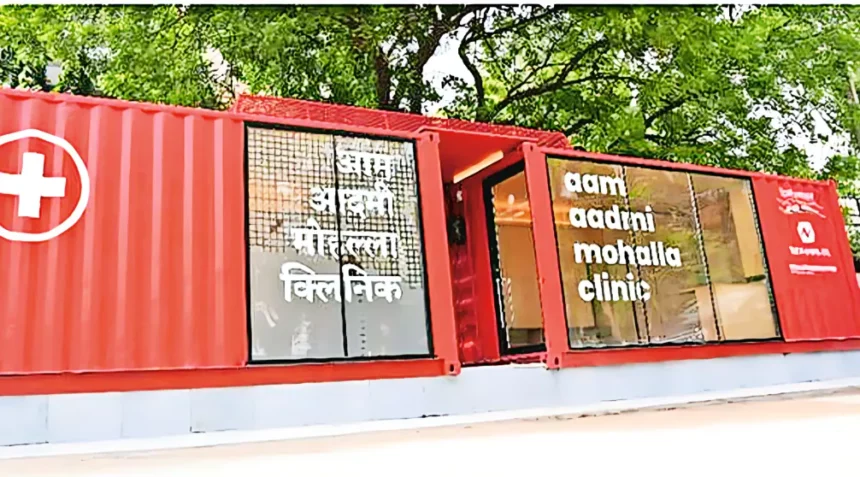
Delhi’s Health Minister Pankaj Singh announced on Thursday that around 250 mohalla clinics across the city would be shut immediately as part of the current government’s 100-day plan to overhaul Delhi’s healthcare infrastructure. This move is part of a broader effort to address alleged issues surrounding the functioning of these clinics, which were initially set up under the Aam Aadmi Party (AAP) government in 2015.
Pankaj Singh, addressing the media at the Delhi Secretariat, strongly criticized the mohalla clinics, labeling them as a source of fraud. He claimed that the clinics existed only on paper and were located on rented land, with the rental expenses being misused. “These clinics were never meant for serving the public and have only become a fraud avenue,” he said, referring to the closure order for these 250 clinics. The decision has sparked controversy, as mohalla clinics had been seen as a significant part of the AAP government’s healthcare model.
The AAP, which did not respond to requests for comment, had launched the mohalla clinics in October 2015 with the aim of providing accessible healthcare services at the grassroots level. As of August 2023, there were 533 such clinics operating in Delhi. While the future of the remaining mohalla clinics remains uncertain, Pankaj Singh hinted at revamping these facilities, potentially renaming them to “Ayushman Arogya Mandir” and enhancing the services provided. However, he refrained from providing specifics during the briefing.
As part of the 100-day health infrastructure plan, Pankaj Singh also highlighted the government’s efforts to accelerate the implementation of the Ayushman Bharat scheme in Delhi. He revealed that the Delhi government was in the process of signing a Memorandum of Understanding (MoU) with the central government to implement the scheme, with enrolment expected to begin after March 8. This program is designed to expand access to healthcare for citizens by providing free health insurance.
Further, Pankaj Singh announced the launch of 10 “Dental Vans” to provide dental services in Delhi’s rural areas, aiming to improve access to dental care. He also outlined plans to streamline the management of government hospitals, stating that each medical superintendent (MS) would be responsible for only one hospital, with transfers occurring every three years.
Addressing concerns about maternity care, Pankaj Singh emphasized the government’s focus on building dedicated maternity centers, as a significant portion of childbirths in Delhi still occur outside of hospitals. The aim is to ensure that all deliveries take place within hospital facilities, eliminating the need for outside deliveries.