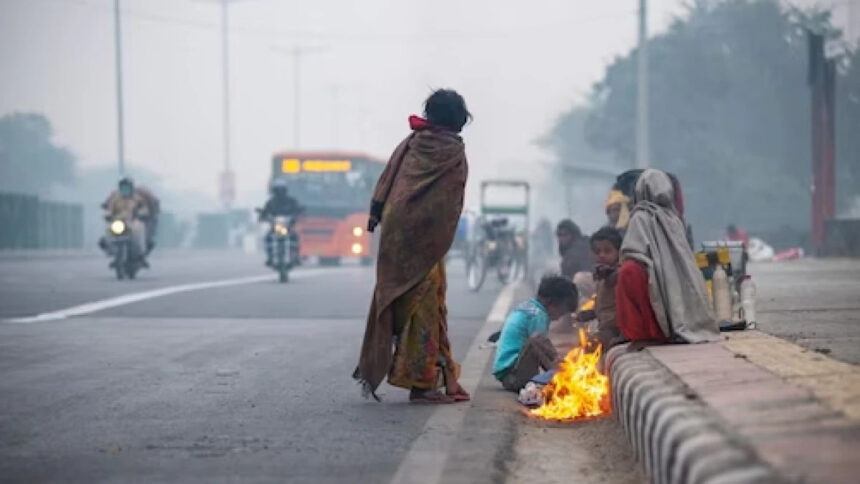
Delhi continues to battle alarming air pollution levels as its air quality remains in the “very poor” category, coinciding with the city recording its lowest minimum temperature for November since 2022. The India Meteorological Department (IMD) reported that the minimum temperature on Wednesday settled around 8°C, three degrees below the seasonal average, emphasizing the harsh onset of winter in the national capital. Cold northwesterly winds are expected to persist, further stabilizing the chilly conditions across the region. Delhiites are now witnessing a combination of cold weather and deteriorating air quality, both factors raising serious public health concerns and highlighting the persistent challenge of pollution management in urban India. The city recorded an air quality index (AQI) of 333 in the morning, categorizing it as “very poor,” while meteorologists indicate that these conditions may continue for several more days.
Extended Period of Poor Air Quality and Historical Context
Delhi’s air quality has remained in the “very poor” range for 21 consecutive days, marking a continuation of a long-standing pattern of extreme pollution during late autumn and early winter. This streak matches the previous year’s record of 21 consecutive days with AQI levels of 300 or higher, observed between November 2 and 22, 2022. Historical data indicates that prolonged periods of very poor air quality are a recurring phenomenon in the city, influenced by meteorological and environmental conditions unique to this season. Cold, stagnant air coupled with reduced wind speeds allows particulate matter and pollutants to accumulate near the surface, exacerbating health risks. While last year saw a longer stretch of 32 consecutive days with AQI above 300, including a peak of 494 (severe) on November 18, this year’s persistent high pollution levels are already raising red flags among health and environmental experts. Other prolonged events include a 23-day streak between December 2018 and January 2019, further illustrating the recurring nature of pollution crises in Delhi during colder months.
Meteorological conditions this season have contributed significantly to the current situation. Cold northwesterly winds, combined with low nighttime temperatures, create conditions that trap particulate matter close to the ground. According to the IMD, the minimum temperature of 8°C on Wednesday is the lowest recorded for November since 2022, when temperatures dipped to 7.3°C. The previous days also recorded below-normal temperatures, with Tuesday at 9°C and Monday at 9.3°C. The combination of low temperatures, calm winds, and pollutant accumulation has made air quality management a critical challenge, as atmospheric dispersion remains minimal.
Health Implications and Forecast for Coming Days
Persistent exposure to very poor air quality poses serious health risks, particularly for vulnerable populations such as children, the elderly, and individuals with respiratory or cardiovascular conditions. AQI levels in the “very poor” range can trigger symptoms including coughing, throat irritation, difficulty in breathing, and exacerbation of chronic diseases. Experts urge residents to limit outdoor activity, use air purifiers indoors, and wear protective masks when necessary. The public health dimension of prolonged pollution is further complicated by the approaching winter season, during which respiratory infections tend to rise, increasing the combined health burden on the city.
The outlook for the coming days remains concerning. The Air Quality Early Warning System for Delhi has indicated that from November 26 to 28, air quality is likely to remain in the “very poor” category, with subsequent days potentially seeing AQI levels fluctuate between “very poor” and “severe.” The city is expected to remain on track for its second-longest stretch of continuous high pollution days if current trends continue. This forecast highlights the need for urgent policy interventions, such as temporary emission control measures, stricter industrial regulations, and increased monitoring of vehicular emissions to mitigate the ongoing crisis.
Historical trends emphasize that Delhi’s air quality deterioration is not an isolated event but part of a cyclical pattern exacerbated by specific climatic and anthropogenic factors. Cold winds from the northwest, low temperature inversion layers, agricultural stubble burning in neighboring states, and increasing vehicular emissions all converge to create episodes of prolonged poor air quality. The accumulation of particulate matter and other pollutants is amplified during nighttime and early morning hours, creating a high-risk period for residents. While brief periods of higher wind speeds can improve dispersion, meteorologists indicate that such reprieves are expected to be temporary, with prevailing conditions likely to maintain the city in a “very poor” AQI range for several days.
Public awareness campaigns and governmental advisories have emphasized the importance of protective measures and minimizing exposure. Despite these efforts, the persistence of very poor air quality highlights structural challenges in managing urban pollution. Long-term solutions are tied to policy reforms, including improving public transport, reducing reliance on private vehicles, enforcing industrial emission norms, and coordinating with neighboring states to manage crop residue burning. The current crisis underscores the urgent need for sustainable solutions, as repeated episodes of poor air quality not only threaten health but also impact productivity, quality of life, and overall urban resilience.
Delhi is navigating a challenging period of extreme air pollution combined with record-low temperatures for November, marking a continuation of historical trends and ongoing public health concerns. The city’s AQI remains stubbornly high, reflecting the convergence of meteorological conditions and human activity, while forecasts suggest that very poor air quality will persist for several more days. The combination of cold winds, stagnant atmospheric conditions, and prolonged pollution episodes underscores the need for vigilance, public awareness, and policy-driven interventions to mitigate risks to health and quality of life in India’s capital.