New Delhi, December 18, 2025:
The Delhi Government has reported encouraging results from its stringent pollution control measures, with a noticeable reduction in vehicular movement on city roads and increased public compliance with Pollution Under Control (PUC) norms. Chief Minister Rekha Gupta reviewed feedback from Cabinet colleagues and departmental officials, noting that intensive enforcement campaigns under Stage IV of the Graded Response Action Plan (GRAP-4) are yielding positive results on the ground.
According to the government, various departments worked in close coordination to ensure effective implementation of pollution control directives. Joint enforcement drives were carried out across the city, and violators contributing to air pollution were issued challans. A significant trend observed during the campaign was that many vehicle owners voluntarily obtained or renewed their PUC certificates, reflecting growing public awareness about clean air.
The Delhi Government reaffirmed that it is fully complying with the directives of the Commission for Air Quality Management (CAQM). Under GRAP-4, intensive inspection and enforcement drives were conducted, with a total of 210 teams deployed, including 126 teams from Delhi Traffic Police and 84 from the Delhi Transport Department. Vehicles without valid PUC certificates faced strict action: 2,743 challans were issued by the Traffic Police, 316 by the Transport Department, and an additional 687 through the Automatic Number Plate Recognition (ANPR) system, bringing the total to 3,746.
Enforcement also extended to violations of GRAP norms, with 363 challans issued by Traffic Police and 34 by the Transport Department, totaling 397 GRAP-related challans. The government has implemented several key measures to reduce pollution, including directives for 50 percent of staff to work from home in all government and private offices, strict enforcement of the ‘No PUC, No Fuel’ rule, and a temporary ban on non-BS-VI vehicles entering Delhi. Considering social impacts, direct financial assistance of ₹10,000 via DBT has been provided to construction workers affected by the temporary suspension of construction activities.
Schools and public events have also been subjected to necessary restrictions under GRAP-4 to limit exposure and reduce emissions. Officials emphasized that these measures aim to curb vehicular emissions, regulate pollution-causing activities, provide immediate relief to public health, and ensure long-term compliance and awareness. Monitoring and strict enforcement will continue in the days ahead.
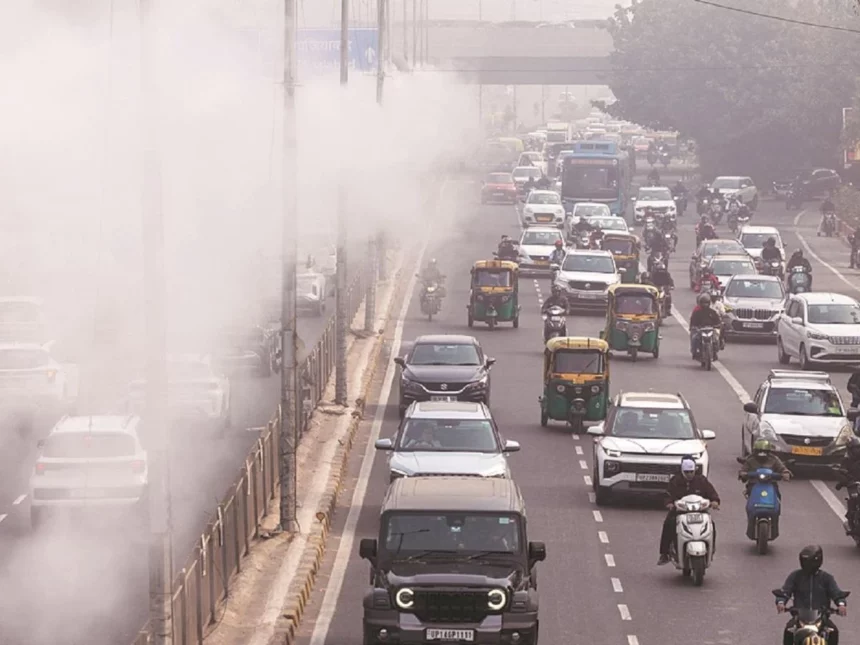
In parallel, the Delhi Government has intensified efforts to control dust pollution across the city. A total of 397 anti-smog guns have been deployed, complemented by 276 water sprinklers to suppress road and open-area dust. Mechanical road cleaning has been conducted using 73 machines, covering over 2,177.2 kilometres, significantly reducing airborne dust levels. As part of innovative measures, a mist spray system has been installed at ITO to neutralize dust particles, with plans to expand the system to other areas of Delhi.
Officials stated that these combined interventions—including vehicular enforcement, dust suppression, monitoring of pollution sources, and public awareness—demonstrate a comprehensive and coordinated approach to tackling Delhi’s air pollution. Chief Minister Gupta emphasized that continued strict enforcement, active citizen participation, and ongoing monitoring will help ensure effective long-term solutions, protect public health, and improve air quality across the capital.