A Delhi court is set to pronounce its order on Saturday on whether to take cognisance of the Enforcement Directorate’s (ED) chargesheet in the National Herald money laundering case, a matter that has remained in legal suspense for weeks. The order will determine if the prosecution complaint meets the statutory threshold under the Prevention of Money Laundering Act (PMLA) to move to the trial stage.
Special Judge (PC Act) Vishal Gogne of the Rouse Avenue Court, Rouse Avenue District Courts, reserved the order on November 7 after the ED submitted additional submissions and clarifications. The court had carried out an inspection of the case records before reserving its decision. “Further submissions and clarifications have been advanced by the Additional Solicitor General on behalf of the ED in light of the inspection of the case files by the court. List for orders on November 29,” the judge had stated in the order sheet on November 7, listing the matter for pronouncement today.
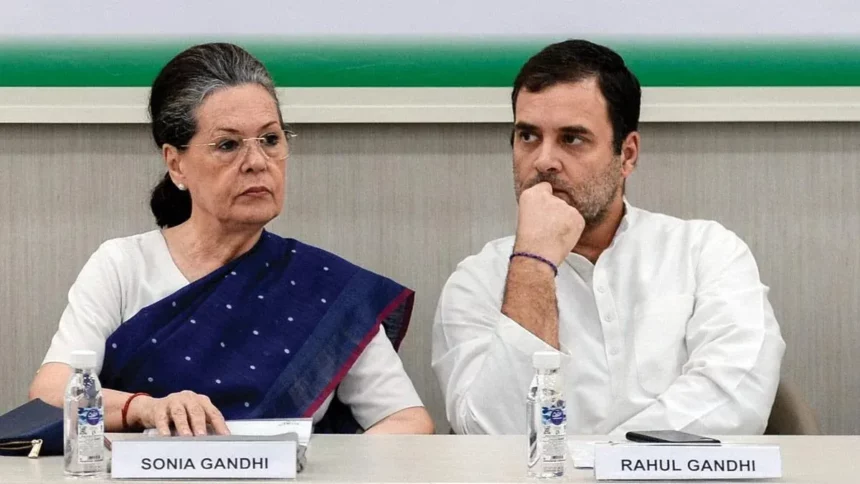
The case names Congress Parliamentary Party Chairperson Sonia Gandhi, Leader of Opposition (LoP) in the Lok Sabha Rahul Gandhi, Congress Overseas Chief Sam Pitroda, Suman Dubey, Suman Dubey, Suman Dubey, Suman Dubey, Suman Dubey, and others as accused under the PMLA. The ED has argued that the matter qualifies as a “serious economic offence” involving alleged conspiracy and wrongful acquisition of valuable assets belonging to Associated Journals Ltd (AJL), the original publisher of the National Herald newspaper.
ED alleges Rs 2,000 crore asset takeover for Rs 50 lakh via Young Indian
The probe agency claims that top Congress functionaries conspired to wrongfully assume control of AJL’s properties valued at over Rs 2,000 crore by routing the acquisition through Young Indian Pvt Ltd — a company in which Sonia and Rahul Gandhi were majority shareholders — for a nominal consideration. According to the ED’s submissions, control of AJL’s assets was obtained by paying just Rs 50 lakh, despite their market valuation running into thousands of crores.
The ED has maintained that the transact AJL assets for a nominal sum of Rs 50 lakh was part of a planned conspiracy to benefit the top Congress leadership personally. The agency asserted that “fake transactions” were carried out, alleging that multiple individuals, acting on instructions from senior Congress leaders, issued fraudulent advance rent payments for extended periods supported by fabricated rent receipts to mask the real intent behind the deal.
The agency further alleged that years of alleged rent receipts submitted for scrutiny were “fabricated and meant to disguise fund flow patterns” in order to wrongfully legitimise the control takeover. The court, before deferring its earlier decision, had noted that additional scrutiny of transaction documents, rent receipts, and patterns of fund movement was required before deciding on the issue of cognisance and assessing compliance with statutory requirements under the PMLA.
The ED has emphasised that the chargesheet lays out evidence of a systematic attempt to transfer control of properties of a defunct newspaper publisher at an artificially deflated price.
Congress dismisses allegations as “strange” in case first filed in 2012 by Subramanian Swamy
Congress leaders, including Sonia Gandhi and Rahul Gandhi, have denied the claims, calling the money laundering charges “really strange” and “unprecedented”. The party has publicly challenged the ED’s narrative and argued that scrutiny must take into account the intent and legal framework under which Young Indian engaged with AJL.
The political and legal origins AJL controversy trace back to 2012, when BJP leader Subramanian Swamy filed a complaint in a trial court alleging cheating and criminal breach of trust by Congress leaders in the process of acquiring assets of Associated Journals Ltd (AJL). The complaint accused the leadership of misusing party position to unlawfully gain control of AJL-owned properties.
The case gained national prominence due to the stature of the accused and has continued to feature intense political contestation alongside courtroom proceedings.
Swamy’s original complaint alleged that the process involved breach of trust and manipulation in the transfer of AJL’s assets.
Since then, the investigation shifted to alleged PMLA violations, culminating in the ED filing its chargesheet, which the court is expected to rule on today.
The verdict on cognisance will be legally procedural, but politically consequential, deciding whether the case crosses the initial threshold of admissibility for prosecution under money laundering statutes.
Senior police and security at Rouse Avenue Court have confirmed that administrative preparations are complete for the order pronouncement amid expected media presence.
The case continues to array legal arguments against a backdrop of political high stakes, testing India’s statutory framework for prosecuting alleged economic conspiracies involving controlling influence, price disproportionality, and documentary verification under PMLA provisions.