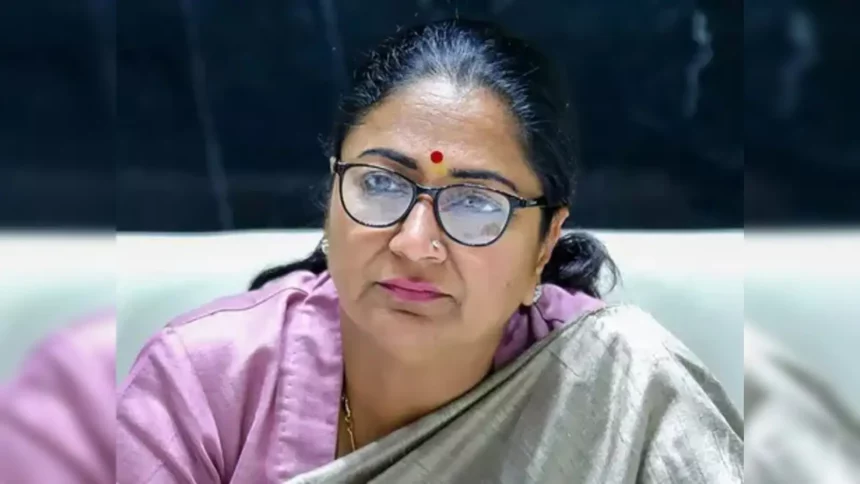
In a shocking incident earlier today, Delhi Chief Minister Rekha Gupta was attacked during a routine public hearing at her official residence, sending waves of concern across political and public spheres. The assailant, a man reportedly in his forties, approached the Chief Minister under the guise of submitting a complaint during her weekly ‘Jansunwai’ session and suddenly launched an attack. Thanks to the quick intervention of the Chief Minister’s security personnel, the attacker was immediately restrained and is currently being questioned by law enforcement agencies. The incident has raised serious questions about security protocols for public officials and whether the attack was politically motivated, igniting debate among politicians, law enforcement, and civil society over the protection of elected leaders and the implications for democratic norms.
The Chief Minister was swiftly transported to a nearby hospital for medical examination, while senior officers from the Delhi Police arrived at her residence to secure the premises. Early reports have identified the attacker as Rajesh Sakaria, originally from Rajkot, Gujarat. Eyewitness accounts suggest that the attacker had prepared documents, possibly to appear as a regular complainant, and approached the Chief Minister calmly before launching the assault, indicating premeditation.
Security Breach at Public Meetings and Immediate Response
The incident has highlighted vulnerabilities in security arrangements at public meetings attended by high-ranking political leaders. The weekly ‘Jansunwai’ sessions, which allow citizens to present grievances directly to the Chief Minister, are a cornerstone of Rekha Gupta’s public engagement strategy. These sessions are designed to foster transparency and accountability in governance, enabling direct interaction between constituents and their elected representative. However, this attack has revealed potential gaps in the screening and monitoring processes, raising urgent questions about how high-profile officials can safely conduct such sessions while ensuring public access.
Delhi Police sources indicate that a detailed inquiry will be launched to assess the circumstances that allowed the assailant to bypass existing security measures. The investigation will be closely monitored by Delhi Police Commissioner SBK Singh, who has taken personal charge of reviewing the security protocols at the Chief Minister’s residence and during public meetings. The assailant’s background, motives, and any possible connections to political entities or external actors are being meticulously examined. Authorities are reportedly investigating whether the assault was carried out on impulse, as a personal grievance, or with premeditated political intentions.
In the immediate aftermath of the attack, senior officials from the Delhi Police and security agencies implemented heightened security protocols around the Chief Minister’s residence. Officers ensured that all entry points were secured, and measures were taken to prevent any secondary threats to the Chief Minister or attendees. Security experts are now evaluating whether the design of such public interaction events needs revision to balance openness with officer and public safety. This includes assessing the use of metal detectors, verification of visitor identities, and closer monitoring of documents submitted by attendees.
Political Reactions and Implications for Delhi Governance
The attack has triggered widespread reactions from various political quarters, reflecting both condemnation and concern over potential political ramifications. Senior BJP leader Harish Khurana stated that the assault could indicate a politically motivated attempt to disrupt governance in Delhi. “One person present at the meeting attacked the Chief Minister. Right now, doctors are examining the Chief Minister. We condemn this attack. It should be investigated if this attack was politically motivated,” he said, emphasizing the need for a thorough inquiry to determine whether rival political factions were involved.
Manjinder Singh Sirsa, a Delhi minister, echoed concerns about potential political conspiracies, asserting that opposition actors may find it difficult to tolerate the Chief Minister’s initiatives and work on the ground. “Rivals cannot tolerate the Chief Minister’s work. An investigation is ongoing to determine who orchestrated the attack,” Sirsa remarked, highlighting the complex interplay between public administration, politics, and governance.
On the other hand, opposition voices have also expressed condemnation of the violent act. Former Delhi Chief Minister and AAP leader Atishi stated that the assault was a stark reminder that violence has no place in a democracy. “The attack on Delhi’s Chief Minister Rekha Gupta is highly condemnable. In a democracy, there is a place for disagreement and protest, but there is no place for violence. I hope the Delhi Police will take the strictest action against the culprits. It is also hoped that the Chief Minister is completely safe,” Atishi said, emphasizing that political discourse must remain within the bounds of democratic principles.
The incident has raised broader questions about the security arrangements for public officials across India. Public interaction sessions, though essential for democratic accountability, now face scrutiny over whether they inadvertently expose leaders to risks. Political analysts have noted that while transparency and citizen engagement are vital for effective governance, the safety of elected representatives must also be prioritized. In this context, this incident may prompt other state governments and the central administration to review security measures during public events, with an emphasis on pre-emptive threat assessment and emergency response protocols.
Further complicating the situation, eyewitnesses at the public meeting described how the attacker approached the Chief Minister with documents, creating an impression of a routine grievance submission. This deceptive approach underlines the challenge of balancing open governance with security, demonstrating that attackers can exploit procedural norms to gain access to high-profile individuals. Authorities are now examining security camera footage, cross-checking visitor records, and interviewing attendees to reconstruct the sequence of events leading up to the assault.
The Delhi Police has also announced that the investigation will consider whether external influences, political rivalries, or personal grievances motivated the attack. By systematically examining the assailant’s connections and background, the authorities aim to determine whether this was an isolated incident or part of a broader attempt to destabilize governance in the national capital. The political ramifications of such an attack are significant, as it may influence public perception, heighten political tensions, and lead to stricter scrutiny of all public events involving ministers and elected representatives.
In response to the attack, the Delhi administration is likely to revise protocols for public meetings, including enhanced screening procedures, additional security personnel, and rapid medical support. Security experts may also recommend technological interventions, such as advanced surveillance systems, facial recognition, and pre-registration of attendees to mitigate risks in future sessions. Moreover, the attack serves as a case study for political risk management, highlighting the importance of coordination between political offices, law enforcement, and intelligence agencies to prevent similar incidents in other states and national capitals.
The timing of the attack, amid ongoing political debates in Delhi, adds layers of complexity. Analysts have noted that attacks on political leaders, especially during public engagements, not only disrupt governance but can also erode public confidence in democratic institutions. Such incidents underscore the fragile balance between maintaining transparency, encouraging citizen participation, and protecting political figures from targeted violence. Law enforcement agencies are expected to coordinate closely with intelligence networks to trace any larger networks or conspiracies that may have facilitated the attack.
Medical teams attending to the Chief Minister have confirmed that her condition is stable, though she continues to undergo thorough evaluation to ensure no serious injuries were sustained. Authorities are also preparing detailed reports to brief government officials and the public on the incident, with a focus on transparency and accountability in the investigative process. Political leaders from multiple parties have expressed solidarity and urged calm, emphasizing that violence should never interrupt democratic functioning or public service delivery.
The Delhi Police Commissioner, SBK Singh, is personally supervising the investigation, highlighting the gravity of the incident and signaling that the authorities are treating it with the highest priority. Investigators are expected to analyze the attacker’s motives, potential accomplices, and whether there were lapses in existing security protocols. This inquiry is not only crucial for accountability in the immediate case but may also inform the design of future policies governing public access to political leaders.
As the investigation unfolds, the incident is already sparking debates about political culture, governance, and citizen engagement in Delhi. Lawmakers, policy analysts, and security experts are weighing the implications of the attack for democratic norms, including how leaders can remain accessible to the public while ensuring personal safety. Discussions are also underway regarding legislative measures and administrative directives that could institutionalize stricter security measures for high-profile officials without undermining citizen participation or transparency.
The attack on Chief Minister Rekha Gupta represents a critical juncture in the intersection of governance, politics, and public engagement. It highlights vulnerabilities in conventional security protocols, the potential for political exploitation of violence, and the need for a comprehensive strategy to protect elected officials. It also serves as a reminder that in democratic societies, open access to leaders must be safeguarded with adequate protections to prevent both isolated attacks and larger conspiratorial threats.
As Delhi Police continues its detailed inquiry, political observers anticipate that the findings may lead to significant changes in how public meetings and hearings are organized, not only in Delhi but across India. The lessons learned from this incident are expected to influence both administrative protocols and political strategies, emphasizing a dual focus on citizen engagement and the safety of public office bearers.