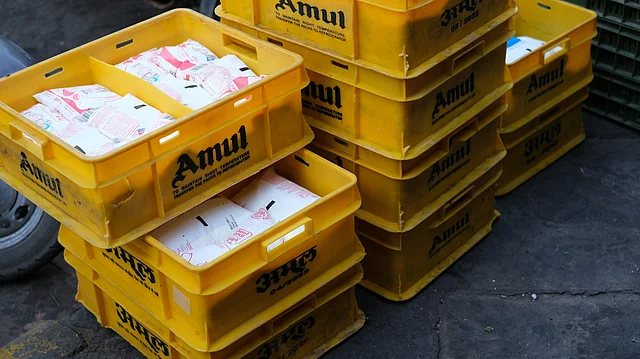
The latest revision marks the second major milk price hike by both dairy giants within the last 13 months and is expected to influence regional dairy cooperatives and private milk suppliers across the country.
The price increase comes at a time when food inflation concerns are already rising due to higher transportation costs, global fuel pressures, and supply-chain disruptions linked to the ongoing West Asia conflict.
Officials from both dairy companies said the hike was necessary due to increasing operational costs, including cattle feed expenses, packaging material prices, fuel costs, and higher procurement rates paid to dairy farmers.
Amul Announces Nationwide Milk Price Revision
The Gujarat Cooperative Milk Marketing Federation, which markets products under the Amul brand, confirmed that prices of fresh pouch milk have been increased by ₹2 per litre across major milk-selling variants and packs throughout India.
The federation stated that the revised pricing structure has been implemented to address rising production and distribution expenses while ensuring better returns to milk producers and dairy farmers.
Amul remains one of India’s largest dairy cooperatives and plays a crucial role in the country’s milk supply chain. The company sources milk from millions of farmers, particularly across rural regions, making procurement pricing a major factor in retail pricing decisions.
Industry experts believe that the increase reflects sustained inflationary pressure on the dairy sector, especially due to rising feed costs and transportation expenses over the past year.
The previous milk price increase by Amul was implemented on May 1, 2025.
Mother Dairy Also Revises Milk Rates
Separately, Mother Dairy announced that it has revised consumer prices for its liquid milk variants by ₹2 per litre effective Thursday.
The company said the increase was necessary to maintain stable procurement from farmers and ensure uninterrupted supply amid rising input costs.
Mother Dairy is one of the largest suppliers of packaged milk in major urban markets including Delhi-NCR and several northern Indian cities. Its pricing decisions often influence retail milk rates in urban centers across the country.
The company had last increased milk prices in April 2025.
With both major dairy brands announcing simultaneous revisions, market observers expect several regional dairy operators and local milk cooperatives to follow with similar increases in the coming weeks.
Rising Costs Pressure Dairy Sector
The latest milk price hike highlights the growing cost pressures faced by India’s dairy industry.
Cattle feed prices have reportedly increased significantly over the past year due to rising raw material costs and supply challenges. Fuel prices and transportation expenses have also added to the operational burden for dairy companies managing nationwide distribution networks.
Packaging material costs, including plastic and logistics expenses, have further contributed to pricing pressure.
At the same time, dairy cooperatives have increased procurement prices paid to farmers to ensure sustained milk production and protect rural incomes.
Industry analysts note that maintaining farmer profitability has become increasingly important as dairy farming costs continue to rise. Higher procurement rates are often passed on partially to consumers through retail milk price revisions.
The dairy sector remains highly sensitive because milk is considered an essential household commodity consumed daily across urban and rural India.
Impact on Household Budgets and Food Inflation
The latest increase is expected to impact household budgets, especially in cities where packaged milk consumption is high.
Milk is widely used not only for direct consumption but also for tea, coffee, curd, sweets, dairy-based beverages, and several food products. As a result, even small increases in milk prices often have broader inflationary effects across the food sector.
Economists warn that the price revision may contribute to upward pressure on food inflation, which has already shown signs of increasing in recent weeks.
Global geopolitical tensions, particularly the ongoing instability in West Asia, have contributed to concerns around fuel prices and import costs, indirectly affecting transportation and supply-chain expenses in India.
The simultaneous increase by both Amul and Mother Dairy could also influence prices of dairy products such as curd, butter, paneer, ghee, and ice cream in the coming months if operational costs continue rising.
Dairy Industry Faces Balancing Challenge
India’s dairy sector continues to face the challenge of balancing affordable consumer pricing with sustainable returns for milk producers.
While consumers are likely to feel the impact of repeated milk price hikes, dairy cooperatives argue that procurement price increases are necessary to support farmers dealing with rising feed and maintenance costs.
Experts say milk pricing decisions are particularly sensitive in India because the dairy economy supports millions of small and marginal farmers.
Any significant imbalance between procurement and retail pricing can directly affect rural livelihoods, production incentives, and long-term supply stability.
The latest revision reflects the growing pressure on essential commodity pricing in an environment shaped by global economic uncertainty, inflationary trends, and increasing production costs.
With major dairy players already implementing revised rates, consumers across India are expected to witness higher milk bills starting May 14.