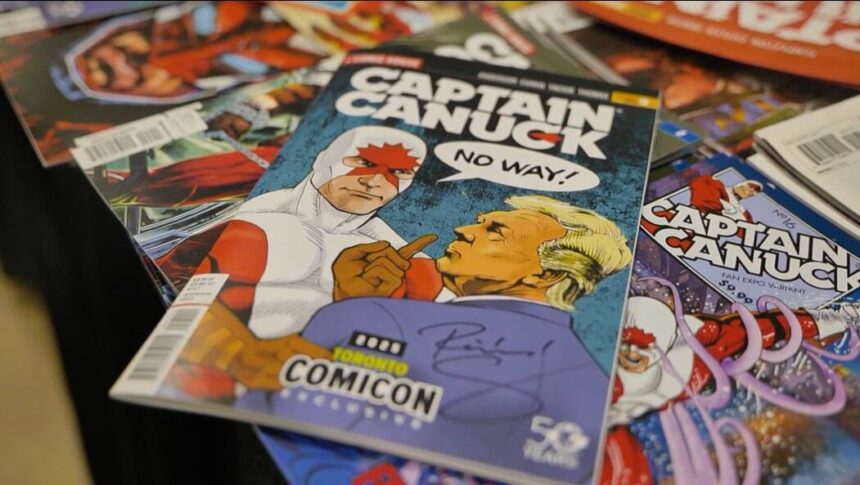
In a bizarre blend of real-world politics and comic book fantasy, Canadians are turning to a 1970s superhero, Captain Canuck, in response to U.S. President Donald Trump’s ongoing threats to impose tariffs and annex Canada as the 51st state. The renewed popularity of this red-and-white-clad Canadian icon reflects a surge of national pride and resistance in the face of escalating tensions between the two nations. The comic series has even portrayed Donald Trump as a villain, aided by none other than tech billionaire Elon Musk, serving as his sidekick.
Donald Trump and Elon Musk depicted as comic villains
Amid ongoing tariff threats and aggressive rhetoric from the U.S. administration, Canadian comic book creators have responded with satire. Captain Canuck, a symbol of Canadian sovereignty, has returned to take on a fictional version of Donald Trump, now cast as a comic-book supervillain. Elon Musk is illustrated as Donald Trump’s eager sidekick, adding a pop culture twist to political commentary. One panel features Captain Canuck confronting Donald Trump mid-plot, while another shows both Donald Trump and Elon Musk being hauled away by the Canadian hero. The exaggerated, humorous depiction has struck a chord with Canadians, particularly as they face continued economic pressure.
Tariff pressure and rising nationalism
Donald Trump recently announced a partial rollback of his global tariff plan but pointedly excluded Canada from any relief. Despite over 75 nations being granted a 90-day suspension from harsh duties, Canada continues to face steep tariffs on steel, aluminum, autos, and energy products. This move has only deepened resentment among Canadians and spurred reflection on their national identity.
Captain Canuck’s co-creator Richard Comely noted a surge in interest for the character amid current geopolitical tensions. “People are suddenly seeing Captain Canuck as more than just a comic book character. He stands for Canadian values, independence, and unity,” Comely said. The comic series, first introduced in 1975, has resurfaced as a symbolic bulwark against perceived American overreach. Canadians, particularly younger audiences, are embracing the superhero as a reminder of their sovereignty and cultural identity.