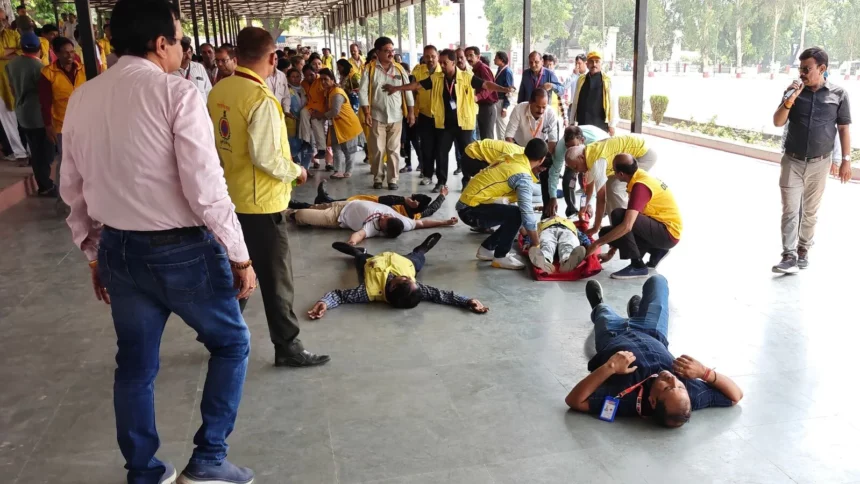
In response to escalating tensions with Pakistan and following the launch of Operation Sindoor, India will conduct civil defence mock drills on May 29 (Thursday) across four key states bordering Pakistan – Punjab, Rajasthan, Gujarat, and parts of Jammu & Kashmir.
These drills come shortly after India’s military response to the April 22 Pahalgam terror attack, which claimed 26 civilian lives and was attributed to The Resistance Front, a Pakistan-backed terror outfit. As a part of Operation Sindoor, the Indian military reportedly targeted terror hideouts inside Pakistan and Pakistan-occupied Kashmir (PoK).
Strategic Significance of Civil Drills
The upcoming mock drills are not routine exercises. Their timing – immediately following a decisive military action – indicates India’s dual strategy: military retaliation and civil preparedness. The drills simulate hostile scenarios, such as:
- Air raids
- Terror attacks
- Fire and rescue emergencies
- Evacuation protocols
These exercises aim to sensitize local populations, test emergency responses, and prepare civilians in vulnerable areas near the international border.
A National Framework: ‘Operation Abhyaas’
This is not an isolated incident. Earlier this month, under ‘Operation Abhyaas’, India conducted similar civil defence mock drills nationwide — the first such exercise on this scale since the 1971 Indo-Pak War. States and Union Territories like Delhi, Uttar Pradesh, Maharashtra, Tamil Nadu, Assam, and Manipur participated, indicating a broader security recalibration.
Defence and Civil Synergy
The synchronisation between military operations and civil preparedness marks a strategic shift in India’s defence doctrine. Instead of merely relying on armed forces, the focus now includes community-level resilience and nationwide alertness.