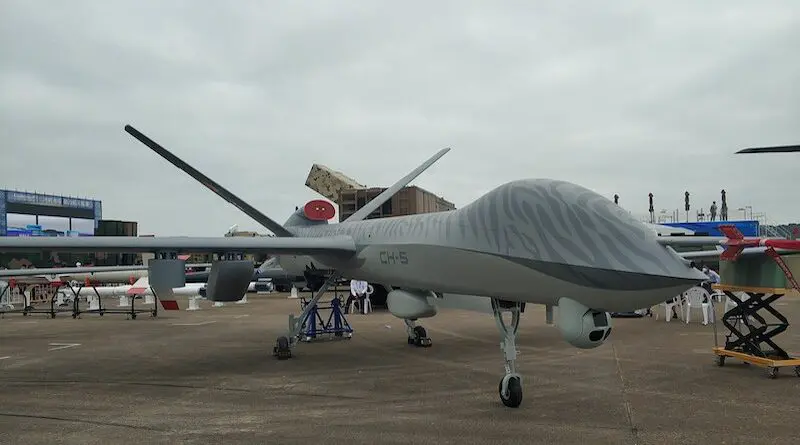
In the rapidly changing world of military technology, China has positioned itself as one of the top developers and exporters of Unmanned Combat Aerial Vehicles (UCAVs). These advanced drones, capable of carrying out precision strikes without human pilots on board, have become central to modern warfare and Beijing is using them as a key diplomatic and strategic tool.
China’s growing UCAV exports are not just a sign of its manufacturing strength but also a reflection of its long-term political and geopolitical ambitions. With customers across West Asia and Africa, the export of UCAVs has added a new dimension to China’s role in global security dynamics.
Where Are Chinese UCAVs Going?
China has exported UCAVs to around 18 countries, making it one of the top drone suppliers in the world. Among the major buyers are Pakistan, Saudi Arabia, the United Arab Emirates (UAE), and Egypt. While these countries vary in their overall reliance on Chinese military equipment, they all see value in China’s UCAV offerings—particularly in terms of cost, availability, and fewer restrictions compared to Western alternatives.
Of all the countries purchasing these drones, Pakistan stands out as a long-term partner with a broader arms dependency on China. The rest—including Gulf and African states—have diversified sources for arms imports but still find Chinese UCAVs attractive due to the operational capabilities they offer at a relatively lower cost.
What Makes China’s Drone Industry So Successful?
One of the key reasons behind China’s success in exporting UCAVs lies in its strong domestic defence ecosystem. Over the past decade, China has invested heavily in research and development, especially in emerging technologies like robotics, artificial intelligence, and autonomous systems.
The People’s Liberation Army (PLA) has also focused on making high-tech defence production a national priority. This long-term planning has helped Chinese defence companies build drones that can compete globally—both in performance and price.
Unlike many Western suppliers, Chinese firms are often willing to export with fewer political or end-use restrictions, making them a more appealing option for countries looking for quick deployment in conflict-prone regions.
Beyond Economics: Politics and Influence
China’s UCAV exports are not just about profit—they’re deeply tied to the country’s larger strategic interests. Many of the importing nations are linked to China’s Belt and Road Initiative (BRI), a global infrastructure and investment push. By supplying UCAVs to these countries, China is deepening its political ties, ensuring long-term security partnerships, and expanding its influence in critical regions.
Through these exports, China gains leverage in international diplomacy, builds trust with key governments, and sometimes gains access to foreign bases or logistical hubs. These military ties often come with broader economic and political cooperation, helping China build strategic footholds around the globe.
Implications for India and the Region
The rise of China as a major UCAV exporter has strategic implications for countries like India. For instance, Pakistan’s access to Chinese drones alters the regional balance of power and could lead to a new kind of arms competition focused on unmanned systems. India must also consider how China’s growing defence influence in West Asia and Africa may reshape security cooperation in those regions.
China’s ability to supply high-end drones quickly and in large numbers gives it a diplomatic advantage in conflict zones, where Western nations may hesitate due to human rights concerns or export controls. This leaves space for China to become the preferred defence partner for many emerging nations.