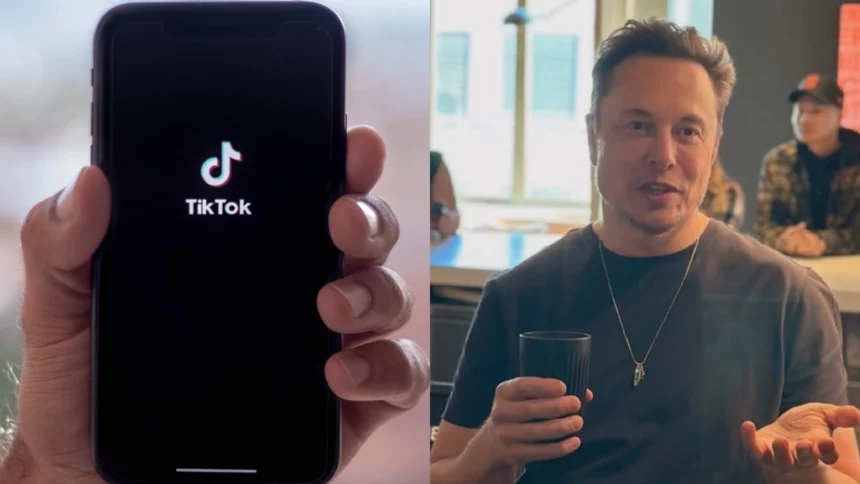
Amid escalating tensions over the future of TikTok in the United States, Chinese officials are reportedly exploring a potential sale of the platform’s US operations to billionaire entrepreneur Elon Musk. The possible divestment, first reported by Bloomberg News, comes as TikTok’s Chinese owner, ByteDance, faces pressure to comply with a recently enacted US law requiring the company to sell its American operations or risk a nationwide shutdown.
The proposed transaction would see Elon Musk’s social media platform, X (formerly known as Twitter), acquire TikTok’s US operations. According to the report, the value of the deal is estimated to range between $40 billion and $50 billion. Such a merger would create a powerful combination of X’s text-based engagement with TikTok’s short-form video dominance, potentially reshaping the social media landscape.
The potential sale arises from the US government’s allegations that TikTok poses a national security threat. American officials claim that the app, with its vast user base, allows the Chinese government to collect sensitive data, spy on users, and disseminate propaganda. Both China and ByteDance have vehemently denied these accusations. Despite their protests, the US law mandating ByteDance to divest TikTok’s US operations will go into effect imminently, just one day before President-elect Donald Trump assumes office.
The legal battle over TikTok has been intense, with ByteDance challenging the divestment mandate all the way to the US Supreme Court. During recent oral arguments, the court’s justices appeared largely skeptical of TikTok’s contention that the forced sale violates First Amendment protections. A final decision is awaited as the deadline looms, leaving the platform’s future uncertain.
Bloomberg’s report, which cites anonymous sources familiar with Beijing’s internal discussions, describes the possibility of Elon Elon Musk as a buyer as still in its preliminary stages. Chinese officials have not yet reached a consensus on how to proceed, and it remains unclear whether ByteDance is fully aware of the Chinese government’s deliberations on the matter. TikTok representatives have not issued a direct response to the report, although a spokesperson was quoted by Variety dismissing the speculation as “pure fiction.”
Elon Musk, widely recognized as the world’s wealthiest person, already commands significant influence in the tech and automotive industries. Beyond owning X, he leads electric vehicle giant Tesla, which operates a major factory in China and derives substantial revenue from the country. However, it is unclear how Elon Musk could execute such a high-stakes acquisition, given the scale of the proposed deal and his existing business commitments. Analysts suggest that Elon Musk might need to liquidate other assets or secure substantial financing to proceed.
The timing of the potential sale coincides with a broader geopolitical backdrop marked by strained US-China relations. Outgoing President Joe Biden maintained many of the trade tariffs introduced during Trump’s first term, and President-elect Trump is expected to escalate these measures further. These tensions add a layer of complexity to any potential transaction involving a high-profile company like TikTok and a prominent figure such as Elon Musk.
Observers note that Elon Musk’s close ties to Trump could play a role in influencing the deal’s feasibility. With Trump poised to regain significant influence in Washington, Elon Musk’s alignment with the incoming administration could provide a strategic advantage. However, questions about how Elon Musk’s acquisition of TikTok might impact his other ventures, including Tesla’s operations in China, remain open.
As of now, the fate of TikTok’s US operations hangs in the balance. If Beijing greenlights the sale and Elon Musk proceeds with the acquisition, it would mark a dramatic shift for the platform, which has become a cultural phenomenon in the US. Meanwhile, the broader implications for US-China relations, global technology markets, and Elon Musk’s ever-expanding empire are likely to spark intense scrutiny in the months ahead.