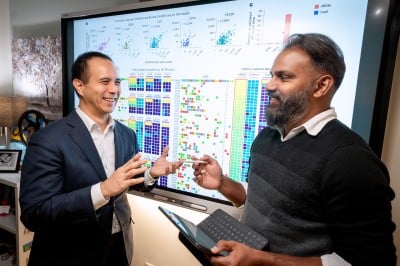
Newswise — (MEMPHIS, Tenn. – January 02, 2026) Scientists and physicians can better assess precision genome editing technology using a new method made public today by St. Jude Children’s Research Hospital. Significant amounts of time and resources spent improving CRISPR gene editing technology focus on identifying small off-target sites that pose a safety risk, which is also technically challenging. St. Jude researchers addressed the problem by creating Circularization for High-throughput Analysis of Nuclease Genome-wide Effects by Sequencing Base Editors (CHANGE-seq-BE), an unbiased, sensitive and resource-efficient method to find these off-target edits. It outperformed conventional approaches and has already been used to support clinical work. The technique was published in Nature Biotechnology.
While traditional genome editing technology uses CRISPR-Cas9 to cut a small segment of DNA from the genome, scientists have continued to develop more precise versions, including base editors, which can find and replace individual DNA base pairs.
“We developed CHANGE-seq-BE to enable scientists to better understand base editors, an important class of CRISPR precise genome editors,” said corresponding author Shengdar Tsai, PhD, St. Jude Department of Hematology. “It’s a simple and streamlined way to understand the global activity of base editors that enables researchers to select highly specific and active editor and target combinations for research or therapeutics.”
CHANGE-seq-BE is already being adopted to support clinical research. The paper published today includes a case study of an emergency application to the Food and Drug Administration (FDA) for a base editor treating CD40L-deficient X-linked Hyper IgM (X-HIGM) syndrome. X-HIGM is a genetic immune disease that base editing may be able to correct. CHANGE-seq-BE was able to confirm 95.4% on-target specificity from the base editor used, with no significant off-target activity, providing valuable safety data to help push forward the patient’s treatment.
“It was a really exciting application to support an emergency request to the FDA to treat a patient rapidly,” Tsai said. “It exemplifies how this method enables rapid understanding of what these editors are doing in the genome and helps advance promising active and specific therapeutics.”
Combining efficiency with an unbiased approach provides better results
Tsai’s lab created CHANGE-seq-BE because conventional methods to assess base editors’ safety have had to choose between comprehensive coverage and efficient resource use. Some techniques to comprehensively find base editing’s off-target activity in an unbiased way require whole genome sequencing, which can be prohibitively expensive and time-consuming. Alternatively, some techniques pre-select suspected off-targets to perform less sequencing and save resources, but these biased techniques can never detect unexpected off-target edits. The St. Jude scientists designed CHANGE-seq-BE to capture the best of both approaches: a comprehensive solution that would also be resource-efficient.
To do so, CHANGE-seq-BE starts with a whole genome, but instead of immediately sequencing it, scientists split the genome into tiny circles of DNA. They then take those circles and expose them to the base editor being tested. Afterward, they treat the DNA with a special enzyme that detects if base editing occurred, opening those — and only those — DNA circles with evidence of base editing into linear strands. The linear strands of DNA are then selectively sequenced, requiring far fewer resources than competing techniques. They optimized it for both major types of base editors (adenine and cytosine base editors). After developing the method, the scientists wanted to know if it truly was both more comprehensive and resource-efficient than conventional approaches, so they tested them head-to-head.
“When we directly compared it to other methods, CHANGE-seq-BE found almost all sites nominated by those methods, as well as many that it was exclusively able to detect,” Tsai said. “We showed that this unbiased approach was more sensitive while using only about 5% of the sequencing reads.”
Given the technique’s sensitivity, ease of use and efficient resource utilization, others have already begun adopting it. Full experimental protocols and software to enable CHANGE-seq-BE are described in the study, enabling this adoption. For example, in addition to the clinical application reported in the paper, clinical trials at St. Jude and beyond have integrated the technique into their planning, using it as a safety and efficiency evaluation tool. CHANGE-seq-BE was also recently used to characterize the first patient-specific in vivo genome editing treatment. Fundamental research labs investigating base editing have also begun using it to test for off-targets early in their process, better identifying the most promising approaches to pursue than existing screens. These early adopters show the technique’s appeal to researchers and clinicians alike, and its promise to push forward the future of base editing.
“We’ve enabled those developing these therapies to quickly understand and find the base editors with the highest potential activity and specificity,” Tsai said. “We hope that methods like CHANGE-seq-BE will open the door toward more genome editing therapies being developed for and reaching the patients who need them.”
Authors and funding
The study’s co-first authors are Cicera Lazzarotto, formerly of St. Jude; and Varun Katta, St. Jude. The study’s other authors are Yichao Li, Garret Manquen, Rachael Wood, Jacqueline Chyr and Azusa Matsubara, St. Jude; Elizabeth Urbina and GaHyun Lee, formerly of St. Jude; Xiaolin Wu, Frederick National Laboratory of Cancer Research; and Suk See De Ravin, National Institutes of Health.
The study was supported by grants from the National Institutes of Health Somatic Cell Genome Editing Consortium Program through National Institutes of Allergy and Infectious Diseases (U01AI176470 and U01AI176471), National Heart Lung and Blood Institute (U01HL163983), St. Jude Collaborative Research Consortium on Novel Gene Therapies for Sickle Cell Disease, St. Jude PARADIGM Blue Sky Project, the Doris Duke Charitable Foundation (2020154) and the American Lebanese Syrian Associated Charities (ALSAC), the fundraising and awareness organization of St. Jude.
St. Jude Media Relations Contact
Michael Sheffield
Desk: (901) 595-0221
Cell: (901) 379-6072
michael.sheffield@stjude.org media@stjude.org
St. Jude Children’s Research Hospital
St. Jude Children’s Research Hospital is leading the way the world understands, treats, and cures childhood catastrophic diseases. From cancer to life-threatening blood disorders, neurological conditions, and infectious diseases, St. Jude is dedicated to advancing cures and means of prevention through groundbreaking research and compassionate care. Through global collaborations and innovative science, St. Jude is working to ensure that every child, everywhere, has the best chance at a healthy future. To learn more, visit stjude.org, read St. Jude Progress, a digital magazine, and follow St. Jude on social media at @stjuderesearch
https%3A%2F%2Fwww.newswise.com%2Farticles%2Fchange-seq-be-finds-off-target-changes-in-the-genome-from-base-editors%2F%3Fsc%3Drsla