Newswise — LOS ANGELES (Jan. 26, 2026) — What can a single molecule in just one of the body’s cells reveal about a person’s health? Quite a lot if you can find it. Cedars-Sinai investigators are doing just that.
Using a powerful technology called single-cell proteomics, these detectives track molecules called proteins, cell by cell, to shed new light on how the human body works and how diseases develop. Their tenacity has helped make Cedars-Sinai one of the world’s leading institutions in this rapidly evolving frontier of medical science.
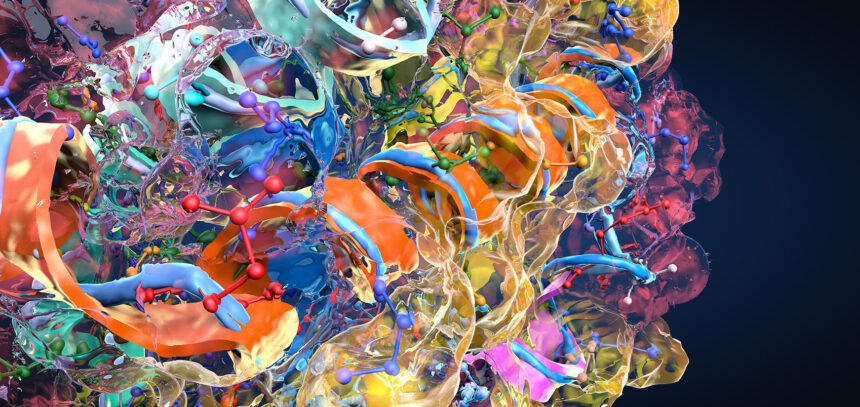
Proteomics, the study of the complete set of proteins expressed by an organism, provides a powerful window on what is happening in the human body. That’s because these hard-working molecules carry out nearly every bodily activity.
The challenge is that a typical laboratory sample of human tissue contains thousands of cells, and each cell is packed with multiple copies of thousands of different proteins.
To connect each protein to the correct cell, single-cell proteomics investigators rely on equipment called mass spectrometers. These machines, which are like highly sophisticated scales, use magnetic forces to separate proteins by their molecular weight or mass. With the proteins sorted, investigators can identify them and match them to the cells that contained them.
Using mass spectrometry, Cedars-Sinai investigators have uncovered new types of heart cells. They are unlocking secrets of how our arteries work. And they are developing proteomics technology that can analyze thousands of cells in minutes instead of hours or days.
More discoveries are on the way. At the Cedars-Sinai Board of Governors Innovation Center, mass spectrometers operate around the clock, seeking, sorting and scrutinizing proteins. The machines are part of the center’s Alfred E. Mann Single Cell Precision Medicine Center.
But it’s really the people, not the machines, who are most responsible for Cedars-Sinai’s leading role in this nascent discipline. Below are profiles of three investigators who rank among the top international experts in single-cell proteomics.
The Visionary
It is impossible to conduct a serious discussion of proteomics without mentioning Jennifer Van Eyk, PhD, who helped pioneer this discipline and recently served as president of the international Human Proteome Organization, the field’s premier scientific association. In 2024 she was listed by The Analytical Scientist as one of the world’s 20 most impactful analytical scientists in human health.
“I started working in proteomics before the word ‘proteome’ was coined in the 1990s,” Van Eyk said in a recent interview. “At that time, I was among just a few scientists around the world who were trying to accurately measure proteins on a large scale.”
Van Eyk’s passion is clinical proteomics, which applies scientific discoveries to patient care. At Cedars-Sinai, she directs the Smidt Heart Institute’s Advanced Clinical Biosystems Research Institute, which she founded in 2014 to foster collaboration among scientists, physicians and biotechnology companies.
One of Van Eyk’s most recent achievements was to co-lead a study revealing that cardiomyocytes, the muscle cells of the heart, are not all identical. Using single-cell proteomics, she and her colleagues discovered two new hybrids of cardiomyocytes that produce both heart- and neuron-related proteins. The team is now exploring whether gender differences in cardiomyocytes could affect how a person responds to medications.
Given that drugs generally target proteins, Van Eyk sees single-cell proteomics as a critical new tool for troubleshooting disease treatments and testing new ones.
“Suppose you have a drug that works 50% of the time,” she said. “Does that mean it’s working 50% in every cell, or is it working 100% in 50% of the cells? The answer is important because it allows you to fix the problem. Single-cell proteomics can provide that information.”
As director of Basic Science Research in the Barbra Streisand Women’s Heart Center and the Erika J. Glazer Chair in Women’s Heart Health, Van Eyk has a special focus on cardiology. But she also collaborates on studies of conditions as diverse as pulmonary hypertension, breast cancer and amyotrophic lateral sclerosis, also known as ALS.
Van Eyk envisions a bright future for single-cell proteomics.
“We’re finding such unexpected things that you couldn’t even have thought about before using these methodologies,” she said. “And the discoveries will continue until we’ve done enough, and then we’ll do the next breakthrough in the technology.”
The Racer
Before she was a scientist, Sarah Parker, PhD, was an aspiring Olympic speed skater. Having narrowly missed that goal in 2002, she now applies the Olympic motto of “Faster, Higher, Stronger – Together” to proteomics.
The together aspect is important. Parker, an associate professor of Cardiology and Biomedical Sciences, co-directs the Proteomics and Metabolomics Core at Cedars-Sinai with Van Eyk. During her decade-long career at Cedars-Sinai, she has been a versatile team player while heading her own laboratory that has produced breakthrough studies in atherosclerosis, cancer and proteomics applications.
Parker is also striving to make single-cell technology faster and stronger through higher volume. With colleagues, she is perfecting so-called “high throughput” techniques that enable a mass spectrometer to analyze proteins in tissues from multiple people. The bigger the sample, the better the chance of finding rare cells and discovering something new about the body.
“The challenge is that to perform this analysis, you need to quickly turn and burn through a lot of cells in a reasonable amount of time,” Parker said.
In 2023, she co-led an influential Cedars-Sinai study that devised a novel solution: Get rid of the dead time between loading one sample and acquiring the data from a subsequent sample by toggling back and forth between the two processes. Using this system, a mass spectrometer can identify more than 1,000 proteins in individual cells in 15 minutes, allowing nearly 100 cells to be measured each day. This rate was double the industry standard at the time.
In current research funded by the National Institutes of Health, Parker is using single-cell proteomics to investigate how hormones influence aortic aneurysms, the bulges in the wall of the main artery from the heart that can rupture, with life-threatening results. The potential clinical application is to design better drug treatments for both males and females with this serious condition.
Parker’s longtime interest in the cardiovascular system grew from courses she took as a college student and athlete preparing for a career in sports psychology.
After retiring from professional sports, Parker learned about proteomics while earning a PhD in physiology at the Medical College of Wisconsin in Milwaukee. As a postdoctoral fellow at Johns Hopkins University in Baltimore, she was mentored by Van Eyk, who later moved her laboratory to Cedars-Sinai and encouraged Parker to join her there.
“I really liked everything about Cedars-Sinai,” Parker said, including the collaborative ethos. “On the proteomics team, we’re on most of each other’s papers—not all of them, but most of them.”
The Data Scientist
To Jesse Meyer, PhD, an assistant professor in the Department of Computational Biomedicine at Cedars-Sinai, health comes down to one number: age.
“Aging is the biggest predictor of most diseases,” he said. “If we can deeply understand aging, then we can potentially delay the onset of many diseases at once instead of spending so much energy targeting each disease separately.”
The quest for that knowledge led Meyer to proteomics and data science, an interdisciplinary field that uses statistics, computer science and mathematics to uncover meaningful patterns in large sets of data.
“What is so cool about proteomics is that proteins are tiny machines in your cells, that we have so many of them and that they are so diverse,” he said.
For data scientists like Meyer, quantifying these tiny machines is a labor of love.
Meyer first encountered protein biochemistry and mass spectrometry as an undergraduate studying plants at the University of Minnesota in Minneapolis. After completing his PhD in chemistry and biochemistry at the University of California, San Diego, he decided to use his skills to help people. That led him to take a postdoctoral research fellowship at the Buck Institute for Research on Aging in Novato, California, where he learned to apply proteomics, and the study of small molecules called metabolites in cells and tissues, to problems related to aging.
Meyer established his laboratory in 2020 and relocated to Cedars-Sinai in 2022, where his research includes developing informatics tools for proteomics, optimizing single-cell workflows, and applying these approaches to single-cell and single muscle fiber proteomics studies of muscle aging.
Based on his achievements in proteomics at such an early career stage, the US Human Proteome Organization presented Meyer with the 2025 Robert J. Cotter New Investigator Award. That year’s advances by Meyer included co-leading the creation of a user-friendly web platform for analyzing mass-spectrometry data that facilitates sharing among multiple collaborators.
In a recent publication, in the peer-reviewed journal Cell Genomics, Meyer and his colleague, project scientist Amanda Momenzadeh, PharmD, offer an overview of the current state of single-cell proteomics. Despite the field’s many challenges, they conclude that single-cell proteomics is poised to transform our understanding of biological complexity.
At this critical moment, you would need a crystal ball to foretell the future of this dynamic science. But judging from their track records, Cedars-Sinai investigators are likely to be at the forefront of the next big innovation.
Cedars-Sinai Health Sciences University is advancing groundbreaking research and educating future leaders in medicine, biomedical sciences and allied health sciences. Learn more about the university.
https%3A%2F%2Fwww.newswise.com%2Farticles%2Fcedars-sinai-scientists-track-body-s-most-elusive-proteins%2F%3Fsc%3Drsla