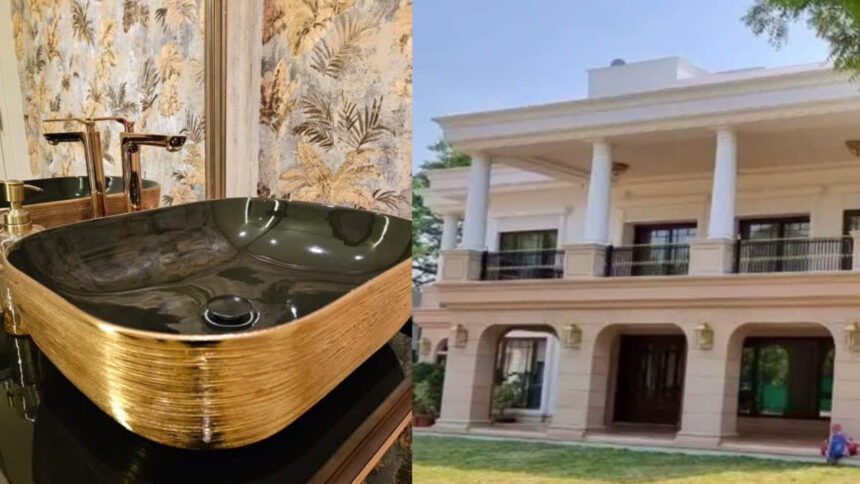
A recent report by the Comptroller and Auditor General has raised serious concerns over the renovation of former Delhi Chief Minister Arvind Kejriwal’s official residence at Flagstaff Road, highlighting a staggering increase in expenditure far beyond the initially approved estimate. According to the findings, the project cost escalated by over 342 percent, with total spending reaching ₹33.66 crore against the original estimate of ₹7.91 crore. The report also points to multiple procedural violations, including execution of work prior to approval, irregular allocation of funds and deviation from sanctioned plans. Tabled in the Delhi Legislative Assembly, the findings have triggered a fresh political debate over transparency and accountability in public expenditure.
Massive Cost Escalation and Irregular Spending Patterns
The CAG report reveals that the renovation project witnessed a sharp and unexplained rise in costs during its execution. Initially approved at ₹7.91 crore, the expenditure increased multiple times, eventually reaching ₹33.66 crore. A significant portion of this amount, nearly ₹18.88 crore, was spent on interiors, decorative elements and premium furnishings, raising questions about the necessity and justification of such expenses in a government residence. The report highlights that the project estimate was revised four times by the Public Works Department in order to accommodate rising costs, indicating a lack of financial discipline and planning. Furthermore, the renovation work was awarded at a rate higher than the initial estimate, and additional work was carried out without issuing fresh tenders. Instead, the same contractor was assigned further work worth ₹25.80 crore, which the audit flagged as a violation of procurement norms. The absence of competitive bidding in awarding contracts has been pointed out as a major irregularity that could have led to inflated costs and lack of accountability. These findings suggest that the project lacked proper oversight and adherence to established financial procedures, ultimately resulting in a significant burden on public funds.
Work Completed Before Approval and Structural Deviations
One of the most serious observations in the report is that administrative approval for the project was granted after the renovation work had already been completed. An amount of ₹9.34 crore was approved two months post-completion, which constitutes a clear violation of established government rules and procedures. This retrospective approval effectively rendered the expenditure unauthorized at the time of execution. The report also points out that funds allocated for specific components of the project were not utilized as intended. For instance, ₹19.87 crore was sanctioned for the construction of a staff block and camp office, but the staff block was never built. Instead, seven servant quarters were constructed at a different location, deviating from the original plan. The camp office, which was supposed to be a permanent structure, was built as a semi-permanent facility and remained incomplete. Additionally, the area of the bungalow was expanded significantly during the renovation, increasing from 1,397 square metres to 1,905 square metres. This expansion, along with the installation of customized fittings and luxury elements, contributed further to the escalation in costs. The Public Works Department had classified the project as urgent, but the audit report questions whether such urgency justified bypassing standard procedures and controls.
Political Fallout and Questions on Accountability
The findings of the CAG report have sparked a political controversy, with opposition parties raising concerns over alleged misuse of public funds. The bungalow, located at 6 Flagstaff Road, had been occupied by Arvind Kejriwal during his tenure as Delhi Chief Minister from 2015 to 2024. The residence had earlier been referred to as “Sheesh Mahal” by political opponents, and the audit report has added further fuel to the debate. Critics argue that the scale of expenditure and the nature of irregularities reflect poor governance and lack of transparency in handling public resources. The report’s observations regarding rule violations, cost overruns and deviations from approved plans have intensified demands for accountability and stricter monitoring of government projects. On the other hand, the findings are likely to have broader implications for administrative processes and financial management in public works. Experts believe that such cases highlight the need for stronger audit mechanisms, timely approvals and adherence to procurement guidelines to prevent misuse of funds. As the issue gains traction, it is expected to remain a significant topic in political discourse, especially in the context of governance and public accountability. The report underscores the importance of maintaining transparency and discipline in the use of taxpayer money, particularly in projects involving public officials and government infrastructure.