The eleventh day of Parliament’s Budget Session 2026 unfolds amid intense political confrontation, persistent disruptions, and heightened anticipation over the government’s response to opposition criticism.
Parliament’s Budget Session entered its eleventh day with expectations of sharp political exchanges and renewed confrontation between the government and the opposition. For more than a week, both Houses of Parliament have witnessed repeated adjournments, slogans, and heated arguments, reflecting a continuing deadlock that has prevented smooth legislative functioning. As lawmakers reconvened, the atmosphere remained tense, with the opposition signaling that its protest over procedural and political grievances would continue, while the ruling coalition insisted that parliamentary decorum must be restored to allow essential business to proceed.
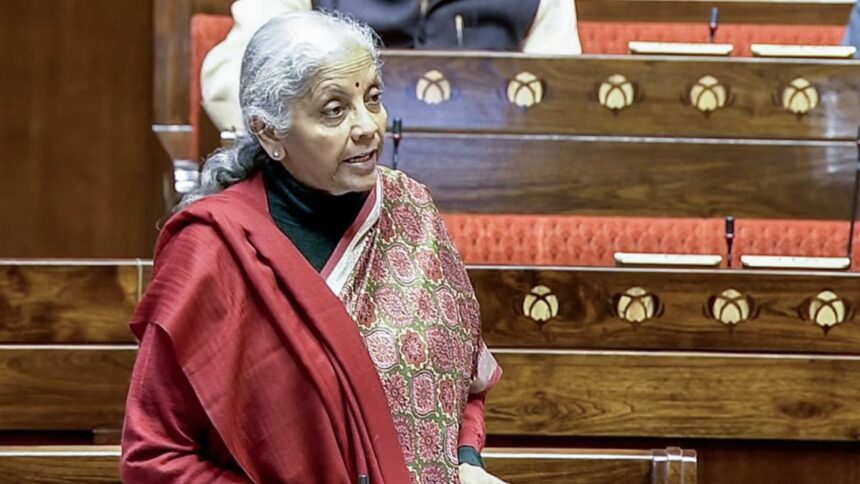
At the center of today’s proceedings is Finance Minister Nirmala Sitharaman, who is scheduled to respond to the debate on Budget 2026 in the Lok Sabha. Her reply is being closely watched, not only for its clarification of budgetary provisions but also for the government’s broader political messaging amid sustained criticism from opposition parties. The budget debate has brought issues such as inflation, farmers’ income, employment generation, and social welfare spending into sharp focus, turning the finance minister’s statement into a key moment of the session.
Despite expectations of substantive discussion, uncertainty continues to loom over whether the Lok Sabha and Rajya Sabha will be able to function without interruption. Over the past several days, adjournments have become routine, often occurring shortly after proceedings begin. Opposition parties argue that their voices are being stifled and that parliamentary conventions are not being followed, while the treasury benches accuse the opposition of deliberately obstructing proceedings to score political points. This clash of narratives has defined the tone of the Budget Session so far and remains unresolved as the eleventh day begins.
Budget Debate and Finance Minister’s Reply in Focus
The Lok Sabha is scheduled to convene at 11 a.m., with hopes that budget-related discussions will resume later in the day. According to parliamentary scheduling, detailed debate on Budget 2026 is expected to take place around the afternoon, provided the House is able to function. The opposition has consistently raised concerns about rising prices, stagnant rural incomes, and the adequacy of government welfare schemes, arguing that the budget fails to address the economic pressures faced by ordinary citizens.
One of the most prominent issues raised during the debate has been the allocation for farmers under the Pradhan Mantri Kisan Samman Nidhi scheme. Earlier this week, Congress MP Shashi Tharoor highlighted the limitations of the existing assistance provided to farmers, questioning whether an annual support structure that effectively amounts to modest installments can meaningfully offset rising input costs and inflation. His remarks echoed a broader opposition narrative that government support for the agricultural sector has not kept pace with economic realities.
Finance Minister Nirmala Sitharaman’s response is expected to address these concerns directly. Her reply will likely outline the government’s rationale behind key budgetary decisions, defend allocations for agriculture, infrastructure, and social welfare, and emphasize the long-term economic vision underlying Budget 2026. Government sources suggest that the finance minister will highlight fiscal discipline, capital expenditure growth, and targeted welfare delivery as core strengths of the budget.
Beyond numbers and allocations, the political context surrounding the finance minister’s reply adds to its significance. With the opposition alleging that their questions and objections are routinely ignored, Sitharaman’s statement is seen as an opportunity for the government to reassert its commitment to parliamentary accountability. At the same time, the ruling coalition hopes her response will shift focus back to policy substance, countering the opposition’s claim that the session has been reduced to procedural conflict.
The Rajya Sabha, meanwhile, is also expected to witness continued debate and disruptions. Similar issues dominate discussions in the Upper House, with opposition members demanding greater transparency and more time for detailed scrutiny of budget proposals. Repeated adjournments in both Houses have raised concerns about the effective use of parliamentary time, especially during a crucial budget session that traditionally sets the economic agenda for the year ahead.
No-Confidence Notice Against Lok Sabha Speaker and Political Polarisation
Adding another layer of complexity to the eleventh day of the Budget Session is the no-confidence notice moved against the Lok Sabha Speaker. On February 10, opposition MPs submitted a formal notice expressing lack of confidence in the Speaker’s conduct, alleging bias and unfair handling of proceedings. The notice was submitted by senior Congress leaders, including K. Suresh, Gaurav Gogoi, and Mohammad Javed, who personally delivered copies to the Lok Sabha Secretariat.
According to opposition sources, the notice carries the signatures of 118 Lok Sabha MPs, reflecting support from a range of parties across the opposition spectrum. These include the Congress, the Samajwadi Party, Left parties, and the Rashtriya Janata Dal. The move has been described by opposition leaders as a response to what they view as systematic denial of opportunities to speak, frequent disallowance of notices, and selective enforcement of parliamentary rules.
The decision to bring a no-confidence notice against the Speaker is unusual and underscores the depth of political polarization within Parliament. Opposition leaders argue that the Speaker’s role is to act as a neutral arbiter, ensuring fair participation for all members, and claim that this principle has been compromised. They insist that their protest is not merely political but institutional, aimed at protecting parliamentary democracy and conventions.
The ruling coalition has strongly rejected these आरोप, accusing the opposition of undermining constitutional offices for political gain. Government leaders maintain that the Speaker has acted strictly in accordance with parliamentary rules and that disruptions are the result of deliberate opposition strategy rather than procedural bias. They argue that frequent slogan-shouting and rushes to the Well of the House leave the Speaker with little choice but to adjourn proceedings or take disciplinary action.
Notably, the no-confidence notice has also exposed fractures within the opposition. The Trinamool Congress has chosen to distance itself from the move, raising questions about opposition unity during the Budget Session. While other opposition parties have attempted to present a united front on issues such as inflation and unemployment, differences over strategy and leadership continue to surface, complicating efforts to sustain coordinated pressure on the government.
As the eleventh day unfolds, the political temperature remains high. The combination of the finance minister’s awaited reply on the budget, ongoing protests over parliamentary functioning, and the unprecedented challenge to the Speaker’s authority has turned today’s proceedings into a critical moment of the session. Whether Parliament can move beyond confrontation to meaningful debate remains uncertain, but the stakes for both the government and the opposition are unmistakably high.